Friday, 22 July 2011

Where Philosophers and Pirates Meet

On Wednesday, in "Folk hero and/or cyberthief? The case of Aaron Swartz", a guest piece which was hosted on this weblog, New York attorney and copyright commentator Christopher F. Meatto explained the significance of the move by one of the world's most high-profile internet activists to liberate a large quantity of material held by one of the world's major depositories of academic journals. Little did we imagine that, just two short days later, we would be hosting a sequel, with a successful raid which reportedly targeted the Philosophical Transactions of the Royal Society, which stretch back to 1665. Grateful thanks are due to Christopher for keeping us up-to-date as this theme continues to evolve:
"Civil Disobedience in Academia – Part 2 
The attack on JSTOR’s paywalled academic research library continues with a publicly declared upload of 32 Gigs of JSTOR documents to The Pirate Bay by Greg Maxwell.

(One Twitter user writes “@mulka mulka: RT @joguldi: seriously RT @mathpunk: Greg Maxwell is hardcore.” Another: @n4lle “Wenn das alles so stimmt, dann ist der Greg Maxwell der coolste Typ, von dem ich seit Jahren gehört habe!”)

Maxwell’s upload was made in support of the efforts of internet activist Aaron Swartz, whose United States criminal indictment for mass JSTOR downloads I reported on here on the 1709 Blog earlier this week.

On the facts as reported, Maxwell presents a scenario where JSTOR attorneys (or United States Justice attorneys) may be forced to utilize intellectual property law to enforce expired copyrights of mostly deceased authors on behalf of an alleged non-profit organization (sure, there are ample salaries for its executives).

Swartz most likely erred when he obtained his download materials through a questionable cat and mouse spy vs. spy battle with the M.I.T. network thorugh a series of shifting identities. Maxwell, I assume, made no such mistake.

JSTOR, like many of the music rights holders of the past 10 years, has failed to realize that it still could maintain its business by charging reasonable prices and offering true curation for which its subscribers would gladly pay. If JSTOR just wants to be a paid version of Google, it will fail, Justice Department notwithstanding".

Life after death on Mars: a reader asks ...

One of our readers (let's call him Dave, since that's his name) has just written in with this question:
"I'm interested in writing a book set in the John Carter of Mars universe, created by Edgar Rice Burroughs. The first four books of the Mars series were published in the US prior to 1922, so I believe I'm in the clear from a copyright perspective to put the book up for sale in the U.S. Burroughs died in 1950, so the the remainder of his the books in the series aren't in the public domain globally until 2020 at the earliest.

The sticky wicket is, the Burroughs estate has been rather aggressive in protecting the John Carter 'brand' (as well as Tarzan), by coming at it from a trade mark tack [coincidentally, the Burroughs' Community trade mark application for JOHN CARTER was published only last week].

I'm wondering how likely I would be to get a cease and desist, or worse, if I wrote a book which only referenced the characters and events depicted in the Mars books 1-4. Is there a precedent for this, with estates or companies trade marking the property in such a way that no new works can be created. Or, since the titles I would be referencing are in the public domain here in the states - am I pretty safe if I keep any sales within our borders?"
Readers will instantly spot that this is a trade mark issue, to the extent that the use of characters whose names and possibly likenesses are protected as trade marks may -- or may not -- be a trade mark use if used in the title or narrative of a book. There is also that old favourite question about whether there is such a thing as copyright in a fictional character per se or in the manner in which that character is depicted.  Readers' comments are welcomed, as ever.

There's an entertaining and fairly polemical article which touches on some of these issues by Paul Reeskamp: "Dr No in trade mark country: a Dutch point of view", Journal of Intellectual Property Law & Practice (2010) 5 (1): 29-38 (abstract here). I expect that there's plenty more out there, but Paul's piece sticks in my mind since I had to edit it for publication ...

Thursday, 21 July 2011

A Motion for Fair Use

imageThe courthouse for the United States District Court, Eastern District of Wisconsin* is majestic, beautiful, dignified. The 100-year old structure’s granite tower draws eyes upward, past elegantly arched windows and into the clear blue sky.  Marble and ornately carved wood add an air of grandness to the sedate black-robed men and women who spend their days in the building’s courtrooms and chambers.  Sunlight pours into the entrance-way atrium from a glass sky-light high above.  It’s a peaceful place, where footsteps echo down from long open balconies and sophisticated women in well-pressed skirts dart in and out of doors.

But this month, one Federal Judge in Wisconsin had to deal with something far less dignified than his magnificent surroundings.  As Judge Stadtmueller’s opening line explained, “Federal lawsuits seldom touch on such riveting subjects and regard so many colorful parties as the present matter.”  The present matter: a copyright dispute over a song called “What What (In the Butt).”

This is one case where no summary could be as entertaining as the actual judicial opinion, and so it will give the basic copyright issues. You can read the full Brownmark Films, LLC v. Comedy Partners decision for yourself.

Dry Background

Brownmark Films made a ridiculous music video that was a smash hit on YouTube.  South Park (Comedy Partners) featured its own 58-second version of the song, performed by a character named Butters Stotch.  Brownmark brought an action for violation of the US Copyright Act (Section 101) against Comedy Partners.  Comedy Partners filed a motion to dismiss on the grounds that Brownmark’s suit failed to state a claim on which relief could be granted.  (A 12b(6) motion for the Fed Civ Pro junkies out there.)

Defenses Raised

Comedy Partners made 2 arguments in its defense: 1) Brownmark lacked standing to bring a federal copyright suit, 2) the use on South Park was permissible under the doctrine of fair use.

Standing – registration and transfer

In order for a US copyright holder to sue for infringement in a federal court, the work involved must be registered with the US Copyright Office.  And, the person bringing the suit has to have exclusive rights to the work.  The song at issue here was registered and two of the joint authors properly transferred their rights to Brownmark such that he had exclusive rights.  In discussing this issue, the court recognized a circuit split between the 9th and 7th Circuits on whether joint copyright owners can grant an exclusive license.  The court sided with the 7th Circuit, saying joint owners can grant exclusive licenses.  This is probably a good thing since the Eastern District of Wisconsin is in the 7th Circuit.  The court goes on to comment further on a wider rejection of the 9th Circuit’s perspective, noting that it “has been widely lampooned in several respected treatises.”

Fair Use – Parody

Factor 1: purpose and character of the use – “to lampoon the recent craze in our society of watching video clips on the internet that are — to be kind — of rather low artistic sophistication and quality.“  The work is transformed by replacing the original performers with a South Park character, and commentary is made on the value of viral videos.  [Tell that to Justin Bieber.]  In favor of Comedy Partners.

Factor 2: nature of the work – “the "nature" of the copyright in question does not help this court assess whether South Park's parody is a fair use.”  Factor ducked.  In favor of, neither side?

Factor 3:amount and substantiality of the portion of the work used – “the use of the copyrighted work in the South Park episode was relatively insubstantial.”  Only a small amount of the song’s lyrics were used.  In favor of Comedy Partners.

Factor 4:effect of the use on the work’s potential market – “there is little risk that derivative work in question would somehow usurp the market demand for the original.”  In favor of Comedy Partners.

The result: dismissal of the suit, with prejudice.

Strange Procedures?

There are some very interesting nuggets hiding in this apparently standard fair use analysis.  The court notes that normally, to bring in materials from outside of the complaint, i.e. the two video clips at issue here, the court needs a motion for summary judgment rather than a motion to dismiss.  The difference is that in summary judgment, the court is making a decision to a valid legal dispute with the facts given in the pleadings.  In a motion to dismiss, the court is deciding whether or not there is a valid legal dispute to judge. 

When necessary, a motion to dismiss can be transformed into a motion for summary judgment.  But here, the court points out an exception, “where the material in question is expressly referenced in the complaint and is central to the plaintiff's claim,” and continues to make a decision on whether or not there is a valid legal dispute here.

The Court acknowledges another problem to proceeding with a fair use analysis on a motion to dismiss.  Fair use is generally regarded as an affirmative defense to infringement.  Don’t you need a valid dispute, a valid claim, before there can be a defense to it?  Normally, yes.  But here again, the court finds an exception.  If the plaintiffs prove the defense in their own pleadings, then the court can proceed under the motion to dismiss.  And that’s what the court found here.

The court says that this practice is common place.  If that is so, why keep viewing fair use as an affirmative defense instead of as not infringement?  Seems like it would require less legal gymnastics.

Picture credit:Milwaukee Federal Building cc-by compujeremy available at http://www.flickr.com/photos/compujeramey/2041317259/. The photo was cropped for the blog.

* More information about the Milwaukee Federal Building here.  The author spent a splendid 6 weeks exploring the building as an intern.
For our European friends, don’t forget the old quip, “America, where 100 years is a long time and 100 miles is a short distance.”

Wednesday, 20 July 2011

Folk hero and/or cyberthief? The case of Aaron Swartz

The 1709 Blog has been made aware of criminal proceedings which are being brought against Aaron Swartz following a dramatic gesture that was pretty much guaranteed to draw a response.  Since this event is governed by United States law, this blogger was hesitant to offer an uninformed opinion. The 1709 Blog is therefore pleased to host this guest piece from Christopher F. Meatto (New York attorney and HarvardLaw74 blogger), which reads thus:
"Swartz, Civil Disobedience, and Harvard Ethics


[The July 14, 2011 United States criminal indictment of activist Aaron Swartz, inventor of RSS, for downloading mass quantities of academic journals, can be accessed here].

The relevant American newspapers have two different takes on the Swartz indictment.

Boston: “Aaron Swartz, a Cambridge web entrepreneur and political activist who has lobbied for the free flow of information on the Internet, was charged in federal court with hacking into a subscription-based archive system at MIT and stealing more than 4 million articles, including scientific and academic journals.

New York Times: “A respected Harvard researcher who also is an Internet folk hero has been arrested in Boston on charges related to computer hacking, which are based on allegations that he downloaded articles that he was entitled to get free.”

I suggest we view this indictment of a Harvard ethics fellow in the following context: “Civil disobedience is the active, professed refusal to obey certain laws, demands, and commands of a government, or of an occupying international power. Civil disobedience is commonly, though not always, defined as being nonviolent resistance. It is one form of civil resistance. In one view (in India, known as ahimsa or satyagraha) it could be said that it is compassion in the form of respectful disagreement.”

JSTOR, the academic archiving service from which the documents were downloaded, has published an ambivalent, at best, account of its position on this case:
“It is important to note that we support and encourage the legitimate use of large sets of content from JSTOR for research purposes. We regularly provide scholars with access to content for this purpose. Our Data for Research site (http://dfr.jstor.org/) was established expressly to support text mining and other projects, and our Advanced Technologies Group is an eager collaborator with researchers in the academic community….Even as we work to increase access, usage, and the impact of scholarship, we must also be responsible stewards of this content. We monitor usage to guard against unauthorized use of the material in JSTOR, which is how we became aware of this particular incident.”
The JSTOR statement also implies that it has already settled with Swartz with respect to the nature of his use of the downloaded content.

I respectfully suggest that the solution here is for JSTOR to publish its complilation of 1,000 academic journals on a non-exclusive basis under a Creative Commons Licence.

I applaud Aaron Swartz for his efforts".
Thanks, Christopher, for this take on what clearly has the makings of a cause celebre -- but what do our readers think?

Harry Potter and the Idea/Expression Dichotomy


Amid the kerfuffle over the News of the World phone-hacking scandal, shaving foam humble pie, and wife Wendi's bodyguard skills, I almost failed to notice the latest (and hopefully last) instalment in the Willy the Wizard v Harry Potter plagiarism saga.

For those who would like to refresh their memories of the history of the case, see previous posts on the 1709 Blog here, here and here, and on the IPKat here. In short, Adrian Jacobs authored a book entitled "The Adventures of Willy the Wizard" and had it published in 1987. In 2004, his estate accused JK Rowling of having copied substantial parts of the book and using them in the first five books of her "Harry Potter" series. The claims referred especially to the fourth book, "Harry Potter and the Goblet of Fire".

Acccording to reports in, among others, the Guardian (here) and the BBC (here), the case was struck out, rather boringly, because the estate of Adrian Jacobs failed to pay the security for costs ordered by Mr Justice Kitchin and confirmed by the Court of Appeal.

If you are disappointed and keen on some idea/expression dichotomy exercise, you may still get it, and on three different levels at that:

- Level 1 ("I really don't have much time"): read the article in the Telegraph (here)

- Level 2 ("Willy the Wizard? I'm intrigued"): go to the "Willy the Wizard" homepage and have a look at the extracts from the book (here)

- Level 3 ("I only read contributions by the judiciary, thank you very much"): peruse Mr Justice Kitchin's account of similarities in Allen v Bloomsbury Publishing Plc & Anor [2010] EWHC 2560 (Ch), paras 20-47 (here). And bear in mind his statement at para 85:
"[C]opyright does protect the content of a literary work, including the selection, arrangement and development of ideas, facts, incidents and the like. In assessing the crucial question as to whether a substantial part has been taken, the court must have regard to all the facts of the case including the nature and extent of the copying; the quality and importance of what has been taken; the degree of originality of what has been taken or whether it is commonplace; and whether a substantial part of the skill and labour contributed by the author in creating the original has been appropriated."

Tuesday, 19 July 2011

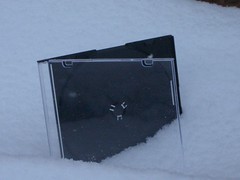
Jewel cases! Get your empty jewel cases here!

Over one thousand burned DVDs, a small shop in Orlando, Florida, and the county Economic Crimes Unit, a combination that has “uh-oh” written all over it.

The shop owner tried to claim that what he was doing was legal because he wasn’t selling the DVDs.  He was giving the DVDs away for free, for promotional use only, with the purchase of a $5 empty jewel case.

The newspaper reporting the results of the search warrant execution states that Mr. DVD-seller is facing felony charges under state law. However, the Florida statute that appears to be most applicable, 540.11, doesn’t seem to quite address the facts at issue here. The first two subsections making it unlawful to copy and sell DVDs only applies to sound recordings fixed prior to February 15th, 1972.  The next two provisions make it illegal to copy “performances.” There’s no definition of “performance” in the statute, so it’s unclear whether movies would fall under this provision.

If movies do count as performances, then Mr. DVD-seller is in trouble. Section (2)(a)3. makes it illegal to copy articles embodying performances with the intent to use those articles to cause the sale of other articles. Hmm… now why would someone pay $5 for an empty jewel case when a pack of 10 retails for nearly half that price on amazon.com?

A Florida case involving infringing CDs, rather than DVDs, suggests section (3)(a)1. might be applicable here.  In that case, it was clear that the CDs themselves were for sale.  If the court doesn’t allow the “I’m only selling the jewel cases” line to fly, then this provision could possibly be applicable.  The real tricky thing here is that half of the provisions talk about sound recordings and half talk about performances. Neither term is defined and neither obviously covers movies.

But don’t worry.  Even if Mr. DVD-seller manages to slip through the cracks of Florida’s state laws, he’s still in deep trouble under Section 506 of the US Copyright Act.

The Orlando police were alerted about Mr. DVD-seller by the MPAA.  Maybe he shouldn’t have set up his shop in a town owned by Disney.

Photo credit:Jewel case in the snow cc-by-nc eleda 1.

Monday, 18 July 2011

When negotiations don't end in a done deal

Looking for the news? Try a taxi driver
Ebden v News International Ltd is an unreported decision of the Chancery Division, England and Wales, which has not been uploaded on to BAILII but which comes to me via a LexisNexis update. It's a decision of Mr Justice Norris and it deals with it covers not only copyright per se but also confidentiality and publishing contracts in an action brought by Ebden against the very-much-in-the-News International.

Ebden made a video recording of a fight at a night club, witnessed by three taxi drivers, in which a premiership football player was involved. He approached News International, which offered him £2,000 for the story if the video could be used.  Ebden said he wanted £20,000 and transferred the video to News International. The video turned out to be of poor quality and didn't show the fight clearly. However, News International agreed to pay the £20,000 if the quality of the video could be improved -- payment being dependent on its publication. At this point Ebden now sought £150,000 -- which News International refused to pay -- but the company did advise Ebden not to talk to other newspapers. Following two further meetings between a News International reporter and Ebden, a contract was drafted which did not specify a price but reiterated that payment depended on publication of the video. No agreement was reached regarding payment of £150,000.

In the event, News International did publish the story, based on information provided by the taxi drivers, and told Ebden that it had used neither his information nor his video. Coincidentally, another newspaper published a story about the same footballer, this time being involved in a different fight: this feature resulted in the newspaper facing a libel claim. News International passed the video and Ebden's contact details to the other newspaper, which contacted him with a view to his assisting it as a witness; News International offered him £5,000 to assist.  At this point Ebden, probably feeling somewhat miffed at ending up as a witness instead of having a large amount of money in his pocket, rejected News International's offer and asked for payment of the £150,000 which, he maintained, News International owed him. No, said News International, so off they went to court -- Ebden as a litigant in person.

Mr Justice Norris dismissed Ebden's claim for the cash. In the first place, there was no contract in which News International agreed to pay Ebden £150,000 for publication of his story. The parties had been negotiating over use of the video but did not contemplate any legal relationship arising out of the right to run the story as such.  Payment was to be made for use of the video only (i) if its quality could be improved and (ii) it was actually used.  However, the video itself was never published.

Ebden did not own the story. While the video was unique to Ebden, the story itself was shared by a number of other people.

News International had not infringed copyright.  While it had made copies of the video, it had done so for the purpose of judicial proceedings under the Copyright Designs and Patents Act 1988, s.45.

Nor had there been any breach of confidence. While it was agreed that Ebden was not to be identified as the source in any publication and his contact details were not to be revealed, a reporter who circulated that information within his employer's sphere of activity was not in breach of that term. Likewise, supplying Ebden's contact details to the other newspaper's solicitors did not amount to a breach of confidence since they too would be bound to keep that information confidential.

From the summary of facts, this sounds like an action which the litigant in person had little prospect of winning and which he might have been well advised not to commence.

Friday, 15 July 2011

Unwarranted threats to sue for copyright infringement

Owners of registered intellectual property rights in the United Kingdom can call in aid many weapons that can be fired against the actual, putative or potential infringer -- interim and permanent injunctive relief, damages, an account of profits, delivery up and declarations. The defendant in turn can seek a declaration of invalidity or the cancellation/revocation of the registered right and may in an appropriate situation bring an action for unwarranted threats to bring infringement proceedings against him.

In the case of copyright the defendant's position appears more vulnerable. Damages which he may be required to pay explicitly include additional ('exemplary' or 'punitive' damages) -- though the effect of the EU's IP Enforcement Directive 2004/48 may be that such damages should be available in respect of all IP rights -- and there is no opportunity to challenge the validity of a registration. He also faces the risk that the copyright owner will opt for self-help relief where the statutory conditions are satisfied and simply seize goods believed to infringe and then walk off with them. More worryingly, in light of recent heavy-handed attempts to discourage or punish file-sharing and unlawful downloading, is the fact that there is no unwarranted threats action which an innocent but threatened party can bring.

Does any reader know quite why an action for unwarranted threats has not been made available in the case of a threat to bring copyright infringement proceedings? It can't be because the right in question is an unregistered right, because an action for unwarranted threats exists in respect of UK unregistered designs right under section 253 of the Copyright, Designs and Patents Act 1988, and a comparable provision exists for unregistered Community design right.