Wednesday, 12 September 2012

Another day, another adjustment of file sharing damges

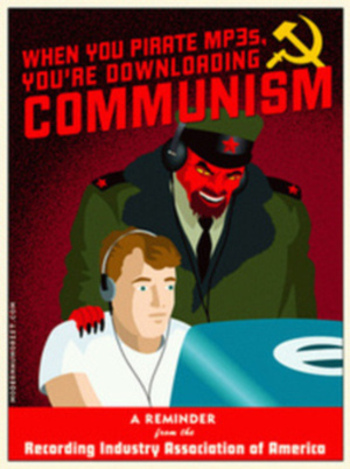
What do these figures have in common? 4,500, 222,000, 1,920,000, 54,000, 1,500,000, 54,000, 222,000? Well, they are all dollar sums of money firstly offered as a settlement and then awarded as damages in the US courts against Jammie Thomas-Rassett for file sharing music online. The first sum is the settlement offered to Rasset-Thomas by the Recording Industry Association of America for illegal file sharing. The second sum of $222,000 is the initial award the court made against Thomas-Rassett for illegally sharing 24 songs. That case resulted in a re-trial and the two biggest sums represent subsequent jury awards, and the two awards of $54,000 represent judicial adjustments of those awards. The final sum is the sum decided upon by a three judge appellate court, rejecting Rassett-Thomas' argument that that the award was excessive and violated her right to due process under the US Constitution. Judge Steven Colloton, giving the unanimous decision for the 8th Circuit, said that the award of $222,000 was "not so severe and oppressive" to violate the Constitution. 

In a separate case, in August the 1st Circuit reinstated a $675,000 judgment against Joel Tenenbaum, a former Boston University student, for 30 charges of illegal downloading. That ruling reversed a trial judge's decision to reduce the award to $67,500.Tenenbaum appealed that case to the Supreme Court, arguing that the Copyright Act was never meant to be applied to individual consumers. The Supreme Court declined to hear the case in May, allowing the 1st Circuit decision to stand although Tenenbaum's attorney, Charles Nesson, plans a further appeal.

Capitol Records Inc et al v. Thomas-Rasset, No. 11-2820.

http://www.guardian.co.uk/technology/2012/sep/11/minnesota-woman-songs-illegally-downloaded?newsfeed=true

Tenenbaum damages upheld

Tuesday, 11 September 2012

Fifty Shades translated: moral (rights) concerns?

Original language Fifty Shades trilogy
After finishing reading the entire Fifty Shades trilogy while sunbathing (and getting sunburnt) at the seaside, this blogger was left wondering the same questions which have made many other readers of EL James's books in non-English speaking countries sleepless. 

One of them is: if a work has not been translated accurately, and the meaning is therefore altered, have the author's moral rights been infringed? This issue may be particularly relevant when the original text is meant as a pun or to have a meaning which can be understood just by those who possess some background information. The latter is the case of the titles of EL James' books.
As most of you will know, the hero of the Trilogy is absolutely realistic character Christian Grey, a clearly hot and fashionable 27-year-old self-made man who makes $100,000 per hour, and is also a skilled piano player and keen sailor. 
The title of the first book (Fifty Shades of Grey) is word-game between Christian's surname and his nickname, which is "Fifty Shades" (it is Ana Steele, the 22-year-old heroine, who calls him this way, after he has tried to send her away because he thinks it is too problematic to have a relationship with her. He indeed admits to being "fifty shades of f****d up". 
The titles of the other two books do not require much explanation. They are Fifty Shades Darker (as this is the book in which some of Christian's dark secrets are revealed) and Fifty Shades Freed (as this is the book in which Christian manages to overcome his traumas).
This blogger's fellow nationals who live in the lovely boot-shaped country in the Mediterranean Sea can buy the translated versions of EL James' works if they want to. However, the manner in which the titles of the books have been translated is rather perplexing. 
Italian-translated Fifty Shades trilogy
They are Cinquanta Sfumature di Grigio (this is a plain literal translation of the title of the first book, and "Grey" is intended to be the colour grey); Cinquanta Sfumature di Nero ( "fifty shades of black"), and Cinquanta Sfumature di Rosso ("fifty shades of red"). Does this translation make any sense? Probably not, if one knows what the actual meaning of the titles is and is aware that the books are not about a painter.
Although no criticisms have yet been made to how EL James's books have been translated into Italian, it may be interesting to discuss whether EL James could object to inaccurate translations of her works. 
The writer (real name: Erika Leonard) is British, so the Copyright Designs and Patents Act 1988 (CDPA 1988) is likely to apply.
Section 80 CDPA 1988 provides that, among the other things, the author of a literary work has the right not to have his work subjected to derogatory treatment. 
What EL James's books
are not about
The treatment of a literary work is defined as any addition to, deletion from or alteration or adaptation of the work, other than a translation. According to well-known commentary by Laddie, Prescott and Vitoria, "the exclusion of translations from the definition should be confined to true and accurate translations, as it is difficult to see why an author should not be able to object to a translation which murders his work or distorts its meaning" (4th edn, 2011, Vol I, 664, referring to 1987 French case of Zorine (Leonide) v Le Lucernaire, in which an author successfully prevented the public performance of his play in a translation and in a production which seriously distorted the original meaning). 
This said, the treatment of a work is derogatory if it amounts to distortion or mutilation of the work or is otherwise prejudicial to the honour or reputation of the author.
As is well-known, under UK law moral rights can be waived. However, the waiver may be conditional and may be made revocable, pursuant to Section 87(3) CDPA 1988. It would be interesting to see how EL James's publishing contracts were drafted and what kind of control the writer has retained over her books. What do you think? In any case, it is unlikely that control-freak Christian Grey would be pleased with all the changes which have contributed to rendering the meaning of the titles "lost in translation". 
Derivative works are important!
So: who do you think should play Christian Grey?
Because of its success, the Fifty Shades trilogy is indeed a great source of inspiration for all IP lovers. 
Trademark lawyers can speculate about all the possible Fifty Shades merchandising - the latest example of which being the Fifty Shades soundtrack which has just been released. 
Copyright enthusiasts may engage in endless discussions as to the legal implications of fan fiction (the Trilogy actually originated as a fan fiction based on the Twilight saga, as you can read here), moral rights and translations, and now also derivative works. The film version of Fifty Shades of Grey has already been announced, although the cast has not been released yet. Since derivative works are of paramount importance to copyright (and are relevant to the topic of moral rights, too), the 1709 Blog has carefully reviewed the actors rumoured to be in the run for the role as Christian Grey and decided to ask its readers: who do you think should play Christian Grey? You can cast your vote until midnight next Tuesday, 18 September and choose among sensitive and most likely to play Christian Ryan Gosling; blue-eyed White Collar star Matt Bomer, no-longer 27-year-old but still much admired Bruce Wayne/Christian Bale; successful and intriguing Shame's Michael Fassbender; and UK-born and forthcoming new Superman Henry Cavill.  The poll can be found at the top of the 1709 Blog's side bar.

Copyright is stuck in the '90s: Neelie Kroes calls for change


Yesterday Neelie Kroes, Vice-President of the European Commission responsible for the Digital Agenda gave a speech entitledCopyright and innovation in the Creative Industries addressing why, in a changing digital age, copyright reform is the right way to support the creative sector.  She began by saying that the debate on copyright often involves extreme positions, rigid views, and emotive arguments but that a pragmatic rather than philosophical approach is necessary.

The last major EU copyright instrument, the Copyright Directive (or the Information Society Directive), was adopted in 2001, but was based on Commission proposals dating back to 1998. Neelie Kroes reminds her audience of what has happened since then, saying that "In 1998, Mark Zuckerberg was 14. Today, almost one billion people around the world actively use Facebook, to share photos, videos, and ideas."

The thrust of her speech is that the world is changing rapidly. In 1998 the creative industries were controlled by large corporations whereas the internet has opened that space up to individuals who can publish their books, blogs, songs and art easily and globally.

Copyright does not just affect the creative industries (though those were the industries that is was created to protect), but has now spread to the business and pharmaceutical industries too. Neelie Kroes has talked in the past about her views on the use of data and text-mining, and yesterday she said that:

"Today, new scientific discoveries don't just come from new experiments, new drugs, new clinical trials: in fact, now, we can get new results by manipulating existing data. Data and text-mining techniques now lie behind a huge field of research, like human genome projects, potentially life-saving."

She goes on to say that pan-European companies should not have to struggle with 27 different sets of legislation, hinting that further harmonisation is required, and that the focus must be our economy, which cannot miss out on the opportunity for new growth.

The Commission has begun reviewing whether changes to EU legislation are necessary. Neelie Kroes has said that "For this, Michel Barnier is looking at whether and how the 2001 Copyright Directive needs to be adapted. I fully back his commitment to do that, set out in the Commission's IPR Strategy of last year."

The public seems divided on whether the gatekeepers to the creative industries are unjustifiably being trampled on or whether they are a near-obsolete concept. Whichever side of the line you fall on, it is hard to fault Neelie Kroe's view that:

"During this process of assessment we should leave passion aside and take a pragmatic view. Is our current system consistent and relevant within the real world?"
Monday, 10 September 2012

TRAC tracks rise in US copyright litigation

After the dip comes the up-and-up ...
From Sabrina I. Pacifi's beSpacific blog, drawn to this blogger's attention by the vigilant Chris Torrero, comes news from the United States that this great nation's copyright litigation lawyers are managing to keep busy. In "TRAC - Copyright Suits Trending Upward", Jeff Lamicela reports:
"The latest available data from the federal courts show that during July 2012 the government reported 296 new copyright civil filings, according to the case-by-case information analyzed by the Transactional Records Access Clearinghouse (TRAC). This is the fourth straight month where filings have reached close to 300 or more per month -- higher than they have been since July 2008. Federal copyright lawsuits are 41.3 higher in July 2012 than they were for the same period one year ago, and have generally been rising over the last two years."
You can read the full report here. As an added bonus it lists those districts in which lawsuits of this kind were filed with the greatest rates relative to population. TRAC is run by Syracuse University: its aim is to provide comprehensive independent and non-partisan information about federal enforcement, staffing and spending.

Thursday, 6 September 2012

Will the CJEU play Nintendo's game?

Going one step further than
Bob Kohn: here's the Nintendo
legal team ...
Another copyright case is winging its way to the Court of Justice of the European Union for a preliminary ruling: it's Case C-355/12 Nintendo et al, which I discovered today via an email circular from the UK Intellectual Property Office (IPO). No clue is given as to the factual background and the InfoCuria page dedicated to this action is not exactly encrusted with useful information, though the referring court would appear to be the Tribunale di Milano, Italy.

The questions referred for a preliminary ruling are as follows:
"(1) Must Article 6 of Directive 2001/29/EC be interpreted, including in the light of recital 48 in the preamble thereto, as meaning that the protection of technological protection measures attaching to copyright-protected works or other subject matter may also extend to a system, produced and marketed by the same undertaking, in which a device is installed in the hardware which is capable of recognising on a separate housing mechanism containing the protected works (videogames produced by the same undertaking as well as by third parties, proprietors of the protected works, ) a recognition code, in the absence of which the works in question cannot be visualised or used in conjunction with that system, the equipment in question thus incorporating a system which is not interoperable with complementary equipment or products other than those of the undertaking which produces the system itself?

(2) Should it be necessary to consider whether or not the use of a product or component whose purpose is to circumvent a technological protection measure predominates over other commercially important purposes or uses, may Article 6 of Directive 2001/29/EC be interpreted, including in the light of recital 48 in the preamble thereto, as meaning that the national court must adopt criteria in assessing that question which give prominence to the particular intended use attributed by the right holder to the product in which the protected content is inserted or, in the alternative or in addition, criteria of a quantative nature relating to the extent of the uses under comparison, or criteria of a qualitative nature, that is, relating to the nature and importance of the uses themselves?"
The 1709 Blog will do its best to keep readers informed as this reference progresses. Meanwhile, anyone who feels the urge to comment on this case for the purpose of nudging the UK government into making representations should email Policy at policy@ipo.gsi.gov.uk before 19 September 2012 -- a remarkably generous date when compared with some earlier Court of Justice references.

Wednesday, 5 September 2012

New Zealand approaches 'third strike'

The 'Three strikes' regime in New Zealand is fast approaching implementing the 'third strike' against three alleged persistent copyright infringers who are facing the possibility of NZ$15,000 fines in the Copyright Tribunal. 

So far some 2,700 warning letters have been sent out under the Kiwi's graduated response system, mostly at the behest of the Recording Industry Association of New Zealand and three customers of Telecom New Zealand are now facing court sanctions. The telecoms company said it did not know what its role would be in the Tribunal, saying that was for the Tribunal to determine and maintained what the carrier's role in the system was administrative only, simply passing on warning letters from those copyright owners who allege infringement to their customers who are identified by their IP address.

http://www.theregister.co.uk/2012/09/05/kiwi_three_strikes_out/

Law firm gets sued over threats to name and shame alleged downloaders


Undoubtedly moved by the conviction that the only bad press you can get is your obituary, Bavarian law firm Urmann + Collegen (U + C) have threatened to publish a list of its clients’ opponents in “open and pending” matters. U + C are charmingly referred to as "Porno-Anwälte" ("porn lawyers") by a local media outlet (here), not because of any alleged moonlighting activities in the adult entertainment industry, I hasten to add, but because they are notorious for representing copyright owners from said industry.

U + C rely on a recent decision by the Bundesverfassungsgericht (Federal Constitutional Court, BVerfG), where the judges held that a law firm may in principle publish lists of companies or notable individuals it has acted against (12 December 2007, 1 BvR 1625/06, available here). The case concerned a list of commercial entities, mainly banks and insurance companies, which was used as an advertising tool to attract new clients – look at all the big names we have sued (or who have sued our clients…)! The BVerfG contended that there is nothing dishonourable about being involved in a legal dispute, so the mere mention that the firm has acted against a certain company, without even claiming to have won the dispute, cannot shed a dubious light on that company.

It is more than doubtful that the BVerfG would detect an advertising function in naming private individuals that have no claim to any fame whatsoever, especially if the law firm in question is primarily associated with acting against alleged filesharers/downloaders of porn and software. The only conceivable aim of announcing the publication of a list of opponents is to shame John or Jane Smith (who may well be no more than the ISP subscriber and never have actually downloaded anything) signing a cease and desist undertaking and paying the lawyers’ fees, which would clearly contravene privacy and data protection laws.

This view is shared by the Landgericht (Regional Court) Essen and the Amtsgericht (District Court) Regensburg, both of which issued injunctions restraining U + C from publishing the respective applicant’s name (LG Essen, 30 August 2012, 4 O 263/12, available here; for a report on the AG Regensburg injunction, see here). The Bayerisches Landesamt für Datenschutzaufsicht (Bavarian State Office for Data Protection Supervision, BayLDA) also issued a preliminary order enjoining U + C to desist from publishing a list of opponents (see press release here).

U + C have grudgingly declared that they will not publish a list of opponents for the time being, but complain that they were not heard before the BayLDA, that the BayLDA was wrong on both the facts and the law, and that they will take matters to the competent administrative court (see U + C website here). According to the BayLDA’s press release, U + C were informed in advance of the planned order and given the opportunity to respond, but failed to meet the prescribed deadline.

Interestingly, U + C have not publicly responded to the civil court injunctions – maybe they do not want to put ideas into the heads of the hordes of people who received warning letters from them (allegedly up to 150,000; see report here). Imagine thousands of people taking out injunctions against the firm – which would have to bear the costs of all those proceedings…

Tuesday, 4 September 2012

DMX: call for action over unauthorised music licences

A little bird with impeccable credentials, known to him only as Lofty Larynx, has told the 1709 Blog about some momentous developments within the field of music licence revenue.  The information received by your blogger reads as follows:
"Get moving!
Composers' and songwriters' future income is at stake and you should INSIST that PRS for Music acts against the US publishers who have issued and been paid for music licences when they had NO RIGHT TO DO SO.

Email PRS for Music’s CEO, insisting that action be taken to protect your revenues and stop this unlawful licensing practice.

Write to BASCA (the British Academy of Songwriters, Composers and Authors), asking them to take this issue to the PRS and insist on action to protect your revenues.

What Happened? 
A large US music service, DMX, has been granted licences by certain US publishers in exchange for licence fees paid direct to those publishers and not to the US societies. The effect has been to reduce the value of the US performing right for DMX to approximately 30% of what it was when the catalogues were licensed by the US societies. One major publisher (soon to be even bigger) was paid a seven figure sum by DMX for these rights. 
Crucially, the US publishers in question do not own the performing right in your work if you are a direct writer member of PRS. You, the writer, have assigned the performing right exclusively to PRS for Music. DMX is using your music without a licence from the rightowner – your society, PRS for Music.

Why does this matter? 
1. The value of the performing right has been reduced to 30% of the value of a society licence. 
2. The US publishers do not own the performing right in any songs or compositions written by direct members of PRS for Music – you granted that right exclusively to PRS for Music. 
3. It is unlikely you will ever see your share of these licence fees. 
4. DMX is a large US music service, part of Mood Media. DMX and Mood supply 580,000 commercial locations in over 40 countries performing PRS songwriters’ music (without a licence) to 100 million people every day (Mood Media’s own figures). 
5. DMX has no right to play the music of The Beatles, The Stones, U2, Pink Floyd, Coldplay, Amy Winehouse, Adele, Guy Chambers, Elton John, The Shadows, INXS etc etc ... you get the picture. But then we should leave DMX to sue those US publishers for selling them a pig in a poke. 
How was this done? 

Unlike most of the rest of the Western world, US writers and publishers grant their performing right to their society non-exclusively. This means that US music users can go direct to US publishers. 
DMX already had licences from the US societies but wanted to cut costs. They went to publishers and paid lump sums for direct licences and then terminated their society licences. Interestingly many US publishers did not renew once they saw their revenue had been eroded. The deals remain in place for other US publishers, especially those who took large upfront fees.
ASCAP and BMI sued and lost – they had a very inexperienced judge at first instance. Publisher representation on society boards makes it unlikely they will act without real pressure from the writers.

What can you do about it? 
UK writers: If you are a direct writer member of PRS for Music (or indeed APRA in Australia, IMRO in Ireland, SOCAN in Canada or any of the European Continental societies) you should write to your society, asking them what they propose to do about US publishers issuing licences for rights they do not own! The PRS Board is 50% publishers, so they need to be pressured by you to act in the best interests of the writers who are the life blood of music. 
US writers: Every US songwriter that is a direct writer member of ASCAP, BMI or SESAC (or their managers) should be looking at their publisher statements to see where their DMX performance revenue is itemised. If it is not there, ask your publisher if they signed one of these DMX deals. If they did, ask them to show you on your statement where you have been paid for the public performance of your work by DMX.

Useful email addresses 
PRS CEO Robert Ashcroft Robert.ashcroft@prsformusic.com
BASCA Chair Sarah Rogers sarah@tutti.co.uk
Also, as MEPs are debating European Collecting societies this month (September), your own MEPs --- and Francois Arbault (EU Commission Cabinet Member with Responsibility for IP),
francois.arbault@ec.europa.eu 
Text of the Judgment here

DMX Announcement: here".
This blogger has no prior knowledge of this and would appreciate any further information from readers, as well as from DMX, Mood Media, publishers, composers and responsible organisations.