Showing posts with label grooveshark. Show all posts

Friday, 5 June 2015

The CopyKat

Azerbaijan’s Copyright Agency has issued a statement saying Armenians have been stealing the Azerbaijani peoples’ musical compositions, folklore samples and other intangible values for years. The statement came after the Armenian Culture Ministry apparently tried to submit the Azerbaijani folk dance "Kocheri" to UNESCO as part of the Armenian 'intangible cultural heritage' and the statement goes on to say 'Armenians are trying to present Azerbaijan’s “Sari gelin”, “Susen Sunbul” and dozens of other folk songs, “Yalli, “Kocheri”, “Uzundere”, “Mirzeyi” dances, ancient musical instruments (tar, balaban, zurna), even works of famous Azerbaijani composers Uzeyir Hajibeyli, Gara Garayev, Fikret Amirov and modern composers like Armenian examples'. More here.

Steve Albini, the renowned musician, record engineer, producer and songwriter has voiced a number of controversial but interesting opinion at the Primavera Pro conference and festival in Barcelona. You can read all about it here but gems included his view that the music industry “makes me angry that it exists as a parasite on the music scene, which is the fans, bands, shows, and the people who help them" and “The idea that you have to have contracts to do [business] agreements, that you have to have formal understanding between people in order to have a long relationship, is a complete fallacy" and “If you enjoy working with someone and both feel the relationship is working out, you naturally carry on indefinitely" and on copyright "“The old copyright model – the person who creates something owns it and anyone else that wants to use it or see it has to pay them – has expired in the same way that around the world you’re seeing structures and social norms [lapse] that were standard for many years.


In the UK, "recent controversy over the Green party's copyright policy illuminates not only the workings of the literary world but the essence of the Party’s shortcomings", argues Hana Gudelis in a well written piece in Varsity. Its well worth a read with Gudelis saying "Not only have the Green party failed to fully consider the negative consequences of their policy on one of the most vulnerable professions in society, but the members of the party have not even reached a clear understanding amongst themselves about the details of the copyright policy. "

Also in the UK, the High Court in London has granted The Publishers Association a blocking order under s97A of the CDPA, meaning the UK's leading ISPs will be required (within 10 working days) to block customer access to seven sites containing infringing content. The Publishers Association has issued almost one million take down requests to the sites. Chief Executive of Publisher's Association, Richard Mollet, said: “A third of publisher revenues now come from digital sales but unfortunately this rise in the digital market has brought with it a growth in on-line infringement. Our members need to be able to protect their authors’ works from such illegal activity; writers need to be paid and publishers need to be able to continue to innovate and invest in new talent and material." And Mr Justice Birss in the High Court has ordered a group of ISPs to block access to the “Popcorn Time” application for copyright film and TV content: Twentieth Century Fox Film Corporation and others v Sky UK Ltd and others.  More here.and more here.
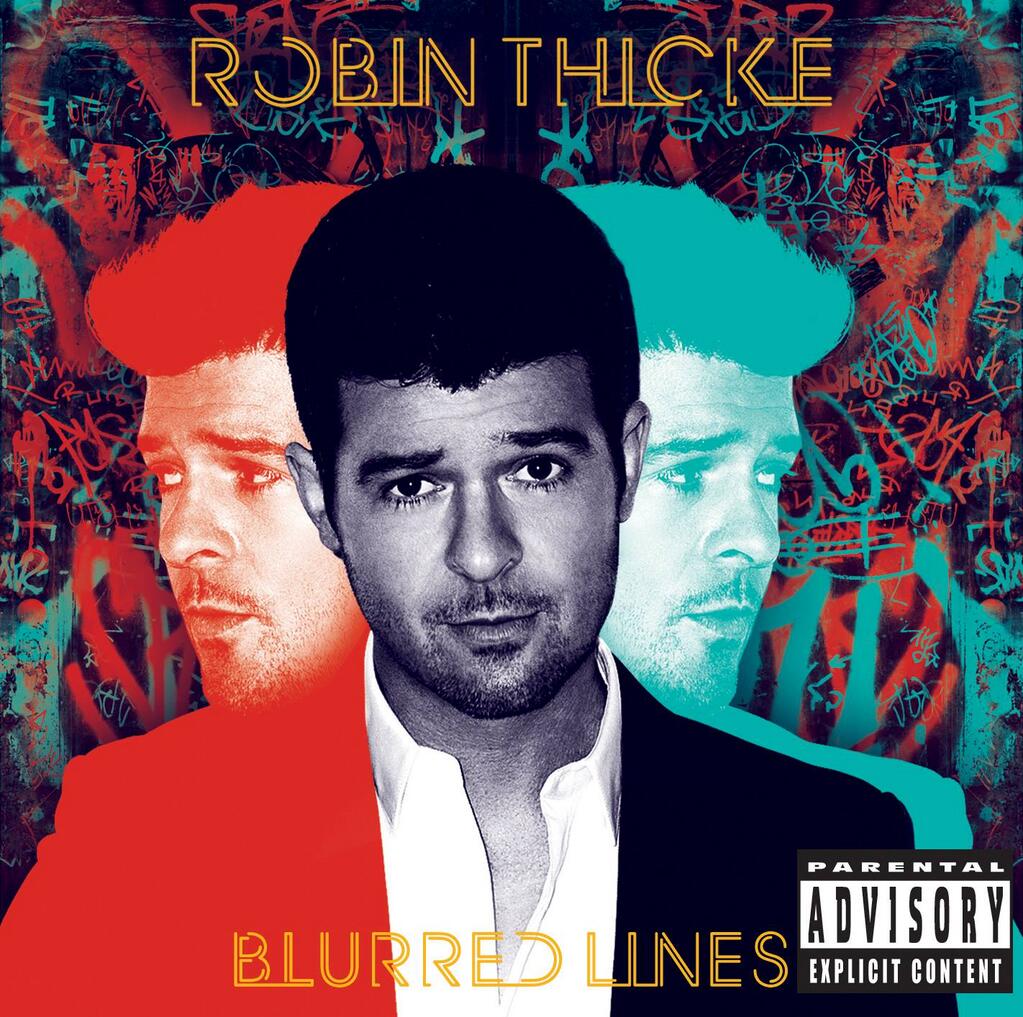

Universal has submitted papers to the US Courts arguing that despite Pharrell Williams and Robin Thicke being found liable by a jury for plagiarising Marvin Gaye's "Got to Give It Up" - rapper TI (real name Clifford Harris) and their Interscope label cannot be held liable in the "Blurred Lines" litigation - because the said jury didn't find against them: "The court may not enter an order declaring that Clifford Harris Jr and the Interscope parties 'are directly liable to the Gaye family for copyright infringement' because the jury found, as to this very issue, that Harris and the Interscope parties are not liable to the Gaye parties for copyright infringement. Once a jury has decided an issue, a court may not 'declare' the opposite on that same issue without violating the prevailing parties' Seventh Amendment right to a jury trial".

Justice Robert A. Blair has been appointed  chair of the Copyright Board of Canada for a five-year term, effective immediately. Blair was appointed to the Court of Appeal for Ontario in November 2003, after serving for 12 years as a trial judge on the Superior Court.

And finally, the fall out from the shuttering of the original Grooveshark continues: U.S. District Judge Alison Nathan (sitting in Manhattan) has widened a preliminary injunction against the operators of the cloned Grooveshark service - and the injunction now include California based CloudFlare, Inc,.which optimizes the speed of websites and allows Internet users to connect to them without having to type in the numerical Internet address. But this "makes CloudFlare and other Internet Service Providers the copyright and trademark police for other rights holders" according to the company's general counsel, Kenneth Carter and CloudFlare, which does not host websites or register domain names, had said in court papers filed on May 28th that its services were passive and automatic, and that even without CloudFlare, the new Grooveshark would be able to continue (Arista Records LLC et al v. Vita Tkach et al, in the U.S. District Court for the Southern District of New York, No. 15-cv-3701).

Friday, 1 May 2015

Grooveshark surrenders

Music-sharing service Grooveshark has announced  that it has shut down after 10 years. The controversial free streaming site, which once boasted 35 million users is owned by Escape Media which has agreed to a legal settlement with the major record companies that includes the termination of all operations, wiping its computer servers of all the record companies’ music, and surrendering ownership of its website, mobile apps and intellectual property, according to a statement from trade organization Recording Industry Association of America (RIAA). “We started out nearly 10 years ago with the goal of helping fans share and discover music. But despite best of intentions, we made very serious mistakes,” a statement from Grooveshark said. “We failed to secure licenses from rights holders for the vast amount of music on the service. That was wrong. We apologize.”

Urging users to now sign up for legal, licensed music services such as Spotify or Beats Music, founders Josh Greenberg and Sam Tarantino also pointed users to http://whymusicmatters.com/find-music and said "If you love music and respect the artists, songwriters and everyone else who makes great music possible, use a licensed service that compensates artists and other rights holders".  A rumoured $75 million penalty clause in the settlement may explain their contrition. 


Monday, 27 April 2015

The CopyKat

In the UK, and as the general election looms, there's not been much mention of copyright, but one party has come up with some new suggestions - the Green Party - but they may be forced to backtrack on proposals to limit UK copyright terms to 14 years after a "howl of protest" from prominent writers and artists including Linda Grant, Al Murray and Philip Pullman. The Greens’ manifesto said the party aims to “make copyright shorter in length, fair and flexible” but Kate Pool, deputy chief executive of the Society of Authors, told the Guardian that the change would be “appalling injustice” and that artists and writers would be first to lose out under the proposal, with more money being made by manufacturers or distributors.

Calling for US Congress to back an overhaul of licensing rules and a rewrite of the so called consent decrees that govern collective licensing in America, rapper Ne-yo has added some pithy common sense comments in the debate about royalties payable from streaming music services like Pandora and Spotify saying "Songwriters see the smallest fraction of royalty payouts because we are limited in how we can negotiate. Meanwhile, record labels and recording artists often earn twelve to fourteen times more than songwriters for a stream of the exact same song. As an artist who has experienced both sides of this split, I can personally speak to the nonsensical disparity between these different incomes".


Online music streaming service Grooveshark could potentially have to pay hundreds of millions of dollars to major record labels after a U.S. judge ruled ahead of its trial starting today (Monday) that Grooveshark's copyright violations on nearly 5,000 songs were "willful" and made "in bad faith." Last september U.S. District Judge Thomas Griesa,  ruled that Grooveshark's parent company, Escape, and its founders, Samuel Tarantino and Joshua Greenberg, were liable for the illegal uploads of thousands of recordings by artists such as Madonna, Eminem, Bob Marley and Jay-Z. Judge Griesa said the defendants had directed their employees to make the uploads in spite of the legal risk and said that the site's takedown procedures ere not robust and failed to prevent uploaders repeatedly posting infringing material. The remaining matter is now the quantum of damages Escape Media must pay in penalties for the infringement in the action brought by nine record companies including Arista Music, Sony Music Entertainment, UMG Recordings, and Warner Bros Records in 2011. The maximum damages allowed under U.S. copyright law of $150,000 could potentially be awarded for each track infringed, and as Grooveshark has been accused of infringing nearly 5,000 tracks in the lawsuit - that's a massive $736 million (UMG Recording Inc et al v. Escape Media Group Inc et al).


In Russia, owners of 'pirate' sites have been given a final warning by the government. Augist 2013 amendments to the countries copyright law which will come into force May 1 not only protect more content than ever before, but also contain provisions to "permanently block sites that continually make unauthorized content available." Torrentfreak has more.

In NIgeria, the Nigerian Copyright Commission is proposing stringent new penalties for online infringement. The new Nigerian Copyright Act would, if passed into law, allow the NCC to cooperate with internet service providers to target infringing websites carrying illegal content. The NCC is also looking for a 2% levy on photocopiers, DVDs and mobile phones either manufactured locally or imported before the end of May, 2015. The levy is to compensate copyright owners but the NCC would retain a percentage to fund anti-piracy operations and promote creativity. Last year the NCC was involved in 202 anti piracy operations which resulted in 53 convictions. 

And China is clamping down on news webstes that harvest stories from other news providers.  WantChinaTimes reports that on April 22, the National Copyright Administration (NCA)  issued a set of new regulations governing news copyright, stipulating that if internet media outlets want to pick up any article from other sources, they should follow related regulations in China's Copyright Law. This means that these outlets should get advance permission from and make payment to the owner of the article reproduced and should clearly indicate the name of the author, as well as the title and source of the article.

Jean-Michel Jarre, songwriter, musician and now the President of CISAC, the global author rights collecting society body issued a statenent yesterday on World Intellectual Property Day in support of fair compensation for creators, saying  "Article 27(2) of the Universal Declaration Of Human Rights, adopted by the United Nations' General Assembly in 1948, states that, 'Everyone has the right to the protection of the moral and material interests resulting from any scientific, literary or artistic production of which he is the author'. These words are as valid now as they were 70 years ago" adding "Culture is what brings people together" and. "And is the expression of the cultural diversity that is so cherished by the United Nations and UNESCO. Access to culture is paramount to the elevation of mankind. It goes hand in hand with freedom of speech and freedom to create. Equally important in our eyes are the rights of creators. Without these moral and economic rights, creators would be deprived of ways to sustain a living and continue to create freely, and would also lose control over the use of their works" and "But for this to happen, creators need to be granted fair remuneration for the use of their creative works. In the music sector, we have launched the Fair Trade Music project to address this issue. In the visual arts sector, we are asking for an international treaty on the artist's resale right under the aegis of WIPO" concluding with "Sustainable creative eco-systems depend on the recognition that creative works bring value to so many businesses that would not exist without them. In return, what we, creators, are asking is simple: to be fairly compensated for the use of our works and to be protected for our rights. We are calling upon all the countries represented at the United Nations to endorse our pledge, and work with creators all around the world to ensure a better future for authors".


And finally, and importantly, over on the IPKat Eleonora reports on a recent decision from the German Federal Court (Bundesgerichtshof ) that says that public libraries may now digitise their physical collections and may make available to their users the digitized works through terminals located in the respective reading rooms. They may do so irrespectively of whether the publisher offers a digital version of the book or not. Further, the library users may not only read the digitized works, they may also print out parts thereof or save those parts to USB sticks. Such reproduction, however, must stay within the boundaries of private or academic use according to Sec. 53 UrhG. In return, the publishers are entitled to receive fair compensation. It's all here - and well worth a read.


Friday, 10 April 2015

The CopyKat - shark attacks back

The Federal Court decision in Red Label Vacations Inc v 411 Travel Buys Limited 2015 FC 19  has focussed on a detailed considerations by a Canadian court of the issues of copyright and trademark infringement via the use of metatags. The court held that the plaintiff's metatags were not subject to copyright protection, and therefore there could be no copyright infringement. The court further held that use of the plaintiff's trade name and similar words in the defendant's metatags was not passing off or trademark infringement since it would not likely lead to consumer confusion with te court saying on the issue of copyright "In this case there is little evidence of any sufficient degree of skill and judgment in creating these meta tags, as is required by the test set out by the Supreme Court of Canada in CCH, above, or for the originality required in compiling data or other compilations, as discussed by the Federal Court of Appeal in Tele-Direct." and Justice Manson added  "While in some cases there may be sufficient originality in metatags to attract copyright protection when viewed as a whole, the substance of the metatags asserted by the plaintiff in this case does not meet the threshold required to acquire copyright protection in Canada."


Billboard says Grooveshark, the controversial music-streaming service, could be closer to extinction after a court decision. Judge Alison Nathan of the U.S. District Court, Southern District of New York granted EMI Music North America's motion for summary judgment on claims that Escape Media Group Inc., Grooveshark's parent company, infringed its copyrights. Total damages could amount to $420 million based on the court's finding that 2,807 EMI-copyrighted sound recordings existed on Grooveshark's servers. The maximum statutory penalty per infringement is $150,000 for wilful violations, although the amount can be reduced. Having no licence from EMI, and having failed to prove that safe harbour protection would apply to Groveshark so called user uploaded content after evidence that it was Grooveshark's employees themselves uploaded a substantrial amount of material, and with a finding by Magistrate Judge Sarah Netburn that Escape had an insufficient recordkeeping system, failed to terminate repeat infringers, and "actively" prevented copyright holders from collecting information needed for the takedown requests required by the DMCA - the writing was always on the wall.  Judges Nathan and Netburn also disagreed with Escape's argument that pre-1972 sound recordings should be excluded, with Judge Nathan citing the recent decision in Flo & Eddie, Inc. v. Sirius XM Radio, Inc  saying "the New York Court of Appeals would recognize the exclusive right to public performance of a sound recording as one of the rights appurtenant [pertaining to something that attaches] to common law copyright in such a recording."  In a blog (see below) Grooveshark says that it "disagree[s] with various aspects of the ruling; for example, our ‘one-strike’ repeat infringer policy is even faster than the ‘three-strike’ policies used regularly in the industry for stopping infringing uploads, and we believe our ‘DMCA Lite’ option goes above and beyond DMCA requirements by executing good-faith takedowns in a variety of situations where proper DMCA takedown notices are not provided. 


In the wake of the ruling (and the phrase 'shutting the stable door after the horse has bolted' does spring to mind), Grooveshark has now announced additional anti-piracy measures. One of these is to create a database with data of repeat offenders. On its blog, the company states it will continue to keep track of repeat offenders, “we will now create an additional independent record of repeat infringers from our existing databases, until our appeal clarifies this issue for Grooveshark and other hosting services committed to complying with the DMCA.” The company is also working on tool that offers record companies insights on what music has been uploaded to the service, “we will provide a pre-screening tool for rights holders that provides immediate access to compare uploaded files on our servers that aren’t even yet available for end-user streaming with content owned by the rightsholder. When a rights holder provides a single file URL to the tool, they will receive a list of other files on our servers that have been found to be digitally different, but contain similar metadata.”


The Madras High Court has directed the Indian government not to appoint 'any bureaucrat' as chairman or member of the Copyright Board and directed that its earlier order on appointments in quasi-judicial boards be followed. The First Bench, comprising Chief Justice Sanjay Kishan Kaul and Justice M M Sundresh said, “Bureaucrat or lesser qualified candidates as chairman and members of Copyright Board should not be appointed and our earlier order on appointing judicial members to quasi-judicial boards, should be followed by government.” The Copyright Board’s judicial functions include determining the rate of royalty payable to copyright-holders, revoking copyright granted by the registrar and hearing appeals regarding copyright of products/works. More on the Sen Times here.


On Wednesday 6th of May 2015, Professor Jonathan Griffiths (Queen Mary University) will deliver a talk entitled "Parody and copyright in EU copyright law" at the City University. This is a topic of great interest to the CopyKat, and since the CJEU's intervention in (C-201/13) Deckmyn v Vandersteen, there are now in place some guiding parameters on the application of the exception for "caricature, parody or pastiche" in European Union copyright law. As this exception has only recently been introduced in the United Kingdom - the CopyKat is doubly excited! This talk will consider the impact of Deckmyn and, in particular, the Court's decision that national courts must apply the parody exception in a manner that maintains a "fair balance" between competing fundamental rights. City University, College Building, Room A110 13.00 (1pm). More on the City Law School website  here.

And finally on this Friday, More than twenty prominent European filmmakers including Michel Hazanavicius (“The Artist”), Wim Wenders (“Every Thing Will Be Fine”), Paolo Sorrentino (“La Grande Bellezza”), Ken Loach (“Jimmy’s Hall”) and Abderrahmane Sissako (“Timbuktu”) have rallied to "protect copyright laws" in the EU add ad their voice to move to reform copyright law across Europe - in particular rallying against proposed moves to remove traditional national exclusivity for film and TV licensing (and geo-blocking) and  allow audiovisual and film works to circulate freely across Europe using pan-European licenses. Saying the moves would undermine the way films are financed, The film makers argue that the E.U.’s proposal would harm right-holders, and solely benefit multi territory platforms like Netflix and Google saying "“We share the European Commission’s will to facilitate film availability to all… but let’s not go about it in a way that could be destructive for cinema.” The directors’ alternative proposals included bolstering existing support for Europe’s exhibition circuit,   and a new charter for the EU’s public broadcasters to aid the diffusion of more European films throughout the region. More on Screen Daily here and here.

Tuesday, 30 September 2014

DIY Grooveshark cannot claim DMCA 'safe habor'

A federal judge in New York has ruled that Grooveshark, the controversial online music service, has infringed on thousands of their copyrights. Grooveshark came under fierce attack from the recording industry for hosting music files without permission. Grooveshark (Escape Media Group) streams music uploaded by its users and Grooveshark’s defence has long been that it is legal under the Digital Millennium Copyright Act, the federal law that protects websites that host third-party material if they comply with takedown notices from copyright holders. The company relies on advertising for its revenues. Granting summary judgment in a case filed in 2011 by the three major record companies, Judge Thomas P. Griesa of United States District Court in Manhattan ruled that Grooveshark was liable for copyright infringement because its own employees and officers — including Samuel Tarantino, the chief executive, and Joshua Greenberg, the chief technology officer — uploaded a total of 5,977 of the labels’ songs without permission. Those uploads are not subject to the “safe harbor” provisions of the Digital Millennium Copyright Act with the judge saying “Each time Escape streamed one of plaintiffs’ songs recordings, it directly infringed upon plaintiffs’ exclusive performance rights”.  According to Reuters, evidence against the executives included a 2007 memo in which they asked staff to upload as much music as they could, while outside the office, to help the service grow in its early days. “By overtly instructing its employees to upload as many files as possible to Grooveshark as a condition of their employment, Escape engaged in purposeful conduct with a manifest intent to foster copyright infringement via the Grooveshark service,” the judge said. The judge also found that the company destroyed important evidence in the case, including lists of files that Mr. Greenberg and others uploaded to the service. The New York Times reports that the next step of the case will be to set damages although Grooveshark said it is currently assessing its next steps, including the possibility of an appeal.” Grooveshark is also still facing two other copyright suits filed by the music industry, one in New York federal court and one in state court, also in New York.

We previously reported that four former and one then employee of Grooveshark had previously signed consent orders with the plaintiffs agreeing i that they would never again infringe the labels' copyrights, or work for a company that "systematically infringes" copyrights.  Those individuals who had been targeted for infringement were then removed from the the ongoing lawsuit. 

Wednesday, 22 May 2013

Grooveshark employees settle labels' action


Four former and one current employee of the controversial streaming music service Grooveshark have signed agreements with the major music companies, led by Universal, who are suing the site and a  number of individuals, agreeing in a consent judgment that they will never again infringe the labels' copyrights, or to work for a company that "systematically infringes" copyrights.  Those individuals who had been targeted for infringement will now be removed from the lawsuit. 

Grooveshark lets users upload music into its libraries, meaning tracks are routinely available on the streaming service without the permission of relevant copyright owners. Because Grooveshark has a takedown system, removing infringing copyright material if made aware of it, the company argues it is operating within the US's DCMA ' safe harbor' provisions, even if taken-down tracks are soon replaced by users.

Grooveshark itself is far from out of the water regarding the copyright infringement case: TorrentFreak has published the relevant court documents, and points out that Grooveshark’s co-founders Sam Tarantino and Josh Greenberg have not yet signed similar agreements and  the label's case has focused on the question of whether the company’s own employees were involved in reuploading tracks taken down through that “strict compliance” policy. Tarantino recently described himself as “literally broke” and said 2012 was “a year of getting punched in the face 10,000 times”. 

For their part, Grooveshark owners Escape Media welcomed the development, telling reporters: "We are pleased that the case between Universal Music and Escape Media has been narrowed and simplified by the removal of some individual defendants from the case upon their stipulation to simply obey the law - something Escape Media does every day through its active licensing of millions of tracks and its strict compliance with the Digital Millennium Copyright Act. Escape Media Group will continue to deliver innovative new solutions and services that revolutionise music consumption for its growing audience of 30 million plus fans around the world".

Last month UMG secured a judgment in the New York State appellate court that held that the DCMA "safe harbor" defence did NOT apply to pre-1972 sound recordings.


Wednesday, 24 April 2013

Safe harbor defence does not apply to pre-1972 recordings

A New York state appeals court as held that the safe harbor defence found in the Digital Millennium Copyright Act does not apply to pre-1972 recordings.

In UMG Recording, Inc. v. Escape Media Group, Inc. et al, UMG Recording, Inc. sued Grooveshark, an internet-based music streaming service, for copyright infringement, accusing it of uploading around 100,000 recordings without authorisation. Grooveshark conceded that it could not ensure that each work uploaded to its servers was a non-infringing work however, it claimed that it operated on the basis that it was shielded from infringement claims by the safe harbor provisions of the DCMA.
Many of the recordings uploaded by Grooveshark were made before 15 February 1972 which is significant as, when the US Copyright Act was amended in 1971 to include sound recordings, Congress expressly extended federal copyright protection only to recordings "fixed" on 15 February 15 1972 or after. UMG claimed that by permitting the pre-1972 recordings to be shared on Grooveshark, the defendant infringed UMG's common law copyright in those works, and that the DMCA should not apply to those recordings.

Grooveshark responded that the pre-1972 recordings sat within the safe harbor of section 512(c) of the DMCA, but UMG argued that the DMCA could not apply to the pre-1972 recordings because that would conflict with s.301(c) of the Copyright Act that nothing in the Act would "annul" or "limit" the common-law copyright protections attendant to any sound recordings fixed before 15 February 1972.
© Ceridwen
The appeals court found that the safe harbor provisions do not apply to recordings made before 1972, as this was when Congress first recognized a federal copyright for sound recordings.

This flies in the face of previous decisions: last year, the Manhattan Supreme Court relied on the 2011 federal ruling in Capitol Records v. MP3tunes, to find "no indication in the text of the DMCA that Congress intended to limit the reach of the safe harbors provided by the statute to just post-1972 recordings."
This was reversed on Tuesday, when the appeals court said:

"It is clear to us that the DMCA, if interpreted in the manner favored by defendant, would directly violate section 301(c) of the Copyright Act." Therefore without language expressly reconciling the two provisions, the court must presume that Congress did not intend the DMCA to extend to all recordings.
The full text of the decision is here.

Sunday, 15 April 2012

shark hunt gets geeky


Grooveshark, now facing legal actions from all four major record labels whilst also bringing its own legal action against Digital Music News to try and find out who leaked apparently confidential information about the company's activities, has been criticised by Jeff Price, the boss of TuneCore which represents self releasing acts who use the digital sphere to distribute their music, who has accused Grooveshark of "knowingly and willingly using a legal loophole to steal from artists and songwriters” adding “Even worse, [Grooveshark bosses] try to defend themselves by having the attitude of ‘hey, we love artists and all we are doing is trying to support them’. What a load of crap”.

Price also gives a fairly basic analysis of Grooveshark's business model, noting that “When you have 30 million people coming to your website, you have a lot of web traffic. This means you can start making money by charging entities to advertise on your site. After all, you reach tens of millions of consumers. Just think of all the money Grooveshark makes by selling ads” but the points out “There is just one really big, big problem: they don’t get licenses and don’t pay the artists, the labels and/or the songwriters for the use of the music that’s making them tons of money. I can assure you, 99% of the hundreds of thousands of TuneCore artists whose music is in Grooveshark have not been paid a single penny”.

Grooveshark has pleaded DCMA 'safe habour' as a defence against infringement claims from both record labels and music publishers, but many have criticised the company's takedown procedures and Price supports the allegation of a ‘deliberately shoddy takedown system’ made by the major labels, and says that far from supporting artists, Grooveshark exploits the DCMA provisions to profit from music that it doesn’t pay for saying "I actually met with people at Grooveshark a few times. You think politicians don’t provide straight answers? Wait until you talk to these guys. I’ve never experienced anyone trying to so hard to convince me that 2+2 does not equal 4. They wanted TuneCore to enter into a deal with them, but the whole thing made me sick" and adding (somewhat controversially) “Some scumbag saw this legal loophole, and must have thought something like: My meal ticket is in. Here is a way to make a lot of money by using music without having to pay artists, labels or songwriters”.

Lightsabers at dawn, let battle commence!

Its all on the TuneCore blog

and see here http://the1709blog.blogspot.co.uk/2012/01/not-quiet-sea-for-grooveshark.html

Wednesday, 4 April 2012

Full house as Grooveshark faces EMI claim


There is more trouble ahead for Grooveshark the popular streaming service that in one way or another has run afoul of every major record label. EMI Music, the only major record label to license its music to Grooveshark, has now sued the company in New York State Supreme Court, saying that the service owes $300,000 plus interest for non-payment on a promissory note having paid $150,000 from the alleged $450,000 due. As a result, EMI says, it has terminated its licensing agreement with Grooveshark.

In a statement, Grooveshark said: “Grooveshark was recently forced to make the difficult decision to part ways with EMI due to EMI’s currently unsustainable streaming rates and EMI’s pending merger with Universal Music Group, which we consider monopolistic and in violation of antitrust laws. To date, Grooveshark has paid over $2.6 million to EMI, but we have yet to find sustainable streaming rates.” Grooveshark has an estimated 35 million users, and argues that its service is legal under the terms of the US Digital Copyright Millennium Act.

The EMI claim completes the 'full house' of claims from all four major record labels. Grooveshark is facing a separate federal action by Universal Music Group, Sony Music Entertainment and the Warner Music Group . EMI's music publishing division had separately brought an action against Grooveshark's parent company Escape Media Group in January this year.

http://mediadecoder.blogs.nytimes.com/2012/04/03/grooveshark-a-music-service-is-sued-again/ and http://news.cnet.com/8301-31001_3-57408868-261/emi-groovesharks-only-major-label-tears-up-contract/

Monday, 16 January 2012

It's just a game of keepy uppy

The music, film and television industries’ recent successes in fighting illegal file sharing by promoting both legislative change and winning court decisions such as Newzbin2 and the recent Dutch Courts decision to block access to The Pirate Bay are all well and good for content owners, but in the fast moving world of the internet things don’t stay still for long and news now reaches the 1709 Blog that The Pirate Bay will start linking by default to 'magnet' rather than BiTorrent downloads in what can only be seen of as a move to avoid user and file detection. Whilst BitTorrent links will still be available (being the currently preferred option for downloaders, both legal and illegal), they will be a secondary option for the time being. The magnet system makes user and file identification even harder and it is expected that The Pirate Bay will now phase out traditional BitTorrent file-sharing (although comments on their Blog suggest this may not be that easy).

And controversial US streaming platform Grooveshark, no stranger to the 1709 Blog and currently facing legal actions from all four major record labels, has just launched a new HTML5 app making it easier for music fans to access the service on their smartphones. Grooveshark had already launched apps for both the iPhone and Android-powered devices, but Apple and Google banned them from their respective stores. The new app seems a clever way to keep fans using the service.

http://thepiratebay.org/blog and http://venturebeat.com/2012/01/13/grooveshark-html5-mobile-app/

The world record for keepy uppy (uppie) is held by Dan Magness of England, a 25 year old professional freestyler, who kept a regulation football aloft for 26 hours using just his feet, legs, shoulders and head; he completed the feat - which took place in Hong Kong, in June 2010.

Friday, 6 January 2012

Not a quiet sea for the Grooveshark

With the start of the new year, copyright is already back in courts.

Popular digital music service Grooveshark's parent company, the Escape Media Group, was sued on Wednseday before the New York State Supreme Court in Manhattan for, inter alia, breach of contract and an accounting (the case is EMI Entertainment World Inc v Escape Media Group Inc, New York State SupremeCourt, New York County, No. 650013/2012) . 

EMI claims that, since entering a licensing agreement to stream music in 2009, Escape has "made not a single royalty payment to EMI, nor provided a single accounting statement."


The complaint refers to alleged written and oral estimates by Grooveshark that it owes at least $150,000, but EMI said it believes the actual sum "greatly exceeds" such estimates.

As recalled by Reuters, the filing came less than a month after three other major record companies -- Vivendi SA's Universal Music Group, Sony Corp and Warner Music Group -- filed a lawsuit before the U.S. District Court, Southern District of New York, accusing Grooveshark of pirating thousands of songs (UMG Recording Inc et al v Escape Media Group Inc et al, U.S. District Court, Southern District of New York, No. 11-08407).


Grooveshark allows users upload songs to its servers, which other users can then stream free. It calls itself the world's largest on-demand and music discovery service, with 30 million monthly active users, more than 15 million songs, and 14 billion streams a year. 


A shark operating in a gray zone
According to its DMCA Takedown Policy, Grooveshark is committed "to honor all takedown requests that comply with the requirements of the Digital Millennium Copyright Act (DMCA) and other applicable intellectual property laws" In any case, and "[t]o be clear, as long as your infringement claim complies with the terms of the DMCA we will honor it, however we would much rather pay you than remove your content."


As pointed out by the New York Times, "[w]ith the music industry coming to rely more and more on fully licensed services like Spotify and Rhapsody that stream music by subscription, EMI’s suit highlights the legal gray zone in which Grooveshark operates."

In a statement, Grooveshark said: “This is a contract dispute that we expect to resolve.”

Let's wait and see then.

Monday, 21 November 2011

Universal goes shark hunting

Wikipedia describes the US based Grooveshark as the “international online music search engine, music streaming service and and music recommendation web software application, allowing users to search for, stream, and upload music that can be played immediately or added to a playlist”. But is it legal? Well, the World’s biggest record company thinks not. Universal Music Group has reportedly filed a lawsuit against music service Grooveshark over alleged copyright violations saying that records show that senior management at Escape Media Group, the company which operates Grooveshark, had led an effort to upload more than 100,000 songs to the music service and claims to have supporting emails and documents, including evidence showing that staff members Sam Tarantino, Paul Geller and Ben Westermann-Clark uploaded 1791, 3452 and 4600 unlicensed songs respectively. Many of those tacks would be presumed to be Universal tracks given the major's market share in the recorded music sector.

Universal is reported to be seeking the maximum in damages of $150,000 per infringing act. Whilst Grooveshark has negotiated direct licenses with EMI and numerous independent labels and aggregators, it has no deal with Universal - but as the service allows user to upload music so UMG tracks will appear – although Grooveshark says that, like YouTube, it will remove unlicensed tracks when notified.

Grooveshark relies on the ‘safe harbour’ provisions in the US’s DMCA which protects an online service from the infringing activities of its users in some specific situations. Grooveshark does not use filters to (theoretically) screen out unlicensed material, although filters are seemingly not as yet required by law in the USA to fall under safe harbour abut insists it has a valid "takedown" system. YouTube does use filters. But in the USA if a service has any direct knowledge of infringing content on its network, it must remove or disable access to that content before being contacted by the copyright owners. If Grooveshark’s management led an effort to upload copyrighted material, as the lawsuit alleges, that would certainly be considered direct knowledge! Universal says that whilst it is committed to "supporting legitimate and innovative" digital business models, it claims "Grooveshark did not build its business legitimately; its business is built on wilful infringement."

The UMG lawsuit also reportedly notes a recent article from Digital Music News about the problems King Crimson guitarist Robert Fripp had in trying to get his music removed from Grooveshark, including an anonymous post in the comments section of that article purporting to come from someone working for Grooveshark, who claims staff there were routinely instructed to upload music to the streaming service's platform. The comment adds that Escape Media senior management were aware of Fripp's takedown requests, but ignored them because they believe Fripp hadn't the resources to sue.

Last year Universal filed a lawsuit in the New York County Court claiming Grooveshark violates copyright by providing free access to its pre-1972 recordings. This is now provably an irrelevance as the court in the recent EMI v MP3tunes.com case said that differentiating between pre and post-1972 works was not necessary, and that DMCA safe harbour applied irrespective of the year of copyright protection.

Grooveshark also faced a copyright infringement lawsuit brought by EMI in 2009. That lawsuit ended with a licensing deal that added EMI's roster to Grooveshark's catalogue.


http://www.billboard.biz/bbbiz/industry/legal-and-management/universal-music-group-sues-grooveshark-report-1005545152.story