Showing posts with label internet. Show all posts

Tuesday, 14 August 2018

CJEU rules that unauthorized re-posting of protected content may be an infringement

First posted by Eleonora on the IPKat on 7th August 2018

The Cordoba photo at issue in Renckhoff
Today the Court of Justice of the European Union (CJEU) issued its last copyright judgment [but also - incredibly - the first copyright judgment of 2018] before the summer break. 

In Renckhoff, C-161/17 it ruled - contrary to the Opinionof Advocate General Campos Sanchéz-Bordona [here and here; ALAI thought it was very bad, and criticized it here] - that in a situation like the one at issue the unauthorized re-posting of a copyright work would be an act of communication to the public within Article 3(1) of the InfoSoc Directive.

Background

As readers might remember, this case had a fairly odd factual background. The national 
proceedings relate in fact to copyright litigation that a photographer has brought in Germany
against a school over the use, by one of the pupils, of copyright-protected material without 
authorization. 

More specifically, one of the pupils found an image of the city of Cordoba online 
and used it for an assignment for her Spanish class, providing acknowledgment 
of the website from which she had downloaded the photograph (though not of the 
photographer, because the website where the photograph appeared did not provide any). 

Upon finishing her work, she and her teacher uploaded it on the school's
website, but the photographer came forward claiming infringement of his copyright in
the photograph, and that he had just granted a licence to use to the image to the website 
from which the pupil had downloaded it.

Litigation has gone all the way up the German Federal Court of Justice, which 
decided to stay the proceedings and refer this question to the CJEU:

Does the inclusion of a work — which is freely accessible to all internet users on a 
third-party website with the consent of the copyright holder — on a person’s own 
publicly accessible website constitute a making available of that work to the public 
within the meaning of Article 3(1) of [Directive 2001/29] if the work is first 
copied onto a server and is uploaded from there to that person’s own website?

The CJEU response

Today the Court answered in the affirmative, noting that:
  1. The reposting of protected content freely available with the rightholder's consent on a third-party website is a new act of communication to the public (I'd also add that it is also an act of reproduction, and in fact this has been already established in the national proceedings) and no analogy with linking to lawful and freely accessible content in a Svensson sense may be drawn. Here the point is not - as it was, instead, in Svensson whether there is a communication to a new public, because there is a new communication to the public tout court.
  2. Holding otherwise would mean that a copyright owner would lose any control over their work once this has been made available online the first time. This would basically amount to an undue exhaustion of the right of communication to the public, contrary to Article 3(3) of the InfoSoc Directive, and would also be in breach of the principle according to which economic rights are preventive in nature (in a Souliersense)
  3. The fact that a work has been initially published online and made available with no restrictions is irrelevant: holding otherwise would be akin to imposing formalities to the enjoyment and exercise of copyright, and this would go against the prohibition in Article 5(2) of the Berne Convention.
If that was ever possible, 
now school may become even more stressful
The Court also recalled that copyright
protection in a photograph only arises when 
the photograph is its author's own 
intellectual creation, in the sense that it 
results from the making of free and 
creative choices and carries the author's 
personal touch, in the sense clarified 
in Painer. Readers will remember that 
the AG doubted that the one at issue 
would be a copyright-protected 
photograph. However, Article 6 of the 
Term Directive leaves EU Member States free to protect sub-original photos.

Implications

Overall, the judgment is good news for copyright owners, in that it gives them reassurance 
that the control over their works is not reduced over the internet. 

The ruling is also interesting in relation to the practice of certain websites (including newspapers) 
that directly host third-party video content in respect of which they neither own the rights nor 
do they have a licence, in lieu of displaying such videos by means of embedded links. While 
the latter might be lawful (depending on whether the requirements set in Svensson and
 GS Media are fulfilled), the former might pave the way to a finding of liability. This 
may be something that we knew already, but that now the CJEU has confirmed.

Monday, 24 April 2017

Higher Regional Court of Düsseldorf applies CJEU Mc Fadden decision

1709 Blog readers will recall that last September the Court of Justice of the European Union (CJEU) issued its decision in the important Mc Fadden case [here and here], a reference for a preliminary ruling from Germany.

The CJEU ruled that the provider of a password-free, free WiFi can be requested to have his internet connection secured by means of a password. 

Via 1709 Blog friend Mirko Brüß (Waldorf Frommer Rechtsanwälte) comes the news that a German court (though not the one that had made the Mc Fadden reference) has recently applied the CJEU judgment, and the principles laid down therein 
[Mirko also wishes to let readers know that a new reference on the right of communication to the public and filesharing was made by the Regional Court of Munich on 17 March last (Case No. 21 S 24454/14): details are not yet available on the Curia website, but as soon as they are this blog will provide relevant information].

Here’s what Mirko writes:

In a judgment on 16 March 2017 the Higher Regional Court of Düsseldorf requested the operator of an open WiFi (and a TOR exit node) to take action against repeated copyright infringements by users of his IP-addresses (case no. I-20 U 17/16). 

This appears to be the first time a German court has dealt with such a case after the CJEU handed down its Mc Fadden decision on 15 September 2016 ... At least, this is the first publicly available decision. 

The ruling of the court does have wide implications for the operators of open WiFi networks, so-called hotspots.

Tobias McFadden
Factual background

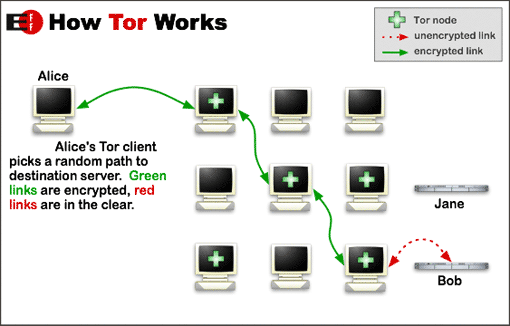
The defendant was an operator of five so-called hotspots, ie access points that can be used by anybody to log into the internet using the defendant‘s internet connection. It remained disputed between the parties whether the defendant operated his network commercially or privately, and whether or how users needed to register themselves to be able to use the network. The defendant claimed that users were asked to refrain from ‘illegal activities’, but did not explicitly ask users to refrain from sharing copyright-protected material via peer-to-peer networks. The defendant also operated a ‘TOR exit-node’ on his IP-address, thus enabling anonymous users to access the internet via his IP address (see this infographic on general TOR functionality).

The claimant is the owner of copyright in a computer game. He had noticed the defendant’s IP-address on several occasions as being the source of an infringing download offer of other works via a BitTorrent network. After obtaining knowledge of the defendant‘s name and address via the court proceedings provided for such cases in Germany (§ 101 Abs. 2, 9 Urheberrechtsgesetz, = UrhG, German copyright code), the claimant sent several cease-and-desist letters to the defendant in 2011, asking him to stop the infringing activities.

However, further infringements were found in 2013, even after the cease-and-desist letters were served to the defendant. At this point, the claimant took matters to court, and obtained a judgment of the District Court of Düsseldorf, that enjoined the defendant from aiding third parties to make available to the public the claimant’s game via peer-to-peer networks and via his own IP-addresses. The court also ordered the defendant to pay the claimant's out-of-court costs for EUR 651,80 (judgment on 13 January, 2016, case no. 12 O 101/15).

The defendant appealed the decision. He claimed that unknown users of his network were the culprits, and he had no way to identify them and no obligation to stop their activities.

View of Düsseldorf
The Higher Regional Court‘s decision

The Higher Regional court of Düsseldorf rejected the appeal and upheld the first decision. While the Regional Court’s judgment was issued before the CJEU decided Mc Fadden, the Higher Regional Court had knowledge of this decision and applied it to the case.

In so doing, the court found that it did not matter whether the defendant operated the hotspots commercially or privately. Furthermore, it did not matter to the court whether the copyright infringements were committed by users of the Hotspots or users of the TOR exit-node.

In all scenarios, the defendant was liable for the infringements and was requested to take reasonable measures to prevent further infringements. To justify this, the court cited Mc Fadden, especially paras 80 – 96. The judges found that, because of the earlier infringements, the operator should have taken reasonable measures to ensure that his users would not continue to infringe third-party copyrights. With regards to the WiFi network, the court sided with the CJEU and ruled that password-protecting the internet connection may dissuade the users of that connection from infringing copyright, provided that such users are required to reveal their identity in order to obtain the required password and may not therefore act anonymously. If this could have been asked of the defendant irrespective of earlier infringements was left undecided by the court.

With regards to the TOR exit-node being the possible source of the infringements, the court found that the defendant could have and should have taken measures against copyright infringements by disabling peer-to-peer communication via the TOR network. It remained undisputed between the parties whether this is technically possible, so the court took such a measure for granted.” 

Thursday, 19 April 2012

Internet openness and copyright: Google and EU Commission agree

Sergey Brin
So far, this week has been very interesting as regards internet openness, also because of converging views from industry and politics.

Last Sunday, Google co-founder Sergey Brin had an interview with The Guardian, in which he talked about the challenges facing the principles of openness and universal access. These have been considered as cornerstones of the internet for three decades. Brin explained that there are "very powerful forces that have lined up against the open internet on all sides and around the world". Because of this, he is "more worried than [he has] been in the past ... It's scary." Threats to internet openness come from a combination of factors, these being (1) attempts by governments to control access and communication; (2) efforts by the entertainment industry to crack down on piracy; and (3) the rise of restrictive walled garden such as Facebook and Apple, which are busy controlling what software can be released on their platforms.
Neelie Kroes
Very similar concerns have been expressed today by Neelie Kroes, Vice-President of the European Commission responsible for the Digital Agenda, at the World Wide Web Conference in Lyon. Indeed, her opening remarks echoed those of Sergey Brin:

“The best thing about the Internet is that it is open. Indeed it's built on the idea that every device can talk to every other, using a common, open language. That's what explains its seemingly endless growth."

Commission's Vice-President further elaborated on this:

Does getting these in the mail
qualify as harassment?
"Only the other day, the Free Software Foundation wrote to me about open standards. With their letter they enclosed something I don't normally get in the mail, a pair of handcuffs. Because they're worried about 'digital handcuffs', and wanted to know if I am with them on openness. And the answer is yes. Let me show you, these handcuffs are not closed, not locked. I can open them if and when I want. That's what I mean by being open online, what it means to me to get rid of 'digital handcuffs' ... The benefits of openness are clear. And when it’s as simple as an oppressive government trying to turn off the Internet, it's clear that we need to do what we can to prevent that."


Cutting-edge techniques to change one's own mindset
In Kroes’s speech there was room for copyright, too. Perhaps a bit cryptically, but there was a reference to the need for new rules in the digital environment.

"Sometimes the problem is ancient, pre-digital rules that we need to cut back or make more flexible. Other times, openness actually flows from strengthening regulation. And sometimes it's not about changing the rules at all, but about changing a mindset. People need to realise: they don't have to look backwards to the constraints and habits of the past; they can look forward to the open opportunities of the future. But that can take time."

Speaking specifically of copyright, Ms Kroes confirmed what the Head of Unit - Copyright, DG Internal Market & Services, Maria Martin-Prat, mentioned last week at the Fordham IP Conference (see earlier 1709 Blog post here). In particular, the complicating licensing systems for copyrighted material in Europe is deemed to prevent Europeans from enjoying great content and discourage business innovation, thus failing to serve the creative people in whose name they were established.

"Indeed, whether you're talking about audiovisual works or scientific information, current systems don't respond nearly well enough to online realities. And these are both areas we are looking at, including through updating EU copyright rules. And through new recommendations on access to publicly funded scientific research results and data."

Having said this, Ms Kroes, in line with Mr Brin, added that openness does not come at the expense of privacy or safety, as fundamental rights, liberty and security are guaranteed together. Being born very suspicious, this blogger spotted here a reference to legislative initiatives which are now discussed in Europe and the US. In particular, it is not difficult to think of ACTA and all the bustle it has been creating worldwide. The reference can also include other ongoing initiatives, at the level of EU Member States and the US alike. As to the former, one may think of the debate in the UK over email and web use monitoring (here). As to the latter, it may not be difficult to spot a reference to new US proposed legislation (now that SOPA and PIPA are in disgrace) known as Cyber Intelligence Sharing and Protection Act, or CISPA.    

Stay tuned for the next moves.

Thursday, 15 March 2012

ISPs' six strikes enforcement plan in force next July

Six strikes and you're out ...
always disappointing
As our readers may remember, in summer last year some major US ISPs (AT&T, Cablevision, Comcast, Time Warner Cable and Verizon) entered an agreement with music and film industries to adopt and implement policies aimed at discouraging their customers from illegally downloading copyright-protected materials (see Ben's post here).

Since then, this agreement has been referred to as 'graduated response' or, as Ars Technica called it, 'six strikes' enforcement plan.

When entering the agreement, ISPs made it clear that they would protect their subscribers' privacy and not filter or monitor their own networks for infringement. In addition, it was agreed that ISPs would never terminate an Internet connection entirely, or otherwise interfere with subscribers' ability to receive phone calls and emails.
As explained in Time Magazine, this is how the six strikes policy would work: 
1) If a copyright owner complains to an ISP (presumably, based on sniffing out IP addresses through BitTorrent),then that service provider sends an online alert such as an email to the subscriber. The alert explains how to secure a wireless network, how to avoid copyright violations in the future and how to lawfully obtain content in the future.2) A second alert may follow if illicit file-sharing persists, or the ISP may move on to the next alert.3) With the third alert, there will be some kind of mechanism (like a pop-up notice or landing page) to ensure that the subscriber received the message.4) Another alert. Same drill as the last one.5) On the fifth alert, the ISP may take action, such as temporarily reducing connection speeds or requiring the user to review and respond to educational information on copyright. The ISP may also skip the mitigation measures and just issue another alert.6) By the sixth alert, all participating ISPs will either throttle the user or require educational measures. The entertainment industry doesn’t expect that many people will persist with copyright violations at this point.
Since the six strikes policy was adopted, however, the parties to the agreement have gone rather quiet … Until yesterday, at least.
It was not easy to find
skilled players to develop
an efficient six strikes
infrastructure
Indeed, during a panel discussion at the annual meeting of the Association of American Publishers, RIAA's CEO Cary Sherman announced that most of the participating ISPs are on track to begin implementing the program by next 12 July, as reported by CNET.
As explained by Sherman, this is because the six strikes policy would have taken a year to set up, in that "each ISP has to develop their infrastructure for automating the system". They need this "for establishing the database so they can keep track of repeat infringers, so they know that this is the first notice or the third notice. Every ISP has to do it differently depending on the architecture of its particular network. Some are nearing completion and others are a little further from completion."
It will be interesting to see the six strikes policy actually in force, especially now that proposed legislative initiatives such as SOPA and PIPA have never been least popular, both in the US and abroad.