Tuesday, 9 September 2014

Not too late for Kuwait: Berne at last!

The World Intellectual Property organization (WIPO) has just broken the news, via Berne Notification No. 268: Berne Convention for the Protection of Literary and Artistic Works -- Accession by the State of Kuwait, that the oil-rich territory has now deposited its instrument of accession to the Berne Convention for the Protection of Literary and Artistic Works, as amended to 28 September 1979. The Berne Convention comes into force with respect to Kuwait on 2 December 2014, the day on which that State of Kuwait will also become a member of the International Union for the Protection of Literary and Artistic Works, the fabled Berne Union.

By sheer coincidence, by Paris Notification No. 220, WIPO announces that Kuwait is joining the Paris Convention for the Protection of Industrial Property Accession with effect from exactly the same day.

Thursday, 4 September 2014

The CopyKat - Bently blocked in bizarre bite sized ball battle

Research from the Motion Picture Association Of America (MPAA) claims that web-blocking in the UK is proving a substantial deterrent to online piracy - even where proxy sites enable users to access blocked services. An internal MPAA report , seen by Torrentfreak, shows that that visits to infringing sites UK sites that had been blocked declined by more than 90% in total during the measurement period or by 74.5% when proxy sites are included. The research is referenced in a report being prepared for the Australian government which is currently considering new anti-piracy measures, including web-blocking. Though Torrentfreak wonders if the fact the MPAA is conducting research of this kind suggests that it is planning on pushing for web-blocking in the US once again.

And UK Culture Secretary Sajid Javid has warned internet search engine companies legislation could be introduced if they do not make "real progress" in clamping down on links to pirate websites. He told the Annual General Meeting of the record label's trade association the BPI that he and Business Secretary Vince Cable had written to leading firms such as Google requesting they work with record firms in finding a way to stop giving easy access to sites which violate copyright saying  " No industry - and no Government - can let this level of infringement continue on such a massive, industrial scale" noting that without enforceable copyright there would be “no A&R, no recording studios, no producers, no session musicians, no publicity, no artwork. None of the vital ingredients that take the music created made by talented artists and turn it into something the whole world can enjoy. It’s what our past success was built on, and it’s what our future success depends on” adding "Copyright infringement is theft, pure and simple".

"The next generation of wars over knowledge, culture, drawings, information, and data is just around the corner, and it’s going to get much uglier with more stakes involved on all sides. We have gotten people elected to parliaments (and stayed there) on the conflict just as it stands now. As this divide deepens, and nothing suggests it won’t, then people will start to pay more attention. And maybe, just maybe, that will be the beginning of the end of these immoral and deeply unjust monopolies known as copyrights and patents." An interesting article. 


The UK's Copyright Licensing Agency and the China's Written Works Copyright Society have signed an agreement which will, for the first time, place numerous Chinese written works in the British market, including books, articles in newspapers and magazines and academic papers. Yan Xiaohong, deputy chief of the Chinese National Copyright Administration, said the agreement marks a milestone in copyright protection for Chinese works in overseas markets saying "It will encourage more Chinese writers and publishers to produce more high-quality copyright works appealing to foreigners, and guarantee their economic benefits" adding "Also, it will serve as a trailblazer for more agreements of its kind to be signed with copyright collective management agencies in other countries and regions of the world. Eventually, this kind of cooperation will boost Chinese cultural exports." The CWWCS is the only valid organization approved by the National Copyright Administration to collectively manage and operate copyright in China. Richard Mollet, chair of the UK Publisher's Association and the UK Alliance for Intellectual Property, and UK Minister for Intellectual Property Baroness Lucy Neville-Rolfe also attended the signing ceremony.

And finally ..... and with echoes of Lawrence Lessig's tussle with Liberation Music over the use of a clip of a Phoenix track in a presentation on cultural and technological innovation - comes news that Professor Lionel Bently has similarly had a video temoved from YouTube - because the English Football Association Premier League claimed that it infringed their copyrights. TechDirt reports that the clip was used by Professor Bently at the Institute for Information Law (IViR) July Information Influx event, which included a panel discussion on "Who Owns the World Cup?" discussing the very question of copyright and sports clips.


It is reported (though this Kat can't confirm) that Professor Bently was arguing in favour of better copyright protection for sporting events - an area where the FAPL have struggled in their battle to prevent unauthorised broadcasts with courts finding that only certain elements of live match transmisisons protectable (logos, anthems and clips from past matches). In the Lessig case, Liberation Music reached a settlement with Lessig. The settlement included an admission that Lessig had the right to use a track by the band Phoenix, and Liberation admitted Lessig's use of the song was protected by fair use - and Liberation agreed to adopt new policies around issuing takedown notices. I wonder if, in the different regime of fair dealing, and with the newly revised S30A "quotation" exception not yet in place in the UK (due 1st October 2014 I believe), the Premier League will take the same approach in the UK - or maybe just apply some common sense? Whatever the FAPL do or don't do, the phrase that most springs to my mind (and others it must be said) is 'own goal'.  

There is more on this story on the Kluwer Copyright Blog  "Premier League claims copyright on football matches shown in copyright debat"  by Thomas Margoni, Institute for Information Law (IViR)


Culture Minister on copyright, with a warning to search engines

In the UK Parliament, copyright does not currently have a Ministerial advocate in the House of Commons, the procession of 8 IP ministers who have been in office in the last 7 years having been mostly members of the House of Lords, so it was interesting that at the 2014 AGM of the UK record industry trade association, the BPI (which this blogger was lucky enough to attend) on Monday 1 September, Sajid Javid, Secretary of State for Culture, Media and Sport but without an official copyright brief, chose to speak at length on copyright issues, putting forward some strong messages in support of key issues affecting copyright in the UK. 

He noted, as I am sure most 1709 readers know, the £4.5 billion scale of the UK creative industries, and crucially what the internet has meant to those industries. It has meant new ways of creating, sharing, buying and playing music digitally but also huge threats and, as the Culture Secretary stated 'theft, pure and simple', of copyrighted material. Theft being a word which will undoubtedly enrage many of a pedantic bent when used in this context.

The past year has seen various initiatives against piracy, from the increase in use of s97A blocking injunctions, to crucial case-law decisions at ECJ level, to new initiatives combatting piracy.  Javid covered many of these on Monday.

He first noted Creative Content UK (formerly known as VCAP) which takes the basic principles of graduated response behind the Digital Economy Act, but is instead an industry-led programme from an alliance between copyright holders and ISPs, which will send letters to individuals infringing copyright in various stages.  In hand with the graduated response part of Creative Content UK is the educational campaign to which the Government has committed £3.5 million explaining copyright to young people and those [allegedly?] naïve infringers who simply do not know they are infringing, or do not understand the business impact it is having.

Javid also mentioned the £2.5 million contribution to PIPCU, who are working with the industry to create the Infringing Website List as part of Operation Creative, to prevent brands from advertising on these illegal sites. Without revenue from advertising, there is no money, no incentive, and no business for the websites. [After his speech, the Minister was pressed to find further funding for the future operation of PIPCU, but he held the line that industry is expected to fund it going forward]

The Culture Secretary then focussed on search engines. According to the IFPI Digital Music Report 2014, 74% of infringers are introduced to pirate sites through a simple search. Search engines therefore have a role to make access to these sites harder. Javid acknowledged a debt to the report of Mike Weatherley MP on this topic and stated that he and Vince Cable have written to the big search engine providers (Google, Microsoft and Yahoo) asking them to work with the industry (following Google's protestations that they already do, and have responded to millions of takedowns requests).


Finally, on the search engine issue, he reassured the BPI that 'if we don't see real progress, we will be looking at a legislative approach'.  The creative industries will undoubtedly be pleased to see a senior minister grappling with these issues (even if legislation is a not wholly convincing threat 8 months away from a general election).

The full speech is available here

Wednesday, 3 September 2014

Parody, Deckmyn and the right to object to discriminatory messages: today's CJEU ruling

Judgment was handed down today by the Court of Justice of the European Union in Case C-201/13 Johan Deckmyn and Vrijheidsfonds VZW v Helena Vandersteen and Others, a keenly-awaited ruling on which our colleague Eleonora was off the mark at the speed of lightning to record the case, and her salient thoughts on it, on the IPKat weblog here. For those in search of something less exciting to read, here's a summary which has been kindly prepared by Curia in the form of this morning's unofficial but sort-of-authoritative media release:
"If a parody conveys a discriminatory message, a person holding rights in the parodied work may demand that that work should not be associated with that message

The only, and essential, characteristics of parody are, on the one hand, to evoke an existing work while being noticeably different from it and, on the other, to constitute an expression of humour or mockery 
The copyright directive [Directive 2001/29 on the harmonisation of certain aspects of copyright and related rights in the information society: the InfoSoc Directive] provides that authors have the exclusive right to authorise the reproduction and communication to the public of their works. Member States may however allow a work to be used, without its author’s consent, for the purpose of caricature, parody or pastiche.

The parodied work
At a reception held by the city of Ghent to celebrate the New Year, Mr Deckmyn, a member of the Vlaams Belang (a Flemish political party), handed out calendars for the year 2011. The cover page of those calendars featured a drawing which resembled that appearing on the cover of one of the Suske en Wiske — known in English as Spike and Suzy — comic books with the original title ‘De Wilde Weldoener’ (which may be rendered as ‘The compulsive benefactor’), produced in 1961 by Willy Vandersteen. The original drawing represented an allegorical character in the series wearing a white tunic and surrounded by people trying to pick to pick up the coins he was scattering all around. In the drawing appearing on Mr Deckmyn’s calendars, that character was replaced by the mayor of the city of Ghent, while the people picking up the coins were replaced by people wearing veils and people of colour.

The alleged parody
Taking the view that the drawing and its communication to the public constituted an infringement of their copyright, several of Mr Vandersteen’s heirs and other holders of the rights to that comic book series brought an action against Mr Deckmyn and the Vrijheidsfonds (an organisation financing the Vlaams Belang). Mr Deckmyn and the Vrijheidsfonds asserted before the Belgian courts that the drawing at issue constituted a political caricature and, therefore, a parody, with the result that the exception established by the directive for that type of work must apply. By contrast, Mr Vandersteen’s heirs and the other rightholders asserted that a parody must itself display originality, which was manifestly not the case here. They also alleged that the drawing in issue conveyed a discriminatory message.

The hof van beroep te Brussel (Court of Appeal, Brussels), hearing the matter on appeal, requested the Court of Justice to clarify the conditions that a work must fulfil in order to be classifiable as parody.

In its judgment delivered today, the Court has noted, in the first place, that ‘parody’ must be defined in accordance with its usual meaning in everyday language [though presumably, since the word appears in a piece of harmonising EU legislation, this everyday language definition is going to have to be consistent across the linguistic and cultural ecosystem of 28 disparate Member States], while account must also be taken of the context in which it is used and of the objectives pursued by the directive. In that regard, the Court notes that, in everyday language, the essential characteristics of parody are, on the one hand, to evoke an existing work while being noticeably different from it and, on the other, to constitute an expression of humour or mockery.

By contrast, a parody need not display an original character of its own, other than that of displaying noticeable differences with respect to the original work parodied [does this need to be spelled out? If the difference between the underlying work and the work parodying it isn't noticeable, it's not going to be much of a parody ...]. In the same way, it is not necessary that it could be attributed to a person other than the author of the original work itself, or that it should relate to the original work itself or mention the source of the work parodied.

In the second place, the Court notes that the application of the exception for parody, established by the directive, must strike a fair balance between, on the one hand, the interests and rights of authors and other rights holders and, on the other, the freedom of expression of the person who wishes to rely on that exception. In that context, the Court declares that, if a parody conveys a discriminatory message (for example, by replacing the original characters with people wearing veils and people of colour), the holders of the rights to the work parodied have, in principle, a legitimate interest in ensuring that their work is not associated with such a message. [the parameters of 'legitimate interest' cry out for explanation and further case law.  Supposing, for example, the underlying work is discriminatory against one sector of society and the parody involves substituting that sector for another sector? Does the fact that the parodied work is itself discriminatory forfeit its legitimacy?]

It is for the Belgian court to determine, having regard to all the circumstances of the case, whether the application of the exception for parody does strike a fair balance between the differing interests of the persons concerned".
One final observation: the practice of placing crucial text in bold print is ever so useful. Can someone encourage the CJEU to do this routinely with Advocate Generals' Opinions and CJEU judgments, not just at the end, in the active part of the ruling, but in the middle too?

Tuesday, 2 September 2014

The Fabulous World of EU Copyright has now a second date!

What do you do on a second date?
Yesterday I posted an item in which I announced my new event The fabulous world of EU copyright: what's (just) happened and what will be next, that is taking place at the London offices of Reynolds Porter Chamberlain LLP (RPC) on 24 September.

This seminar has limited places available so to provide everybody with the opportunity to discuss fully the present and future of EU copyright at the judicial, policy and legislative levels. 

There are no longer tickets available for 24 September. The good news is that I have decided to have a second date besides the one originally planned. There will be in fact another Fabulous World of EU Copyright on 23 September, still kindly hosted by RPC and still from 2 to 5 pm.

You may register here!

And this is the description of the event as it appears on the event page:

The past year alone has been one of intense activity for EU copyright: the Court of Justice of the European Union (CJEU) has issued several copyright decisions and touched upon a number of topical issues, spanning from jurisdiction in online infringement cases to hyperlinking, from blocking injunctions to the notion of parody; the Commission has been busy consulting with interested stakeholders about possible reform interventions, while two draft key documents (the Impact Assessment and White Paper) have been leaked; the EU legislative has adopted a new directive on collective rights management.

You have some copyright fun, of course!
This seminar will provide an opportunity to both discuss the above in detail, including the practical impact of EU developments on UK copyright, and highlight what issues might be addressed in the near future at the judicial, policy and legislative levels.  

Topics will include:
Places are limited also this time (with some tickets available for full time students) so to provide everybody with the opportunity to discuss fully the present and future of EU copyright law and policy.

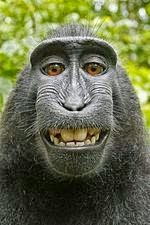
That poor macaque: 1709 Blog readers say there is no copyright in her selfie

Alas: not much too
laugh about
copyright-wise
Following the huge debate generated by *that* macaque selfie, on 14 August last our own blogmeister Jeremy launched a poll asking 1709 Blog readers about their copyright-related thoughts [but can there be thoughts which are non-copyright-related? This will probably be one of our next polls] regarding that photograph: is there copyright in it? If so, who owns it?

The poll ended yesterday and received 354 responses [thanks so much to all those who took the time to vote!].

The results are well summarised here, but for the sake of completeness, here's what our readers think:
  • "The monkey owns the copyright: she's the author, after all". This is true for just 24 readers (6%). 
  • "Only humans are authors so the photographer owns the copyright as the nearest relevant human", say 107 readers (30%).
  • "There is no copyright in works authored by animals: they are a gift to humanity which we can all use". This is not just the opinion of the US Copyright Office [see §306], but also of 187 readers (52%).
  • "The United Nations should set up a special agency to own and control uses of all non-human works like this", is the ambitious suggestion of 16 voters (4%).
  • "Whichever human gets to it first can keep it, just like any other bona vacantia" is the opinion of 20 readers (5%).

Monday, 1 September 2014

Bravo for the Bailiwick: Guernsey gets a Berne makeover

These are heady intellectual property days indeed for the Channel Islands -- or for at least one of them. The Bailiwick of Guernsey, replete with its own statutory image right, has now received something of a copyright makeover too. According to Berne Notification No. 267: Berne Convention for the Protection of Literary and Artistic Works:
Declaration by the United Kingdom of Great Britain and Northern Ireland

The Director General of the World Intellectual Property Organization (WIPO) presents his compliments to the Minister for Foreign Affairs and has the honor to refer to the deposit by the Government of the United Kingdom of Great Britain and Northern Ireland, on September 29, 1989, of its instrument of ratification of the Berne Convention for the Protection of Literary and Artistic Works of September 9, 1886, as revised at Paris on July 24, 1971, and amended on September 28, 1979 (see Berne Notification No. 125).

In this respect, the Director General has the honor to notify the deposit, on August 21, 2014, by the Government of the United Kingdom of Great Britain and Northern Ireland of the following declaration:
- "in accordance with Article 31 of the Convention as revised and amended, the Government of the United Kingdom of Great Britain and Northern Ireland wishes the United Kingdom’s ratification of the Convention be extended to the territory of the Bailiwick of Guernsey for whose international relations the United Kingdom is responsible."
The said declaration shall enter into force, with respect to the territory of the Bailiwick of Guernsey, on November 21, 2014.

Want to discuss how fabulous EU copyright is? Here's an event for you

Just back from summer holidays? 
With summer almost behind us (at least if you are based in the northern hemisphere), you certainly need something to cheer yourself up. 

Why not going for an afternoon of EU copyright discussion then?

On Wednesday, 24 September 2014 from 2 to 5 pm I am organising a new event entitled The fabulous world of EU copyright: what's (just) happened and what will be next. 

The focus of this seminar, which will be held somewhere in Central London, will be on recent judicial, policy and legislative activity in our beloved copyright world.

The past year alone has been in fact one of intense activity for EU copyright: the Court of Justice of the European Union (CJEU) has issued several copyright decisions and touched upon a number of topical issues, spanning from jurisdiction in online infringement cases to hyperlinking, from blocking injunctions to the notion of parody; the Commission has been busy consulting with interested stakeholders about possible reform interventions, while two draft key documents (the Impact Assessment and White Paper) have been leaked; the EU legislative has adopted a new directive on collective rights management.

This seminar will provide an opportunity to both discuss the above in detail, including the practical impact of EU developments on UK copyright, and highlight what issues might be addressed in the near future at the judicial, policy and legislative levels.  

Topics will include:
Not to worry:
it is still time to party
with EU copyright!
  • CJEU case law from the past year, including Case C-170/12 Pinckney, Case C-355/12 Nintendo, Case C-466/12 Svensson, Case C-351/12 OSA, Case C-314/12 Telekabel, Case C-435/12 ACI Adam, Case C-360/13 Meltwater, Case C-201/13 Deckmyn [to be decided the day after tomorrow!]. 
  • Impact of CJEU case law on UK copyright, eg with regard to the new parody exception.
  • Policy activity of the EU Commission, including the Public Consultation and the relevant Responses, and the leaked draft Impact Assessment and White Paper [with regard to the latter: who knows, perhaps by 24 September there will be also an actual White Paper].
  • Directive 2014/26/EU and the future of collective rights management.
  • What to expect next, especially at the CJEU and Commission levels. 

Places are limited (with some tickets available for full time students) so to provide everybody with the opportunity to discuss fully the present and future of EU copyright law and policy. 

For further details and registration, just click here!

UPDATE: following some requests, it will be possible to follow the event in live streaming, too! Details still here.