Minneapolis attorney Paul Hansmeier, who is most known to this blog for being associated with the Prenda Law 'trolling' saga, is facing suspension or disbarment. Minnesota's Office of Lawyers Professional Responsibility has now filed a petition with the state Supreme Court seeking disbarment or "otherwise appropriate discipline," citing Hansmeier's "unprofessional conduct." In 2013, Hansmeier, along with Chicago attorneys John Steele and Paul Duffy, filed multiple 'John Doe' copyright infringement claims, and faced scathing criticism from U.S. District Judge Otis Wright II, other federal judges and the US Court of Appeals for the 7th Circuit. Reports say Hansmeier remains an active civil litigation attorney. His solo practice -- a Minneapolis firm called Class Justice PLLC -- consists wholly of suing businesses that do not comply with disability access laws. Hansmeier's attorney, Eric Cooperstein, told reporters that they look forward to presenting their side of the case.
Rocky P. Ouprasith, who operated the website RockDizMusic.com website between May 2011 to October 2014 has been sentenced to three years in prison. Ouprasithhad admitted obtaining copies of copyrighted songs and albums from online sources and encouraging others to upload music to the website. Court documents say the market value of Ouprasith's illegally obtained material was more than $6 million. Ouprasith was sentenced to serve 36 months in prison in the US. Chief U.S. District Judge Rebecca Beach Smith of the Eastern District of Virginia also sentenced Ouprasith to serve two years of supervised release and was ordered to forfeit $50,851.05 and pay $48,288.62 in restitution. Brad Buckles, EVP of Anti-Piracy at RIAA, said: “We congratulate the Department of Justice and Homeland Security Investigations and thank them for their diligence and hard work to bring to justice those who cause millions of dollars in damage to music creators" adding “This sentence should send a message that operating a flagrantly illegal business that steals from others by engaging in criminal activity online has real consequences.” Indeed.
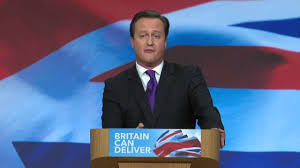
'YouTube sensation' CassetteBoy have been talking about copyright implications of the recent changes in United Kingdom coyright law and the new exception for parody at an event at Bournemouth University. The pair, whose 2014 'mash up' of David Cameron's speeches featured in their 'Conference Rap' has been seen by more than 6 milllion people, said: "We were infringing copyright for 20 years before the law changed, and never dreamt that our work would ever be legalised. The change in the law has had a huge impact on the work we've been able to do, and we're very happy to be able to talk about it and share our experiences." The event was organised by the Centre for Intellectual Property and Policy Management. Co-director for the Centre and associate professor in law, Dr Dinusha Mendis, told the Bournemouth Daily Echo : “The reforms to copyright law which came about last year were certainly seen as a welcome change and much needed in a digital world dominated by user-generated content and collaborative creators.
The World Intellectual Property Organization Deputy Director General responsible for copyright, Anne Leer, has decided to resign her post, citing personal reasons.

YouTube has set up a $1 million fund to support video creators who have been targeted in Digital Millennium Copyright Act (DMCA) takedowns. The company’s copyright legal director Fred von Lohmann confirmed the new funding in a blog post saying that that whilst YouTube will only provide its legal support “to a handful of videos,” who would be arguing 'fair use' for the posting, the company will cover the cost of any copyright lawsuits brought against its creators and adding “We’re doing this because we recognize that creators can be intimidated by the DMCA’s counter notification process, and the potential for litigation that comes with it,” Lohmann himself is a former Electronic Frontier Foundation (EFF) staffer who have previously argued that YouTube is not doing enough to protect the so-called “fair use” provision.
And TorrentFreak tells us that YouTube parent company Google is facing "a never-ending flood" of DMCA takedown requests from copyright holders, breaking records. The company currently processes a record breaking 1,500 links to "pirate" pages from its search results every minute, which is a 100% increase compared to last year.
 The Pirate Bay and several other locally significant 'pirate' sites have been placed on an advertising blacklist. The initiative is the result if a collaboration between anti-piracy group Rights Alliance and the national association of Swedish advertisers which has more than 600 member companies. As Torrent Freak says, this “follow the money” approach is gaining momentum worldwide and is largely centered on the companies financing pirate sites with their advertising spend.
Acording to daya presented by the Motion Picture Association at a conference focused on online law enforcement in Southampton last week, 504 web blocking injunctions have been issued in Europe: Italy tops the list of orders against internet service providers requiring them to block consumers access to copyright infringing websites, with 238 injunctions now issued. The UK comes second with 135 web-blocks now in place. More here.
Aurous, which MBW likened to the new Grooveshark last week and which was also called the 'Popcorn Time for music', and which we highlighted in the last CopyKat, has pulled its attempted crowdfunding on IndieGogo citing "unwanted attention"
Raanan Katz , the real estate mogul and owner of the Miami Heat basketball team, has learned about copyright law the hard (and expensive) way. Irina Chevaldina,an unhappy former tenant of Katz’s company, copied a rather unflattering photograph of Katz taken by photographer Seffi Magriso onto her blog which was highly critical of Katz. Unhappy about this, Katz acquired the photo’s copyright, and then claimed Chevaldina had infringed his newly acquired copyright. The District Court gave the claim short shrift - and applying the standard tests they found fair use, and in particular found: The nature of the use was non-commercial - Chevaldina used the photo to criticise, ridiule and satirize Katz; and because Katz acquired the photo to block any publication, Chevaldina's use could not have any effect on the marketplace: "Due to Katz’s attempt to utilize copyright as an instrument of censorship against unwanted criticism, there is no potential market for his work", concluding "“every reasonable factfinder would conclude the inclusion of the Photo in her blog posts constituted fair use.” Chevaldina was awarded her attorney's fees.

Shares of in Pandora Media, the Internet radio company have jumped by 5.3% after the firm received good news in an ongoing fight over royalties. The company said it "was pleased that the U.S. Registrar of Copyrights agreed that the company's pact with Merlin Network, a global rights agency for independent musicians, was admissible as a benchmark in royalty proceedings before the Copyright Royalty Board according to a Reuters report. In May The Federal Communications Commission gave Pandora Media permission to buy a small radio station in South Dakota in a move to obtain lower royalty rates. ASCAP's objection to the acquisition of the terrestrial radio station was finally put to rest by the FCC last week .The agency rejected the performance rights organization's request for reconsideration of its original ruling.
 The cabinet reshuffle in Canberra has seen the Australian Attorney-General George Brandis not only lose his position as the Minister of Arts, but his responsibilities for copyright and content classification - which have been moved from his office to that of newly appointed Communication Minister Mitch Fifield.
And finally, the he much delayed extradition hearing of the former management team of MegaUpload has begin in New Zealand, despite lawyers for MegaUpload founder Kim Dotcom and his former colleagues again trying to get their clients' extradition case pushed back, not least as court imposed restrictions on funds mean Dotcom and his colleagues cannot hire U.S based experts in U.S. copyright and criminal law.


