"Right away it will be seen that these claims bear some striking similarities to the claims in the litigation concerning the company Media CAT Ltd, the subject of my judgment Media CAT v Adams [2011] EWPCC 6. However I should also make clear that there may very well be important differences between the present cases and the Media CAT cases. At this stage I do not know".Mr Maricar, who has been receiving assistance from a legal advice clinic, is in need of some pro bono assistance, ideally from someone who has a clue about IP litigation. If you may be that person, can you please email Kingsley Egbuonu here and let him know.
In 1709 (or was it 1710?) the Statute of Anne created the first purpose-built copyright law. This blog, founded just 300 short and unextended years later, is dedicated to all things copyright, warts and all.
Wednesday, 12 October 2011
It may be another MediaCAT: can you help?
It seems that the notorious MediaCAT-type copyright infringement action (on which see earlier 1709 Blog posts here and here) may not yet be extinct. Golden Eye (International) Limited v Mohamed Maricar [2011] EWPCC 27 is an ongoing copyright infringement action before the Patents County Court, England and Wales, before Judge Colin Birss QC, for which a day in court has been scheduled for 9 December. According to Judge Birss QC,
Tuesday, 11 October 2011
Copyright term extension: here's the new Directive
Directive 2011/77/EU of the European Parliament and of the Council of 27 September 2011 amending Directive 2006/116/EC on the term of protection of copyright and certain related rights -- the Cliff Richard Directive -- has now been published on the website of the Official Journal of the European Union. You can read it in full here.
The main bit of the Directive reads like this:
"Article 1
Amendments to Directive 2006/116/EC [on the term of protection of copyright and certain related rights (codified version), formerly Directive 93/98]
Directive 2006/116/EC is hereby amended as follows:
(1) The following paragraph shall be added to Article 1:
‘7. The term of protection of a musical composition with words shall expire 70 years after the death of the last of the following persons to survive, whether or not those persons are designated as co-authors: the author of the lyrics and the composer of the musical composition, provided that both contributions were specifically created for the respective musical composition with words.’.
(2) Article 3 shall be amended as follows:
(a) in paragraph 1, the second sentence shall be replaced by the following:
‘However,
— if a fixation of the performance otherwise than in a phonogram is lawfully published or lawfully communicated to the public within this period, the rights shall expire 50 years from the date of the first such publication or the first such communication to the public, whichever is the earlier,
— if a fixation of the performance in a phonogram is lawfully published or lawfully communicated to the public within this period, the rights shall expire 70 years from the date of the first such publication or the first such communication to the public, whichever is the earlier.’;
(b) in the second and third sentences of paragraph 2, the number ‘50’ shall be replaced by ‘70’;
(c) the following paragraphs shall be inserted:
‘2a. If, 50 years after the phonogram was lawfully published or, failing such publication, 50 years after it was lawfully communicated to the public, the phonogram producer does not offer copies of the phonogram for sale in sufficient quantity or does not make it available to the public, by wire or wireless means, in such a way that members of the public may access it from a place and at a time individually chosen by them, the performer may terminate the contract by which the performer has transferred or assigned his rights in the fixation of his performance to a phonogram producer (hereinafter a “contract on transfer or assignment”). The right to terminate the contract on transfer or assignment may be exercised if the producer, within a year from the notification by the performer of his intention to terminate the contract on transfer or assignment pursuant to the previous sentence, fails to carry out both of the acts of exploitation referred to in that sentence. This right to terminate may not be waived by the performer. Where a phonogram contains the fixation of the performances of a plurality of performers, they may terminate their contracts on transfer or assignment in accordance with applicable national law. If the contract on transfer or assignment is terminated pursuant to this paragraph, the rights of the phonogram producer in the phonogram shall expire".
2b. Where a contract on transfer or assignment gives the performer a right to claim a non-recurring remuneration, the performer shall have the right to obtain an annual supplementary remuneration from the phonogram producer for each full year immediately following the 50th year after the phonogram was lawfully published or, failing such publication, the 50th year after it was lawfully communicated to the public. The right to obtain such annual supplementary remuneration may not be waived by the performer.
2c. The overall amount to be set aside by a phonogram producer for payment of the annual supplementary remuneration referred to in paragraph 2b shall correspond to 20 % of the revenue which the phonogram producer has derived, during the year preceding that for which the said remuneration is paid, from the reproduction, distribution and making available of the phonogram in question, following the 50th year after it was lawfully published or, failing such publication, the 50th year after it was lawfully communicated to the public. Member States shall ensure that phonogram producers are required on request to provide to performers who are entitled to the annual supplementary remuneration referred to in paragraph 2b any information which may be necessary in order to secure payment of that remuneration.
2d. Member States shall ensure that the right to obtain an annual supplementary remuneration as
referred to in paragraph 2b is administered by collecting societies.
2e. Where a performer is entitled to recurring payments, neither advance payments nor any
contractually defined deductions shall be deducted from the payments made to the performer following the 50th year after the phonogram was lawfully published or, failing such publication, the 50th year after it was lawfully communicated to the public.’.
(3) The following paragraphs shall be added to Article 10:
‘5. Article 3(1) to (2e) in the version thereof in force on 31 October 2011 shall apply to fixations of performances and phonograms in regard to which the performer and the phonogram producer are still protected, by virtue of those provisions in the version thereof in force on 30 October 2011, as at 1 November 2013 and to fixations of performances and phonograms which come into being after that date.
6. Article 1(7) shall apply to musical compositions with words of which at least the musical composition or the lyrics are protected in at least one Member State on 1 November 2013, and to musical compositions with words which come into being after that date. The first subparagraph of this paragraph shall be without prejudice to any acts of exploitation performed before 1 November 2013. Member States shall adopt the necessary provisions to protect, in particular, acquired rights of third parties.’.
(4) The following Article shall be inserted:
‘Article 10a
Transitional measures
1. In the absence of clear contractual indications to the contrary, a contract on transfer or assignment concluded before 1 November 2013 shall be deemed to continue to produce its effects beyond the moment at which, by virtue of Article 3(1) in the version thereof in force on 30 October 2011, the performer would no longer be protected.
2. Member States may provide that contracts on transfer or assignment which entitle a performer to recurring payments and which are concluded before 1 November 2013 can be modified following the 50th year after the phonogram was lawfully published or, failing such publication, the 50th year after it was lawfully communicated to the public.’.
Article 2
Transposition
1. Member States shall bring into force the laws, regulations and administrative provisions necessary to comply with this Directive by 1 November 2013 [i.e. in a very generous two years' time]. They shall forthwith inform the Commission thereof. When Member States adopt those measures, they shall contain a reference to this Directive or shall be accompanied by such a reference on the occasion of their official publication. The methods of making such reference shall be laid down by Member States.
2. Member States shall communicate to the Commission the text of the main provisions of national law which they adopt in the field covered by this Directive".Thanks, Chris Torrero, for being so swift with the link!
Sunday, 9 October 2011
Conversations on Copyright to start by revisiting transformative use
![]() |
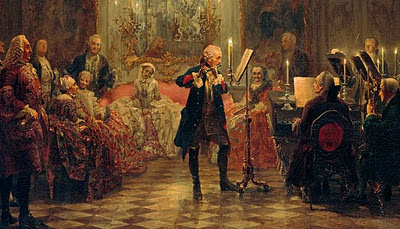
| Conversations on Copyright: an early use of "transformative use" as a chat-up line ... |
"Prof Jaszi is the Faculty Director of the Glushko-Samuelson Intellectual Property clinic at the Washington College of Law, American University. With Craig Joyce, Marshall Leaffer and Tyler Ochoa, he co-authors a standard copyright textbook, Copyright Law (Lexis, 7th ed., 2006). Alone and with Martha Woodmansee, he has written several articles on copyright history and theory; together they edited The Construction of Authorship, published by Duke University Press. In 1994, Professor Jaszi was a member of the Librarian of Congress’ Advisory Commission on Copyright Registration and Deposit, and in 1995 he was an organizer of the Digital Future Coalition. He is a Trustee of the Copyright Society of the U.S.A., and a member of the editorial board of its journal. In 2007, he received the American Library Association’s L. Ray Patterson Copyright Award, and in 2009 the Intellectual Property Section of the District of Columbia Bar honoured him as the year’s Champion of Intellectual Property.The event runs from 5.00pm to 7.00pm, but Professor Jaszi’s lecture doesn't start till 5.15pm. This means that if you arrive on time you can enjoy some conversations of your own first, To secure your place at this event please email Lilian Wright at lilian.wright@glasgow.ac.uk
Since 2005, Professor Jaszi has been working with Professor Patricia Aufderheide of the American University’s Center for Social Media on projects designed to promote the understanding of fair use by documentary filmmakers and other creators. In 2006-07, he led an interdisciplinary research team, funded by the Ford Foundation, that investigated the connections between intellectual law and the traditional arts in Indonesia. He currently serves on the board of ITVS, an important funder of documentary film projects".
Saturday, 8 October 2011
BT and Talk Talk win right to appeal DEA judgment

The BBC reports that British Telecom and Talk Talk have been given permission to appeal against the High Court's judgment against them over their challenge to the provisions of the Digital Economy Act. Under the provisions of the DEA, Internet Service Providerss would be compelled to send out warning letters, at the behest of rights holders such as film and record companies, warning about illegal downloading. The Act also allows for sanctions, known as "technical measures", which could include disconnection - although the exact nature of technical measures and the circumstances under which they could be imposed have not as yet been determined. The Guardian add this "The decision means that there will now be a hearing at the Court of Appeal – likely to be in the new year – which means that the government's plans to send thousands of warning letters to alleged illegal downloaders will probably be pushed back by about six months. The government had planned to start sending the letters in the first half of next year, but it will now have to hold off until the challenge by Britain's two largest ISPs is resolved."
Lord Justice Lewison granted BT and TalkTalk leave to appeal the DEA on four grounds. Both companies have raised concerns about how the legislation works alongside EU directives on technical standards, authorisation, e-commerce, as well as privacy and electronic communications.
http://www.guardian.co.uk/technology/2011/oct/07/bt-talktalk-digital-economy-act?newsfeed=true
Thursday, 6 October 2011
A conference -- and a book
![]() |
| "It's all good fun", said Maud, "but what the Glastonbury Festival really needs is something a bit more, well, muddy" |
Topics covered this year are as follows:
- Music copyright and policy: Too Much, Too Quickly?
- What’s New, What’s on the Way: A European Perspective
- Infringement - Has the Same Old Tune Changed?
- Business Models and the Music Industry: Successes and Failures
- Online Piracy and The Digital Economy Act 2010 - Where Are We Now?
- Collective Copyright Management in Court
- Music and Copyright in the Patents County Court
This is the second year that CLT has offered Music and Copyright. Last year's conference was a great success and, coincidentally, one of its star speakers -- the University of Glasgow's Dr Andreas Rahmatian -- has just published a very thought-provoking and stimulating critique of proprietary interests in the creative sector: it's Copyright and Creativity: the making of property rights in creative works, published by Edward Elgar Publishing.
What is this book about? According to the publicity material:
"Copyright and Creativity discusses the making of property out of creative works through the legal mechanism of copyright. It shows the manner in which the law translates a great variety of expressions of the human mind into its normative system and transforms them into the property right of copyright or droit d’auteur.This blogger read one of the chapters pre-publication and can confirm that it is a work of substantial scholarship which will be much appreciated by anyone who has a good understanding of legal systems, jurisprudential notions of property and the principles of copyright. It makes no concessions to lazy reading, sloppy thinking or common law sentiments. There's also an excellent 22-page bibliography which reflects not only the author's linguistic skills but the considerable breadth of his inquisitive instincts when chasing strands of thought. For a relatively small book, it's a big, big read.
This timely book examines the proprietary features of copyright, the inherent limitations of its powers, and its justification and relationship to the non-proprietary realm of the public domain. The latter part of the book deals with the ‘propertisation/commodification’ of human authors themselves through their works as alienable objects of property, the well-known ‘Romantic author’ critique as a sophisticated justification of that commodification, and at an international level, neo-feudal and neo-colonial developments as a result of this process.
This detailed study will appeal to undergraduate and postgraduate students, legal sociologists, and specialists in copyright, property theory, or legal theory and political philosophy with particular interest in property theory. Practitioners within bodies involved in legal policy, organisations concerned with law reform, European institutions, and international organisations will also find much to interest them in this book".
Bibliographical details: Hardback, xx + 314 pages. ISBN 978 1 84844 246 7. Price £79.95 (online price £71.96). 35% discount for 1709 Blog readers who purchase it by 31 October .£51.96 + carriage charges. Web page here.
Tuesday, 4 October 2011
Supreme Court confirms that a download is NOT a performance
The U.S. Supreme Court denied an appeal against an appellate court’s ruling that a traditional Internet download of sound recording does not constitute a public performance of the recorded musical work or the composition under federal copyright law. The Supreme Court denied the appeal without comment.The American Society of Composers, Authors and Publishers (ASCAP) had appealed to the Supreme Court saying the ruling has profound implications for the nation's music industry, costing its songwriter members tens of millions of dollars in potential royalties each year. The federal government opposed the appeal and U.S. Solicitor General Donald Verrilli said that the ruling by the appeals court and the court of first instance were correct and comported with common understanding and sound copyright policy.
ASCAP argued that digital downloads were also public performances for which the copyright owners must be compensated. But a federal judge and the appeals court rejected that argument.
At issue was the section of the US Copyright Act stating that to perform a work means to recite, render, play, dance or act it either directly or by means of any device or process - with the appeals court ruling that "music is neither recited, rendered, nor played when a recording (electronic or otherwise) is simply delivered to a potential listener" saying that the download it is simply considered a “reproduction” and thus not subject to performance royalties under the Act. A mechanical royalty for the delivery of a composition would be due for each download (though not payable to ASCAP).
ASCAP v. United States, No. 10-1337
ECJ upholds AG opinion; no copyright in football matches?

The ECJ judgment in QC Leisure is just in. You can read it in full here.
Press release pasted in full below - comment to follow.
"A system of licences for the broadcasting of football matches which grants broadcasters territorial exclusivity on a Member State basis and which prohibits television viewers from watching the broadcasts with a decoder card in other Member States is contrary to EU law
The screening in a pub of football-match broadcasts containing protected works requires the authorisation of the author of those works
The Football Association Premier League (‘the FAPL’) runs the Premier League, the leading professional football league competition in England, and markets the television broadcasting rights for Premier League matches. It grants broadcasters, under an open competitive tender procedure, an exclusive live broadcasting right for Premier League matches on a territorial basis. As the territorial basis generally corresponds to a single Member State, television viewers can watch only the matches transmitted by the broadcasters established in the Member State where they reside.
In order to protect such territorial exclusivity and to prevent the public from receiving broadcasts outside the relevant Member State, each broadcaster undertakes, in the licence agreement concluded with the FAPL, to encrypt its satellite signal and to transmit the signal, so encrypted, by satellite solely to subscribers in the territory which it has been awarded. Consequently, the licence agreement prohibits the broadcasters from supplying decoder cards to persons who wish to watch their broadcasts outside the Member State for which the licence is granted.
The disputes giving rise to the present cases concern attempts to circumvent that exclusivity. Certain pubs in the United Kingdom have begun to use foreign decoder cards, issued by a Greek broadcaster to subscribers resident in Greece, to access Premier League matches. The pubs buy a card and a decoder box from a dealer at prices lower than those of Sky, the holder of the broadcasting rights in the United Kingdom.
Since the FAPL takes the view that such activities undermine the exclusivity of the television broadcasting rights and the value of those rights, it is seeking to bring them to an end by means of legal proceedings. The first case (C-403/08) concerns a civil action brought by the FAPL against pubs that have screened Premier League matches by using Greek decoder cards and against the suppliers of such decoder cards to those pubs. The second case (C-429/08) has arisen from criminal proceedings against Karen Murphy, the landlady of a pub that screened Premier League matches using a Greek decoder card. In those two cases, the High Court of Justice of England and Wales has referred a number of questions concerning the interpretation of European Union law to the Court of Justice.
In its judgment delivered today, the Court of Justice holds that national legislation which prohibits the import, sale or use of foreign decoder cards is contrary to the freedom to provide services and cannot be justified either in light of the objective of protecting intellectual property rights or by the objective of encouraging the public to attend football stadiums.
So far as concerns the possibility of justifying that restriction in light of the objective of protecting intellectual property rights, the Court observes that the FAPL cannot claim copyright in the Premier League matches themselves, as those sporting events cannot be considered to be an author’s own intellectual creation and, therefore, to be ‘works’ for the purposes of copyright in the European Union.
Also, even if national law were to confer comparable protection upon sporting events – which would, in principle, be compatible with EU law – a prohibition on using foreign decoder cards would go beyond what is necessary to ensure appropriate remuneration for the holders of the rights concerned.
In this regard, the Court observes, first, that when calculating such appropriate remuneration it is possible to take account of the actual and potential audience both in the Member State of broadcast and in any other Member State where the broadcasts are received, and that it is thus not necessary to limit the free movement of services within the European Union. Second, payment by the television stations of a premium in order to ensure themselves absolute territorial exclusivity goes beyond what is necessary to ensure the right holders appropriate remuneration, because such a practice may result in artificial price differences between the partitioned national markets. Such partitioning and such an artificial price difference are irreconcilable with the fundamental aim of the Treaty, which is completion of the internal market.
For similar reasons, a system of exclusive licences is also contrary to European Union competition law if the licence agreements prohibit the supply of decoder cards to television viewers who wish to watch the broadcasts outside the Member State for which the licence is granted.
It is true that European Union competition law does not, in principle, preclude a right holder from granting to a sole licensee the exclusive right to broadcast protected subject-matter by satellite, during a specified period, from a single Member State of broadcast or from a number of Member States of broadcast. However, the licence agreements must not prohibit the broadcasters from effecting any cross-border provision of services that relates to the sporting events concerned, because such an agreement would enable each broadcaster to be granted absolute territorial exclusivity in the area covered by its licence, would therefore eliminate all competition between broadcasters in the field of those services and would thus partition the national markets in accordance with national borders.
Finally, as regards the questions asked concerning the interpretation of the Copyright Directive, the Court notes first of all that only the opening video sequence, the Premier League anthem, pre-recorded films showing highlights of recent Premier League matches and various graphics can be regarded as ‘works’ and are therefore protected by copyright. By contrast, the matches themselves are not works enjoying such protection.
That being so, the Court decides that transmission in a pub of the broadcasts containing those protected works, such as the opening video sequence or the Premier League anthem, constitutes a ‘communication to the public’ within the meaning of the copyright directive, for which the authorisation of the author of the works is necessary, because when a pub transmits those works to the customers present on the premises the works are transmitted to an additional public which was not considered by the authors when they authorised the broadcasting of their works".
Monday, 3 October 2011
Canada's Bill and the hacking of digital locks
On Saturday this weblog posted a short note, "Canada moves to modernise its copyright law". Canadian IP/IT lawyer and blogger Barry Sookman has now kindly drawn our attention to his own post today, "Some observations on Bill C-11: The Copyright Modernization Act", a lengthy and detailed analysis and commentary which you can read here. In clarifying what the Bill (which he tells us has been misreported by a number of news sources) actually says, he adds:
"The Bill does not prohibit hacking copy control digital locks for any purpose and there are multiple exceptions that permit circumventing access control TPMs. Moreover, Section 41.1(3) of the Bill expressly precludes an award of statutory damages against an individual who circumvents a TPM for his or her own private purposes. Accordingly, it is flat out wrong to claim that an individual could be liable for “thousands of dollars in legal damages” for hacking a TPM for personal purposes. Further, even if statutory damages did apply, which they do not, the Bill would limit such damages to a range, the maximum of which would be $5,000 for the most egregious case".Thanks, Barry!
Subscribe to:
Posts (Atom)


