Thursday, 15 December 2016

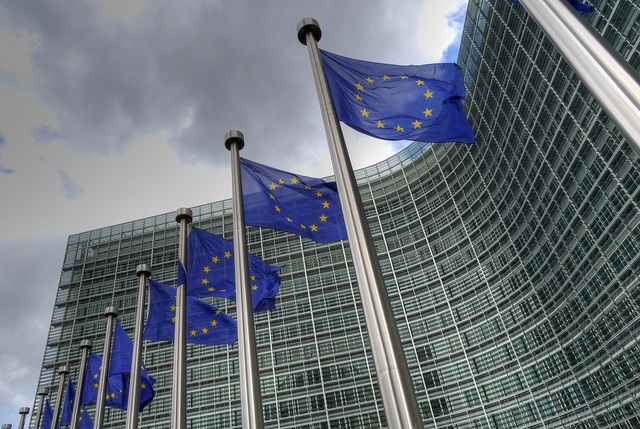
The Competence of the European Union in Copyright Lawmaking


The title of this posting was also the title of a seminar organised by the Institute of Advanced Legal Studies, University of London, on Thursday 15th December. The speaker was Dr Ana Ramalho who is Assistant Professor of Intellectual Property law at Maastricht Univeristy, and author of a book also bearing the same title. Dr Ramalho's book was reviewed by Nicola Searle on the IPKat website back in May.
As I often question both the Competence and the competence of the EU when it comes to copyright lawmaking, I hoped this seminar would provide some real answers. Unfortunately in her main presentation Dr Ramalho really only outlined the methodology she adopted in order to analyse the copyright aquis against the objectives which the EU had asserted in various preparatory papers that led to the 9 Directives which are largely concerned with copyright. To be fair to her, the original plan for the evening was also to have involved a contribution from Prof Lionel Bently who would, no doubt, have provided a contrasting look at the subject. Unfortunately he was unable to attend and so the remainder of the time was taken up with questions from the floor.
If one consults the EU's own website on the subject of competences, there is no mention of intellectual property per se, but from Dr Ramalho's presentation (and her book which is based on her PhD thesis) it quickly becomes clear that the bulk of the EU's competence in this area derives from its remit to establish and maintain a smooth running internal market. Versions of this phrase crop up in the recitals of virtually all of the 9 Directives which impinge on copyright, even where, as in the case of the Orphan Works Directive (pdf), it is hard to really see a direct impact of orphan works on the internal market in the context of the four freedoms. It is true that Article 118 of the Treaty on the Functioning of the EU (the Lisbon Treaty or TFEU) does confer a competence for the EU to " ... establish measures for the creation of European intellectual property rights to provide uniform protection of intellectual property rights throughout the Union ... " but Dr Ramalho thought this was a rather weak source of authority and certainly  [see first comment below] not one which imposed a mandatory duty on the EU.
Dr Ramalho's methodology and analysis of the subject of competence are complicated and detailed and so you will need to read her book to get the full flavour of what they entail (alternatively a shorter paper on the subject by the same author is available for download here). I'm not sure how much the analysis is of value in the real world (ie one inhabited by people other than politicians or academics) but, as was stated in the introduction to her presentation, her work is one of few academic works on this subject and is a valuable resource for that reason alone.
Without explicitly saying so, it would seem that one of Dr Ramalho's conclusions is that greater harmonisation of copyright law across the EU is desirable, although it is questionable whether at this stage there is the political will to delve into parochial matters (the tension between the common law Lockean view of copyright versus the droit d'auteur ethos for example) which still account for the many anomalies which can be found at the level of national copyright legislation. The low hanging fruit (copyright term, the relatively uncontentious Articles 2 to 4 of the Information Society Directive, for instance) having been taken, the Commission seems much more inclined to look at completely new areas such as the so-called value gap, rather than become too bogged down in fights over such things as harmonising the legislation over freedom of panorama, or moral rights, or as mentioned by Dr Ramalho, the contractual relationships between authors and the various intermediaries which make up much of the creative industries. This is rather like building a grand edifice before the foundations have been finished.
And regrettably Dr Ramalho could not be drawn into any detail about the role played by the CJEU in creating new law in this area, although she acknowledged that decisions such as Infopaq had had that effect. Maybe if Prof Bently had been present the discussion might have turned to Svensson and the court-made concept of a new public!

US music industry asks Trump for a fair deal (but less fair use!)

Nineteen US music industry organisations have come together deliver an open letter to President-elect Donald Trump (pictured left), pointing out that the likes of YouTube, Google and Facebook have thrived on 'free' music and what they term the "value grab", and that "sophisticated technology corporations can do better" at fighting piracy, and and shouldn't be able to hide behind legislation such as safe harbor - which has arguably allowed the technology and telecoms giants to grow and grow at the expense of the music industry.

Amongst those signing are the Recording Industry Association of America (RIAA), the American Society of Composers, Authors and Publishers (ASCAP), the American Association of Independent Music (A2IM) and the Songwriters Guild of America, who have asked Mr Trump to work with them on behalf of "American music – one of our nation's most valuable forms of art and intellectual property, and a powerful driver of high-quality U.S. jobs and exports" and group ask Trump to pass laws that would strengthen and enforce intellectual property laws in the industry's fight against "infringers" while seeking fair compensation from "search engines, user upload content platforms, hosting companies, and domain name registrars and registries" noting that "Strong protection for intellectual property rights will assure growth in both creativity and technology, benefiting the American economy as a whole."


The Honorable Donald J. Trump
President-Elect of the United States
Office of the Presidential Transition
1800 F Street, NW

Washington, DC


Dear Mr. President-Elect:

Congratulations on your election to serve as the 45th President of the United States. We look forward to working with you and your Administration on behalf of American music – one of our nation’s most valuable forms of art and intellectual property, and a powerful driver of high-quality U.S. jobs and exports.

We represent the music community of America. From songwriters, musicians and recording artists, to artist managers, music publishers and record companies. From producers and engineers, to performing rights organizations and genre organizations that promote everything from Americana and blues to classical, Christian, gospel and country to hip-hop, jazz, pop, rock, R&B, and everything in between.

So much of what you wrote in your platform this summer about intellectual property and private property rights resonated with many of us, including:

“Intellectual property is a driving force in today’s global economy of constant innovation. It is the wellspring of American economic growth and job creation. With the rise of the digital economy, it has become even more critical that we protect intellectual property rights and preserve freedom of contract rather than create regulatory barriers to creativity, growth, and innovation.”

And calling for strong action to enforce intellectual property laws against infringers.

As you meet tomorrow with some of the world’s major corporate technology executives, we wanted to highlight some points that are assuring the continued dynamism of music as one of America’s national treasures.

Music powers economic growth. Among other research, just this week a new study reported that music and other copyright industries in the U.S. contribute more than $1.2 trillion to our national economy and create jobs for more than 5.5 million Americans. Music is one of our nation’s great exports.

Music drives innovation. Consumers today enjoy more music in more formats than ever, as the music industry has aggressively embraced technology. The industry has worked with more than 360 digital services providing instant access to tens of millions of songs from any location in our country at the touch of a button.

Indeed, many of today’s popular technology platforms owe much of their growth and success to music. Music is responsible for the most-followed accounts on Facebook and Twitter, the most-watched videos on YouTube, and is one of the most popular draws for phones and other personal devices. These platforms thrive and grow by delivering the creative genius of songwriters and artists.

As partners, many in the technology and corporate community should be commended for doing their part to help value creators and their content. Some have developed systems to promote a healthy market for music and deter theft. However, much more needs to be done. Search engines, user upload content platforms, hosting companies, and domain name registrars and registries should follow others’ example to effectively stop theft and assure fair payment.

Further, there is a massive “value grab” as some of these corporations weaken intellectual property rights for America’s creators by exploiting legal loopholes never intended for them – perversely abusing U.S. law to underpay music creators, thus harming one of America’s economic and job engines.

Surely the world’s most sophisticated technology corporations can do better – by helping to prevent illegal access and paying fair market value for music with prices set by or based on the free market.
Strong protection for intellectual property rights will assure growth in both creativity and technology, benefiting the American economy as a whole.

We hope you will lead the effort to assure American creativity is encouraged, invested in, protected and fairly compensated in a manner that carries out the exclusive rights guaranteed in the Constitution to those who, with the genius of their mind, form the cultural identity of our great nation.

Sincerely,

American Association of Independent Music (A2IM)
American Federation of Musicians
American Society of Composers, Authors and Publishers (ASCAP)
Americana Music Association
Broadcast Music, Inc. (BMI)
Church Music Publishers’ Association (CMPA)
Christian Music Trade Association (CMTA)
Gospel Music Association
The Living Legends Foundation, Inc.
Music Managers Forum - U.S.
Nashville Songwriters’ Association International (NSAI)
National Music Publishers’ Association (NMPA)
The Recording Academy
Recording Industry Association of America (RIAA)
Rhythm & Blues Foundation
Screen Actors’ Guild-American Federation of Television and Radio Artists (SAG-AFTRA)
SESAC
The Songwriters Guild of America
SoundExchange

http://arstechnica.com/wp-content/uploads/2016/12/Letter-to-POTUSE-from-Music-Community-121316.pdf

Image by Gage Skidmore

Tuesday, 13 December 2016

Academic publishing houses lose appeal against Delhi University & photocopy shop

We are reposting this excellent article by Prashant Reddy (details at the end of the post) first published on the IPKat

Academic publishing houses, OUP and CUP have suffered yet another defeat in their litigation against Delhi University and a photocopy shop when a Division Bench of the Delhi High Court ruled against them in an appeal on December 9, 2016.

The crux of the lawsuit was whether the practice of photocopying copyrighted material and compiling them in course-packs was copyright infringement under Indian law. Given that universities and students have been photocopying copyrighted material for several years without any restrictions, the lawsuit had provoked an angry backlash from students and academics – both of whom then organised themselves into an association and intervened in the case. 

The first round of litigation ended in an emphatic defeat for the publishers when a Single Judge of the Delhi High Court dismissed the lawsuit on 16th September, without conducting a trial, on the grounds that photocopying for educational use was covered under Section 52(1)(i) of the Copyright Act, 1957. This provision states that the following acts shall not be considered as an infringement of copyright:
“the reproduction of any work—(i) by a teacher or a pupil in the course of instruction”.
The end goal of the publishers was to introduce a licensing system in Indian universities and charge them a royalty for photocopying copyrighted material that were compiled into course packs. 

The second round of litigation began with an appeal filed by the publishers before a Division Bench of the Delhi High Court. In its judgment the Division Bench set aside the judgment of the Single Judge and remanded the matter for trial on two issues. 

Quantitative and Qualitative restrictions on photocopying for the purpose of instruction

On the point of law however the Division Bench has broadly concurred with the Single Judge and has ruled that the language of Section 52(1)(i) does not impose any quantitative or qualitative restrictions when a work is being used for educational purposes. According to the Division Bench, the only issue to be determined while claiming this exception under Section 52(1)(i) is whether the “inclusion of the copyrighted work in the course-pack was justified by the purpose of the course-pack”. As per the court this was an issue to be determined at trial with expert evidence although as far as I know there was no factual dispute on this issue of the course packs being relevant to the course. It is not clear how a judge is going to decide the relevance of readings to a particular course since that’s the teacher’s prerogative – what one teacher may consider relevant another may not.

The second issue remanded for trial was whether the photocopying of entire textbooks was permissible since apart from the course-packs, the photocopying shop was also found to be photocopying entire textbooks. However given the court’s ruling that there are no quantitative restrictions on photocopying under Section 52(1)(i), the photocopying shop merely has to argue that the textbooks were being photocopied by students as a part of their course-work. 

Photocopying through an agent 

On the issue of whether Section 52(1)(i) allows for reproduction only in the classroom or whether it can be extended to photocopying through an external photocopier, the court ruled against the publishers. The publishers had tried arguing that the provision had to be confined to classroom teaching and external photocopying done through the Rameshwari photocopy shop would not be covered. The court however disagreed, stating that the core issue was reproduction of a work through photocopying. The issue of photocopying through an agency was thus deemed “irrelevant” by the court.

Liability of Delhi University for the actions of the photocopier shop

A secondary issue in this case was Delhi University’s liability for the acts of Rameshwari photocopying shop. Rather than dismiss this claim on the grounds that copyright infringement had not been established, the court dismissed this claim on the grounds that the University had no role to play since the academic council’s action was restricted to setting the course curriculum leaving it to the teachers to decide the reading material. It appears that the Court completely failed to understand the issue at hand because teachers are still employees of the University and the issue at question was one of knowledge regarding the actions of the photocopying shop i.e. was the University aware of the actions of the photocopy shop? 

8% of book or an entire work: How much exactly was being photocopied? 

One of the key problems with the publisher’s strategy in this case is that they presented the material being photocopied in terms of percentage of each book from which the material was taken. For example before the Single Judge they argued that quantities of copyrighted books copied ranged from 8% to 33%, while the Division Bench calculated that on average 8% had been copied from the 23 books that were at dispute. These calculations are incorrect because most of the 23 books in question were compilation of essays or articles by different authors on a similar theme. In such cases, each essay or article is counted as an individual copyrighted work under the law. Therefore when one essay or article is photocopied from one book for inclusion in a course-pack, an entire copyrighted work is being reproduced. 

Framing the argument in terms of percentage of a book weakened the case of the publishers especially when they were trying to argue that a ‘substantial part’ of each book was being photocopied. The phrase ‘substantial part’ is found in Section 14 of the Copyright Act which explains that a copyright authorises the owner of a copyright to control the use of a work or ‘substantial part’ of a work. 

Foreign precedent and Indian copyright law 

One of the many perils of being a former colony of the UK is our over-reliance on foreign legal precedent, often without understanding the context. The danger of this approach cannot be overstated in the context of copyright law. The Indian Copyright Act, 1957 is fundamentally different from most common law jurisdictions because of its heavy reliance on compulsory licensing after the Paris Revision of the Berne Convention in 1971 – these CL provisions are absent from the copyright legislation of most common law jurisdictions, especially developed countries like the US and UK.

Similarly on the issue of exceptions and limitations under Section 52, we have some provisions which use the phrase ‘fair dealing’ and several others omit the phrase ‘fair dealing’ giving them the flavour of complete exceptions. Given these unique characteristics of Indian copyright law it is necessary for the Indian bar and bench to be careful while using foreign terminology or case law. Unfortunately that is not the case in India. 

The IP bar, especially at the Delhi High Court, indiscriminately cites foreign precedent in IP cases resulting in an IP jurisprudence that is a train-wreck. For example, some judges of the Delhi High Court have granted punitive damages in copyright and trademark cases by citing utterly irrelevant American judgments, when neither Indian copyright or trademark law provide for punitive damages.    
In the current photocopying case, the publishers apparently tried arguing in favour of reading in the American style four-factor ‘fair use’ analysis in order to convince the court to limit the quantity that could be copied under Section 52(1)(i). This is a surprising line of argument because copyright owners are usually terrified of the American style fair use analysis due to the high degree of discretion left to judges. Clearly the publishers arguing this case thought otherwise and maybe Indian lawmakers should consider incorporating such an exception into the Indian statute. 

Although the Division Bench rejected the publisher’s argument on the American style fair use exception and also expressed caution against relying on foreign case law, it thought nothing of devoting reams of pages in its judgment towards discussing an old copyright case from New Zealand because the provision at dispute in that case was similar (not identical) to Section 52(1)(i). However the context of New Zealand’s copyright law is entirely different from Indian copyright law since the former has never had the equivalent of Section 32A of the Indian Copyright Act – which is a wide ranging compulsory licensing provision introduced in 1983 for the purpose of making available copyrighted works for educational purposes at a reasonable price. 

As I argued in an earlier post on IPKat, a wide reading of Section 52(1)(i) results in providing a carte blanche for reproducing copyrighted material for educational uses and would render Section 32A redundant – the principles of statutory interpretation require judges to reconcile apparent conflicts in a harmonious manner. It is impermissible to interpret one provision in a manner which renders another provision of the same law redundant. For whatever reasons, the publishers did not take this line of argument before the Delhi High Court. 

The writer is co-author of a forthcoming book to be published by OUP – Create, Copy, Disrupt: India’s Intellectual Property Dilemmas (with Sumathi Chandrashekaran) and is a Research Associate at ARCIALA, School of Law, Singapore Management University.   

Saturday, 10 December 2016

The CEIPI Publishes An Opinion on the EU Commission’s Copyright Reform Proposal


The Center for International Intellectual Property Studies (CEIPI) which is part of my alma mater, the University of Strasbourg, published on November 28, 2016 its Opinion on the European Commission’s copyright reform proposal (the Opinion). The Opinion, which was written by Professor Christophe Geiger, PhD candidate Oleksandr Bulayenko, and Senior Researcher Giancarlo Frosio, focuses on the introduction of neighbouring rights for press publishers in EU law. It argues that the recent Directive proposal would make it harder to reach the Digital Single market. The authors of the Opinion conclude by recommending “to refrain from advancing this legislative action.” The CEIPI sent its Opinion to the EU Commission on December 2.


What Are the Commission’s Proposals re Neighbouring Rignts??

The Commission adopted in May 2015 its Digital Single Market Strategy, which goal is to reduce the differences between the copyright regimes of the Member States and to allow works to be widely accessed online across the EU.

Following a consultation on the role of publishers in the copyright value chain, which the European Commission had launched on March 23, 2016, the Commission introduced on September 14, 2016 its Proposal for a Directive of the European Parliament and of the Council on Copyright in the Digital Single Market (the Proposal).

The Opinion concentrates on the neighboring rights that the Proposal would give to publishers. The Impact Assessment on the modernization of EU copyright rules, also published by the Commission on September 14, provides a helpful overview of the rights provided to the publishers in various member States (see Part 3/3, p. 189-192).

The Opinion cites the example of the German law on Authors’ and Neighbouring Rights which gives some exclusive neighbouring rights to press publishers, such as making available for commercial purpose any publications and parts thereof. This, as noted in the Opinion, takes “only individual words or the smallest text excerpts” out of the scope of the law (Opinion p. 6). A Spanish law provides press publishers the right to be remunerated for making available online non-significant fragments of their publications. The Opinion notes that the legality of this right has been questioned, for example here (Opinion p. 6).

The Opinion notes that they are tensions between press publishers and online service providers in several countries, Belgium, France and Italy. Such tensions have been addressed by signing agreements, not by enacting new laws. For instance, a financial fund financed by Google has been put in place in France. It is intended to provide financial support for projects of publishers of political and general information sites. A similar Italian fund is also financed by Google, which also finances the EU Digital News Initiative (Opinion p. 7).

Article 11(1) of the Proposal directs Member States to provide publishers of press publications with the neighboring rights provided for in Article 2 and Article 3(2) of Directive 2001/29/EC for the digital use of their press publications. This means that the “publisher’s neignboring rights would encompass the right of reproduction and making available to the public for digital uses” (Opinion p. 11).

Under Article 12 of the Proposal, Member States could provide a publisher, to whom an author has transferred or licensed a right, the right to share the compensation for the uses of the work made under an exception or limitation to the transferred or licensed right.

The authors of the Opinion note that the combination of these two articles may give publishers two revenue streams, if both copyright and neighboring rights have the same exceptions and limitations: the publishers would receive a revenue both as holders of the neighbouring rights  and as transferees or licensees of authors’rights (Opinion p. 12).

The Proposal Would Make it Harder to Reach the Digital Single Market

Member States have each their own copyright and neighbouring rights laws. The Opinion states that:

“the Impact Assessment fails to explain how an additional layer of 28 national rights might promote the Digital Single Market. Rather the proposal poses further challenges related to the territoriality of rights and their fragmentation” (Opinion p. 8).

This is a concern, especially since the Proposal “does not pre-empt the re-emergence of new national legislation extending rights of press publishers. Member States still remain free to create other neighbouring rights in their national law” (Opinion p. 8). The authors point out that our own Eleonora Rosati has questioned the lawfulness under EU law of allowing Member States to create neighbouring rights.

The authors of the Opinion are also concerned by the facts that the exceptions and limitations to authors’ rights, which are currently applicable to those rights in the Member States, may not be equally applied to the neighbouring rights. For instance, national laws could regulate differently when and if such exceptions can be overridden by contract or technical protection measures (Opinion p. 9).

Allowing Member States to each create their own neighboring rights and even expanding them could fragmentize the Digital Single Market, and thus hurt it. The authors of the Opinion advocate instead for the enactment of a unitary right (Opinion p. 9).

Proposal Would Reduce the Economic Value of Creative Works

The authors of the Opinion argue that if more economic actors can share the revenues of creative activities, the authors may lose part of their revenue, as the financial pie is not getting bigger even while more guests are invited to partake. The “pie theory” explains that “new royalties stemming from neighbouring rights are going to be distributed at the expense of those receiving royalties from authors rights today” (Opinion p. 11, citing this recent article by Joseph Pomianowski).


There is a chance that publishers from other sectors than the press, such as music publishers, would request neighbouring rights, which could further reduce authors’revenue (Opinion p. 9). Granting rights to more actors “will decrease the economic value of each rights” (Opinion p. 10). However, the “pie” is not getting bigger (Opinion p. 12).

No Causal Link Between Publishers’ Revenues and Granting them Neighbouring Rights

Publishers generally hold the economic rights of authors, under various legal schemes, such as contract or work for hire (Opinion p. 13). Not every publisher believes it must have neighboring rights, and some have even argued that they are not necessary. Even if publishers are sometimes called into court if a work has been infringed, granting them neighbouring rights “will not change the burden of proof for proving ownership of authors’ rights in court” (Opinion p. 14). For these reasons, there is no “causal link supporting the introduction of new rights” (Opinion p. 14).

The Scope of Protection is Overbroad

The authors of the Opinion are troubled by the fact that the Proposal “does not limit the subject matter to works and uses presently protected by authors’ rights.” Even unoriginal works could be protected by neighbouring rights (Opinion p. 16). Works from the public domain could be protected as well, and works published under a public copyright licenses could be restricted by such rights (Opinion p. 17). Restricting the public’s use of works in the public domain “imping[es] greatly on freedom of expression and democratization.” This would have repercussions on the ability of people of lesser means to disseminate their speech and would instead favor big corporations (Opinion p.17). The Authors also argue that the proposed term of protection, 20 years, is “way too long” (Opinion p. 18). 

The authors conclude that introducing neighbouring rights for press publishers will create new EU copyright issues instead of solving them.

The Opinion is a very interesting read, and this is both my impartial blogger opinion and my hometown partial Alsatian opinion.


European Commission Image is courtesy of Flickr user Kevin White under a CC BY-NC-ND 2.0 license.

Friday, 9 December 2016

CJEU GS Media decision finds its first application in Germany

GS Media finds its first application
in Germany
A few weeks ago on The IPKat I reported that a Swedish court has been likely the first in Europe to apply the September decision of the Court of Justice of the European Union (CJEU) in GS Media [here and here].

After Sweden, it is now the turn of Germany, as 1709 Blog friend Mirko Brüß (Rasch) explains.

Here's what Mirko writes:

"UFOs, creative commons and hyperlinks!

The Regional Court of Hamburg (Landgericht) has just provided us with a decision that appears to be the first ruling from Germany to apply the GS Media principles [Case no. 310 O 402/16]

The court came to the conclusion that (commercial) linking to unauthorized content is infringing, even when it is quite hard to determine the infringing nature of the work that is being linked to.

The claimant in this case is a photographer who took a picture of a public building. He then uploaded this picture on the “Wikimedia Commons” platform, using a Creative Commons (CC) licence (note that the judgment does not expressly indicate which license was used). This picture was then modified by an unknown third person, who added UFOs to the picture that appear to be flying above the building. This new picture was uploaded by the third person on his website.

The defendant operates a website where he publishes and sells educational material that he creates. In the imprint of this website, the defendant posted a sentence that included the word “UFO”, which linked to the modified “UFO-Version” of the claimant’s picture. Clicking on the word “UFO” a new browser window in which the “UFO-Version” of the picture was shown would be opened. 

The photographer deemed that this constituted an infringing use of his work and brought the defendant to court.

The Hamburg court noted at the outset that the original picture is a protected work within the German Law on Copyright and Related Rights (UrhG) and that the claimant owned the rights to this work, including the right of communication to the public within § 19a UrhG. The court then moved directly to the GS Media decision and quoted paras 32-43 and paras 47-53, stating that the principles set therein would be applicable to the case at hand.

Since linking to content that has been published with the rightholder’s consent is not an infringement per se and the original picture was available on the “Wikimedia Commons” platform with the consent of the claimant (under a CC licence), the court looked into the question of whether the derived version was lsawful or not. 

It determined that the “UFO-Version” of the picture that was hosted on the third party’s website was infringing. 

While the CC licence used by the claimant allowed for modifications of the original work and also the making available of such modified works, the terms of the licence also required attribution and an indication that the work had been modified. Since the “UFO-Version” was hosted on the third party’s website without the necessary attribution and indication of modification, the CC licence was forfeited. Thus, the court found that the use of the modified picture on the third party’s website was infringing. 

From there, the court looked into the requirements of “infringing linking” after the GS Media decision. It interpreted GS Media in a way that hyperlinking is only potentially infringing in case of culpable conduct or negligence. This is derived from the CJEU’s requirement that the person using the link did not know, or could not reasonably have known, about the unlicensed nature of the publication of the work in question. If the link is provided for financial gain, such knowledge must be presumed.

... here it is rather about
the pursuit of profit
Here, the court wondered whether indeed the specific link must be provided “for financial gain” or if it is sufficient that the link is provided on a website that is operated for financial gain. Looking at the CJEU’s reasons, the Hamburg court went for the latter option [note by Eleonora: this addresses a point left ambiguous by GS Media]. The judges understood the criterion in a broad sense, because the CJEU used this to distinguish between cases where the person using the link needs to verify if the work he links to is infringing or not and other cases, where no such checks are necessary. It appears that the court believed that it is reasonable to ask any operator of a “commercial website” to check the legality of the works he links to.

The defendant stated that he was aware of the GS Media decision, but did not agree with it arguing that its application would infringe his fundamental rights. This argument did not persuade the judges, since the CJEU decision did provide the necessary balance of all the affected fundamental rights. Thus, the defendant was unable to rebut the presumption of knowledge that the content linked to was unlawful.

Finding that the defendant operated a website for commercial gain on which he had linked to a work that was not (in this form) published with the rightholder’s consent, the court concluded in the sense that the defendant had infringed the claimant’s right of communication to the public."

Thanks so much Mirko for this thorough review of yet another interesting decision from Germany!

Tuesday, 6 December 2016

Wild Boys Sometimes Lose It: Duran Duran fail to reclaim their US copyright

This post is by David Brophy writing on the IPKat

A few weeks after his eighteenth birthday, Duran Duran co-founder Nick Rhodes signed a music publishing agreement assigning his existing and future copyrights to a publisher, as did the other band members. None of them was aged more than 21 at the time.


Had they taken advice from a copyright lawyer at the time (1980), one can imagine a conversation along the following lines:

Duran Duran: Please please tell me now: Is there something I should know? Is there something I should say?
 Lawyer: You mean, is there something you should say, before your copyright goes away?
Duran Duran: That's funny, for a lawyer. But we didn't agree to pay you a hundred quid for your songwriting talents. What do you think about this contract?
Nick Rhodes, co-founder of Duran Duran (photo: Eva RinaldiCC BY_SA 2.0)
Lawyer: Well, you're agreeing here to assign all of your existing and future copyrights worldwide for their full term. That's pretty standard stuff. But there's a new Copyright Act in the United States, just two years old, and it will allow you to reclaim your copyright from the publishers after 35 years. Which is nice, though it does rather assume anyone will be buying your records in 2015 (no offence). 
Duran Duran: Eh thanks. What exactly should we do? 
Lawyer: When the 35 year mark is approaching, you'll simply serve a notice on the publisher. Tell them you want your copyright back, lodge a copy of the Notice with the Copyright Office and hey presto it will revert to you. So in your contract, you could include a clause stating that the assignment is without prejudice to your rights under section 203 of the US Copyright Act to terminate the assignment of the US copyright. 
Duran Duran: They'll never go for it. Have you seen our haircuts? They won't change their standard contract for us. And if they don't sign us up, nobody will.
Lawyer: Well don't worry about it. When Congress was passing the law, they had unequal relationships like that in mind. Here's what they say in House Report 94–1476 introducing the law: 
"A provision of this sort is needed because of the unequal bargaining position of authors, resulting in part from the impossibility of determining a work’s value until it has been exploited ... Instead of being automatic, as is theoretically the case under the present renewal provision, the termination of a transfer or license under section 203 would require the serving of an advance notice within specified time limits and under specified conditions. However, although affirmative action is needed to effect a termination, the right to take this action cannot be waived in advance or contracted away."  
And it's right here in section 203(5): "Termination of the grant [of a transfer or licence of copyright] may be effected notwithstanding any agreement to the contrary, including an agreement to make a will or to make any future grant." So basically, it doesn't matter what you sign now. You can't contract away the right to claim the copyright back when the time comes. 
Duran Duran: Cool. Now about your fees. We've been thinking. Maybe we can cut you in on the royalties for our first three albums instead? 
Lawyer: Thank you, but my understanding is that you have never even been inside a recording studio. I think I'd prefer the hundred pounds we agreed on. In cash please, boys.
Factual background

This conversation never happened of course, and indeed we don't know if the band took any advice or knew about the possibility of claiming the US copyright back in the future. What we do know is the band members signed a music publishing agreement assigning the "entire copyrights" in their existing and future works for the "full term" of the copyrights, to Gloucester Place Music Ltd (then called Tritec Music Ltd, and now part of the Sony/ATV group).


In 2014, with the 35 year point approaching, band members Nick Rhodes, Simon Le Bon, John Taylor, Andy Taylor and Roger Taylor, duly served Notices under section 203 in respect of 37 songs, including most of their best-known works like "Girls on Film", "Rio", "Hungry Like The Wolf" and "Is There Something I Should Know?".


Gloucester Place Music responded by seeking a determination from the English High Court that such Notices, if not retracted, would represent a breach of contract, i.e. by improperly terminating an assignmentwhich the band members had no right to do.


Effect of contractual agreement


Mr Justice Arnold has decided in favour of the publisher and against the band members. The case is Gloucester Place Music Ltd v Le Bon & Ors [2016] EWHC 3091 (Ch). His decision is based on the fact that the contract was made under English law, and on its proper interpretation the parties are assumed to have been aware when entering into the Agreements, at least in general terms, of the effect of section 203, and to have nevertheless contracted away the US copyright for its full term. He summarised at [44]:


"The language of clause 3(a) is wide and general. Particularly when read together with clause 4, I consider that what the language would have conveyed to a reasonable person having the relevant background knowledge was that the parties' intention was that the "entire copyrights" in the Compositions should vest, and remain vested, in the Claimant for the "full term" of the copyrights. That implicitly precludes the Group Members from exercising rights under US law which have the result that the Claimant's ownership of the copyrights is brought to an end prior to their expiry. Moreover, this interpretation is reinforced by clause 6(b), by which the Group Members promised not to transfer any interest in the copyrights to any other person, which I read in context as meaning any person other than the Claimant. (This is clearer from the wording of clause 6(b) of the Service Company Music Publishing Agreements, which refers to "any person, firm or corporation other than Tritec".) In effect, what the Group Members have done by exercising their rights of termination is to transfer the reversionary interest in the copyrights from the Claimant to themselves."
The reference to "a reasonable person having the relevant background knowledge" was held to include some knowledge of US copyright law. In other words, someone signing a contract such as this was assumed to know, at least in general terms, about the possibility of reclaiming copyright in the US.

Insofar as it goes, this may be a pretty unremarkable interpretation of a contract under English law. But what about the fact that under US law the right to terminate the assignment cannot be contracted away?


Conflict with US law


Arnold J. noted the US law aspect but pointed to the fact that Article 7(1) of the Rome Convention, which provides for effect to be given to the mandatory rules of the law of another country with which the situation has a close connection, does not have the force of law in the United Kingdom by virtue of section 2(2) of the Contracts (Applicable Law) Act 1990.


The issues of US law were treated as questions of fact. No expert evidence had been provided as to the meaning of the US statute, nor had permission been sought to do so. So efffectively they were never brought properly before the court.


The solicitor for the defendants (i.e. the band members and their service companies) had made a statement in his witness statement that:


"As a consequence of Section 203, a US Court would not allow a claim for damages for breach of a contractual agreement because the statutory termination right supersedes any contractual right. This applies whether that contract was governed under English or US law." 
The defendants argued that this was admissible evidence, and was unchallenged. Arnold J had little time for this argument. It was no more than a statement of case with which they could expect the other side to take issue at trial. It was a statement made by an English solicitor who, he noted, claimed no expertise in US law, with no basis given and no citation of any decided cases supporting the assertion, and nor did it address whether the position was the same in the period 1980-1983.

To the IPKat it appears that this failure to introduce evidence as to US law represented a major oversight by the defendants, or at least a very risky assumption that the point was self-evident. This Kat cannot tell whether the outcome would have changed if the judge had evidence that the position as stated by the solicitor was both correct as to the law now and at the relevant time, but the failure to adduce this evidence undermined the defendants' reliance on the US law point.


Nick Rhodes, commenting on the judgment, said "We are shocked that English contract law is being used to overturn artists’ rights in another territory. If left untested, this judgment sets a very bad precedent for all songwriters of our era and so we are deciding how properly to proceed."


The IPKat would like to see the case appealed, and would prefer to see artists free to exercise their statutory rights, but is less convinced that the decision sets a "very bad precedent". A future litigant who introduces strong expert evidence on the US law point would at the minimum ensure that the court would have to consider afresh the conflict of laws question.


Rhodes also commented that the band members signed the agreement as "unsuspecting teenagers ... when we knew no better". This bears out the "unequal relationship" rationale for section 203, and is another reason why it would be extremely interesting to see the US law point properly considered.


Arnold J's decision serves a salutory purpose, reminding anyone signing a publishing agreement that the court will interpret the agreement from the viewpoint of a reasonable person with the necessary background information, including some knowledge of copyright law. This makes obtaining good advice all the more critical when the bargaining position is unequal. 


Posted By David Brophy to The IPKat on 12/06/2016