Showing posts with label Twitter. Show all posts

Tuesday, 17 July 2018

The COPYKAT: "Faceswap" for the Statue of Liberty, trade wars, and embezzlement

It's been an exciting few weeks for copyright around the world. This CopyKat takes a look at three "David vs Goliath" disputes, in which parties (respectively) include the US Government, Fifa and an 8 year-old boy, and one of Africa's largest telecoms companies. Also in the news: YouTube rolls out its anticipated Copyright Match tool, copyright collecting societies in Kenya continue to struggle with accountability, and China launches an IPR awareness campaign.


Lady Liberty "faceswap" will cost the United States Postal Service $3.5M

Between 2011 and 2014, the United States Postal Service (USPS) used an image of the Statue of Liberty for its Forever Stamp series (a type of First Class postage stamp). Unfortunately for the USPS, the image they chose was not actually of the famous statue that towers over New York Harbor designed by French sculptor Frédéric Auguste Bartholdi in 1886. Instead, the image they chose was actually Robert S. Davidson's replica Statue of Liberty which looks over the New York-New York Hotel & Casino in Las Vegas. Davidson sued for – and won – nearly $3.5 (£2.6) million in royalties, plus interest.

As reported by Artsy, an eagle eyed stamp collector identified the mix-up in 2011. The USPS was made aware of the goof in 2013, but went on to print another 1.13 billion stamps with the replica’s image. For context, the judgement cited that the USPS made some $70 million in revenue resulting from sales of this Lady Liberty stamp alone.

The statues in NYC (left) and Las Vegas (right).


The Post Office purchased the photo used on the stamp from the image service Getty for $1,500 (£1,140). However, the license only covered the rights to Getty's photograph of the statue — and not the statue itself. The USPS neglected to seek permission from Davidson, likely because they simply assumed what it was using was in the public domain.

In its defense, the USPS asserted that the statue is a replica and accordingly, contains no truly original work. If true, this would render Davidson’s copyright claim invalid, and the government would owe nothing for its use of the replica statue’s image.

Davidson was therefore tasked with proving that his copyright in the statue was valid, which under US law requires only a showing of “some minimal degree of creativity” and that it was his own “independent creation” of those original elements.

By way of reminder, the focus is on the expression of an original idea and not the idea itself (Oracle Am., Inc. v. Google Inc., 2014). As such, Davidson’s statue did not need to be wholly original, but rather a “new and original expression” of some previous work or idea – namely, the famous Bartholdi statue.

Davidson argued in his lawsuit that he wasn't trying to create a replica of the original, but rather to craft a fresher, more feminine version. As was later quoted in the ruling, he “envisioned his mother-in-law as inspiration ... and viewed her picture every night during the construction of the face of the statue."

The Court examined photographs and was satisfied that Davidson “succeeded in making the statue his own creation, particularly the face.  A comparison of the two faces unmistakably shows that they are different.” Ultimately, the Court agreed that Davidson’s statue “evokes a softer and more feminine appeal.  The eyes are different, the jaw line is less massive and the whole face is more rounded. “

The USPS’s defense that the stamp fell under the fair use exemption was rejected by the Court. As the USPS printed “billions of copies and selling them to the public as part of a business enterprise … so overwhelmingly favors a finding of infringement that no fair use can be found.”


In case you’re wondering how the USPS – which is a US government agency – can be successfully sued for copyright infringement, 28 U.S.C. § 1498(b) waives sovereign immunity for claims of copyright infringement against the federal government “for the recovery of his reasonable and entire compensation as damages for such infringement.”


YouTube's "Copyright Match" offers enhanced screening technology (for a selected few)

As the CopyKat mentioned last month, YouTube has been beta testing a feature called Copyright Match, designed to find re-uploads of content on other channels. The tool will point content uploaders (creators) to instances where their work has been stolen, and allow them to request that YouTube delete the guilty party’s video on the grounds of copyright infringement. Last week, YouTube channels with more than 100,000 subscribers received access to the new tool.

When a creator uploads a video to the Copyright Match tool for review, other video uploads on different channels will then be scanned to detect similar content has been uploaded. Fabio Magagna, the product manager for the Copyright Match Tool, explained on the YouTube Creators blog that “when there is a match, it will appear in the ‘matches’ tab in the tool and you can decide what to do next”.

Although YouTube already offers an automated copyright-flagging system called Content ID, Copyright Match is different because it’s designed especially for YouTube creators who have problems with unauthorized re-uploads.

By YouTube’s own admission, the Copyright Match is “a powerful feature,” which will be monitored closely in its early stages. Magagna noted that the software will continue to expand over the coming months, “with the long-term goal of making it available to every creator in the YouTube Partner program.” The company insists that takedown requests will be reviewed to make sure they comply with YouTube’s copyright policies.

The introduction of Copyright Match comes at a time of intense debate surrounding user-uploaded content on social media platforms such as YouTube. In particular, The European Parliament recently voted to reject a new copyright directive.  At the heart of controversy for many was Article 13, a section of the proposed directive that focuses on the use of copyrighted material uploaded by users.

And yes, in case you’re wondering: new YouTube video reviews of Copyright Match are already available to watch.


Fifa takes down celebratory World Cup dance video: is this a step too far?

The World Cup is the largest single sporting event on Earth, with nearly half the world’s population tuning in. With England’s (somewhat surprisingly!) good run up to the Semi-Finals, fans of the Three Lions were especially eager to show their support.

When England’s captain Harry Kane scored a goal against Tunisia, a mother filmed her 7-year old boy celebrating the moment. She subsequently posted the short 5-second clip of him dancing in the living room on Twitter. However, FIFA - Football's ruling body - ordered the clip removed from Twitter. FIFA claimed the clip infringed their copyright, as viewers could see blurred football action from the family's TV in the background.

Speaking to the Mirror, Kathryn Conn explained that her son “is a massive Spurs fan and he absolutely worships Harry Kane so he started dancing around in the living room. All you can see on the TV in the background is a really blurry replay of the goal. It's hardly visible."
England captain Harry Kane won the Golden Boot for most goals scored in the tournament.


According to Conn’s tweet on the subject, the copyright notice from Twitter was brought under the US Digital Millennium Copyright Act. Several sources including iNews report that Fifa issued a letter stating: “On behalf of Fifa, we hereby assert that your making available and/or promoting of the protected content on your platform is not authorised by Fifa, its agent nor the law and that your activities in this regard serve as a serious infringement of Fifa’s exclusive rights.”

By way of background, Fifa reports on its finances page that around 95% of its revenues come from the sale of television broadcasting, marketing, and licensing rights related to the FIFA World Cup.
From the 2014 World Cup in Brazil, Fifa hauled in $4.8 billion in revenue, which turned a $2.6 billion profit for the association (which is then re-invested into development projects). Compared to ticket sales earned $527 million, Fifa’s broadcast revenue topped $2.43 billion, while sponsorship fees brought in $1.6 billion.

To date, Fifa’s intellectual property portfolio contains 14,000 trade mark registrations, about 300 registered designs, and 150 copyright registrations covering 157 jurisdictions overall. As is made clear in its 30-plus pages of official guidance on brand protection, Fifa has millions of reasons to be protective of its intellectual property.

Fifa engages in active surveillance and brand protection, which includes court proceedings to halt an infringing situation and seek financial compensation for any damages suffered. However, sharing official content belonging to FIFA by fans without any commercial benefit is expressly permitted, as per the branding guidance. Curious by nature, this CopyKat’s therefore wonders why an account with barely 200 followers was singled out in this instance.


Did Safaricom steal Songa app from former employee?

Web developer Evans Gikunda has sued Radio Africa and Safaricom, accusing them of infringing his copyright when they launched a mobile app, Songa by Safaricom several weeks ago. Safaricom is a leading mobile network operator in Kenya, and its Songa music app enables subscribers “to get their local and international songs in one place and keep them consistently entertained and updated.”
Gikunda claims that he created the music app between 2012 and 2016. In 2013, while working as a developer at Radio Africa, the Chief Executive at Radio Africa Patrick Quarcoo “persuaded Gikunda to partner with him to ensure that the product gets to market” (IPKenya). According to Gikunda, Quarcoo proposed that that once Radio Africa’s Board of Directors sanctioned its participation in his app, they would share out the ownership of the app. The ownership was proposed at Radio Africa – 40%; Gikunda- 30%; Quarcoo- 20%; and the remaining 10% to a strategic partner.
In 2016 Gikunda left Radio Africa (under less than favourable circumstances) and says that after his resignation, Quarcoo sold the app to Safaricom without consulting him. Gikunda had not been “involved in the process at any stage, and neither has he benefited from it; despite the claims he created the platform” (innova8tiv). As with most intellectual property disputes arising between (former) employees and their bosses, establishing the ownership of the copyright subsisting in the Songa app lies at the heart of this matter. Gikunda is asking the High Court to compel Safaricom and Radio Africa to reveal how much money they have made from ‘Songa by Safaricom’ and is seeking damages.

To be successful in his claim, Gikunda will need to establish that he created his app outside the scope of his employment with Radio Africa, and that the app currently used by Safaricom is a reproduction or adaptation of his original app. To complicate matters, Gikunda’s app has been known under a variety of other names, including ‘NakedGroove’, ‘The Platform’, ‘The Music Platform’ and ‘RAMP’ – the latter being an abbreviation of either ‘Radio Africa Music Player’. Additionally, neither Gikunda nor Radio Africa obtained copyright registration, which further confuses the evidence.
This calls into question whether or not Gikunda made the program as part of his employment with Radio Africa (see also the work-for-hire doctrine), as well as the enforceability of moral rights for digital works. To achieve an injunction against the companies, which Gikunda is also seeking, he will need to prove that damages alone are an insufficient remedy.


Copyright woes continue for Kenyan collecting societies

Kenya's High Court

Elsewhere in Kenya, the complicated saga of the copyright collecting societies continues. Most recently, the High Court (pictured) ordered the Music Copyright Society of Kenya (MCSK) to account for the money it has collected as royalties and licence fees since January 1st 2017. Justices RN Sitati, DS Majanja and TW Cherere have given the MSCK thirty days to comply with the order (The Star).
In 2015, it was noted that MCSK's disbursement of royalties to artists has been decreasing for several years. The Kenya Copyright Board (KECOBO), the government organisation tasked with enforcing copyright in Kenya, established a minimum standard of 70% of revenue to be given back to artists. However, MCSK’s disbursement rates to musicians has fallen to 58.9% of collected revenue. Although MCSK was once Kenya’s largest royalty-collecting body, KECOBO revoked its licence in February of 2017 when MCSK failed to provide audited financial statements. The move came amidst allegations from local artistes over embezzlement of their royalties by MSCK.

As the CopyKat discovered back in May, Kenya is not the only African country to be experiencing problems with copyright collecting societies: power struggles with the Copyright Society of Nigeria (COSON) and the Nigerian Copyright Commission continue. 


Copyright awareness comes to China 

China has launched a four-month campaign to protect the intellectual property rights: you can visit the campaign website here. First announced in September, the campaign is seen by many as an attempt to alleviate major concerns among foreign investors, including those in the United States. 

China’s lack of strong intellectual property rights protection measures “frequently draw complaints from foreign investors and have been a long-standing focus of attention at annual talks with the US and Europe” (South China Morning Post). The Trump administration has officially launched a probe into alleged Chinese intellectual property theft which, amongst other things, led the United States to impose punitive tariffs on Chinese products. 

The campaign, which will last for at least four months, has been jointly launched by the National Copyright Administration of China (NCAC), the Cyberspace Administration, the Ministry of Industry and Information Technology and the Ministry of Public Security.

It will target key areas including unauthorized republication of news and plagiarism on social media, unauthorized broadcasting of copyrighted content on short video sharing apps, and copyright violations by setting up overseas servers. The campaign will also push service providers to enhance their internal supervision systems (China Daily).

Chairman Mao Memorial Hall in Beijing
In 2012, an article on Forbes argued that “IP protection will always be an uphill struggle in China and for companies doing business there,” as individual rights – including intellectual property rights – may be in some instances at odds with traditional Chinese society. 

A more recent Reuters article from April of this year explained that while Chinese IP protection laws are comparable to U.S. and European legal standards, the weakness lies in implementation, with high levels of bureaucracy. In particular, “court decisions applying on a provincial level rather than nationally, and judges often having different interpretations of the laws.”

In China, many consider that “even the education system works against an embrace of IP protection,” and until IP infringement is seen as an immediate threat to economic success, “few will really care.” Will a potential trade war be the impetus China needs to close the gap?

Monday, 4 January 2016

Publish and Be Damned


On two recent occasions I have been stunned by the ignorance of some BBC journalists about the law of copyright with regard to using other people's photographs without permission. Perhaps I shouldn't be. Even a leading guide on legal matters for journalists, McNae's Essential Law for Journalists, devotes several paragraphs to the public interest and ethical considerations of taking and using pictures from social media sites belonging to people who inadvertently find themselves in the news spotlight, but can only manage a single sentence elsewhere in the book to highlight the fact that using photographs is excluded from the fair dealing exception for news reporting, as shown in section 30(2) CDPA.

Clearly the majority of average users of social media will not think twice about the copyright implications of re-tweeting or otherwise re-publishing other people's comments or photographs, and in the main this is probably something which can be tolerated when no-one is being deprived of any actual financial benefit which might otherwise be due to them as authors. But this situation changes once the professional media become involved. Arguably this is where the Berne three step test becomes engaged. 
Too often the large news organisations rely on the ignorance of ordinary members of the public about their rights. By way of contrast however, try re-publishing anything substantial (say more than 11 words) from a news website without a licence and you can expect a bill from the Newspaper Licensing Agency. If nothing else, the Leveson Inquiry has taught us that many journalists operate to different ethical standards, and are not immune from gross hypocrisy. And it's not as if there isn't plenty of caselaw on the subject. The cases of Painer and Daniel Morel come to mind.

So what of the two stories which have prompted this article? The first concerns that dress which some people perceived as white and gold while others saw as black and blue. The background to the story, for those unfamiliar with it, can be found here on the BBC News website. My particular complaint lies in a Radio4 programme made by the BBC's Mukul Devichand (available here on iplayer for anyone located in the UK) in which he specifically defended his publication of the picture by reference to the fair dealing exception for news reporting, which of course does not apply to photographs. The authors of the original photograph have now engaged a solicitor to try and get recompense from those dozens of news outlets which have exploited this famous image for free.

The second instance involves another BBC journalist, Roland Hughes, and his story about his part in helping another 'lifted' photograph to go viral without the author's permission. You can read the story here, but while the photographer's moral right to be credited gets a mention, don't expect to see anything about infringement of copyright.

These are just two fairly recent examples of the particular problem faced by photographers, both amateur and professional. While the music and film industries have the resources to go after the infringers of their products, and get the offending websites blocked, individual photographers can face enormous difficulties in extracting fees from large news organisations who should know better, when they engage in similar piracy. Here's one example of the press's publish-and-take-the-consequences attitude. In addition to claiming that time pressures prevented the picture desk from getting permission, I have come across another national newspaper company whose picture desk defiantly refused to pay for using pictures it had taken from an urbex website, claiming that that they were allowed to do this by virtue section 30(1) because they were criticising the activities of Urbex explorers, notwithstanding the fact that s 30(1) only permits criticism of a copyright work, not an activity or the behaviour of the author. Their second line of ‘defence’ was that since the person who took the photographs must have been trespassing at the time he took them, this voided any copyright in the photographs. On another occasion, the Daily Mail hilariously accredited the 'Internet' as the copyright owner of a picture they had used without permission.

Having established that section 30(2) does not provide an exception for photographs to be used in connection with news reporting, and that section 30(1) will rarely justify using an image unless the purpose is just to criticise it, can there ever be a defence to using an image found on the internet, without permission? When it comes to text, the new exception (subsection 1ZA) added to section 30 for quotation would certainly seem to strengthen the hand of those who re-tweet comments, although invariably this 'defence' would fail because the original source has not been credited. But it is far from clear whether the quotation exception could apply to a photograph which was used other than in connection with news reporting; if it could, then where does that leave s30(2)? I suggest that quoting a photograph (or indeed any artistic work) might be possible for the purposes of something akin to criticism or review, but it will continue to remain outside the fair dealing rules for news reporting.
Then there is the reliance on a purported licence, such as creative commons, which may accompany an image found on, say, Flickr. Since copyright infringement is a matter of strict liability, a newspaper or other publisher would be unable to use as its defence the honest belief that the image had been made available under an open licence when in fact it had not, irrespective of the grounds for holding this view. And of course there’s the ultimate in ignorance of the law, believing that because something is placed on the internet, it is “in the public domain” and thus free for anyone to re-use, as advanced by the Irish Mail on Sunday.
“The photograph of Mrs Schregardus which we published to accompany this article came from Page 36 of this online magazine http://issuu.com/connors-bevalot/docs/publication1_-destress. Like Mrs Schregardus’s blog, it had been put into the public domain by Mrs Schregardus herself.”
So that just leaves the public interest defence, apparently established, but not defined, by section 171(3) CDPA.
(3) Nothing in this Part affects any rule of law preventing or restricting the enforcement of copyright, on grounds of public interest or otherwise.
I say ‘apparently’ because the courts are not so sure that this establishes a defence at all. But first we need to find out what ‘public interest’ may mean in relation to copyright infringement.
It is significant that while there is quite a bit of caselaw on the subject of a public interest defence for copyright infringement, much is very old, but it generally falls into two separate groupings. Professor William Cornish put it quite elegantly when he said there are two kinds of policy grounds: those involving "the policy against legal protection" for instance because the copyright work itself is obscene, immoral or deceptive, and the "policy favouring dissemination" such as bringing a disreputable matter, for which the work is evidence, to public attention.

We need not dwell on it here, but the whole matter is made more complicated by a debate about whether s 171(3) complies with the Infosoc Directive, specifically Article 5(3)(e):
"Members States may provide for exceptions or limitations to the rights provide for in Articles 2 and 3 in the following cases: [...] use for the purpose of public security or to ensure the proper performance or reporting of administrative, parliamentary or judicial proceedings."
and the waters are muddied still further by the suggestion that both the InfoSoc Directive and the CDPA might be trumped by Article 10 (the right to freedom of expression) of the European Convention on Human Rights. Fortunately this particular matter has been considered and largely rejected by the UK courts (see Ashdown v Telegraph Group Ltd [2001] EWHC/Ch/25 )
As mentioned, there is quite a bit of case law on the public interest issue, and those interested in it may find it helpful to read a summary by Jacob J (as he then was) in his first instance hearing of Hyde Park Residence Ltd v Yelland case (see paras [24-34]). I will return to this case in a moment and look at how the Court of Appeal dealt with the issue, but first I want to look at a few examples of what Prof Cornish calls the policy against protection, that is to say, declining to enforce copyright where the work itself is disreputable. The first case is Glyn v Weston Feature Films Ltd which concerned public morality as the work was largely about an adulterous affair. For those who would like to read an in-depth analysis of the case, I can recommend an article in the European Intellectual Property Review written by someone called Jeremy Phillips (who ever he is). The next case I want to consider is Lion Laboratories v Evans, where the defendant published a report belonging to the claimant which showed that the public and the courts were being deceived about the accuracy of an intoximeter device made by the claimants. The case also involved breach of confidence, but on appeal the court held that it should not enforce copyright in this instance because to do so would deny members of the public who might have been convicted on the strength of faulty readings given by the intoximeter, the opportunity to challenge their convictions. The last case in this category I want to look at is the Spycatcher trial (HM Attorney General v Guardian Newspapers). The matter went all the way to the House of Lords and was about whether the injunction preventing publication in the UK of Peter Wright’s book Spycatcher should be lifted. By way of background, the book had been written in contravention of the duty of confidence owed by Peter Wright to his previous employers, the Crown, and the Law Lords held that the copyright in the book should not be enforced, since to do so would be to condone the breaking of the Official Secrets Act. 

Aside from these sorts of case where the claimant's own misbehaviour results in the public interest being used to decline to enforce copyright, the only significant pre-CDPA case involving the public interest of 'policy favouring dissemination' was Beloff v Pressdram Ltd [1973] FSR 33. It needs to be borne in mind that this case was tried under the 1956 Copyright Act which did not contain a reference to the public interest. In this case Nora Beloff, a political columnist on the Observer, sued Private Eye magazine for infringing copyright by publishing a private internal memo she had written to other members of the Observer's staff, about various manoeuvrings within the then Conservative government. The case failed, not least because Ms Beloff did not have standing to bring the claim as she was not the owner of the copyright, which vested in her employer. Notwithstanding this finding the court went on to say that the public interest defence advanced by Private Eye also failed, albeit the judge's remarks were deemed to be obiter and have since been criticised.

So now it is time to return to the Hyde Park Residence case. This and the Ashdown case, also mentioned earlier, are the only significant cases in recent times to look at the public interest where the policy issue was one favouring dissemination. Readers may recall that this case was about the publication in the Sun newspaper of still images taken from CCTV installed at Mohamed Al Fayed's Paris residence known as Villa Windsor, several months after the death of Princess Diana in August 1997. It is worth pointing out that at first instance the court was dealing with an application to dismiss the claim against the Sun and was not a trial on the actual issue of copyright infringement. Jacob J found that the Sun did have reasonable chance of success with its defence based on fair dealing (section 30(1)) and public interest. This decision went to the Court of Appeal where, in theory, they were only looking at the judge's application of the law in arriving at his conclusions, and they also were not addressing the underlying infringement claim itself. Nonetheless, Mance and Aldous LJJ (with whom Stuart-Smith LJ agreed) made some significant negative remarks about, inter alia, the public interest defence. The CA also looked at the Section 30(2) defence put forward by the Sun but that is not relevant here. The gist of the case was that some months after the fatal crash, Mr Al Fayed senior arranged to have published a book entitled Death of a Princess containing his version of events, which it was alleged, grossly falsified significant facts including what had happened at Villa Windsor in the hours before the death of Princess Diana and Dodi Fayed. The Sun's case was that it was necessary to publish the still images to establish the truth about the timings of the couple's arrival and departure from the Villa, which showed Mr Al Fayed’s assertions to be false, and this then undermined many of his other fanciful claims in the book. Hyde Park Residence Ltd (representing, in effect Mr Al Fayed) countered that the Sun's sole purpose in its articles was to attack Mr Al Fayed personally, and this was in no way justified in the public interest. In the event the Court of Appeal unanimously allowed the appeal and rejected the Sun’s fair dealing and the public interest defences. The matter of infringement of copyright never went to full trial.

And so as things stand today, it is fair to say, the courts do not think much of the public interest defence when it comes to matters which may interest the public, but which involve little or no public policy. However I doubt that it will stop people's Facebook and Twitter accounts from continuing to be raided for the amusement and titillation of the newspaper-buying public.

Friday, 31 July 2015

The CopyKat's Baked Cake Social

It seems Twitter is removing 'recycled' jokes which have been re-tweeted. First spotted by @PlagiarismBad, The Verge tell us that at least five separate tweets have been deleted by Twitter for copying this joke: "saw someone spill their high end juice cleanse all over the sidewalk and now I know god is on my side"  Olga Lexell, who, according to her Twitter bio, is a freelance writer in LA, appears to be the first person to publish the joke on Twitter. In a tweet she confirmed that she did file a request to have the tweet that copied her 'joke' removed. Eleonora has posted her thoughts on the IPKat here

The MPAA has sued MovieTube, owners of some two-dozen-plus streaming sites, alleging copyright infringement, according to a story from The Hollywood Reporter. MPAA members 20th Century Fox, Columbia Pictures, Disney, Universal, and Warner Bros. jointly filed a lawsuit in New York against a number of MovieTube-owned streaming sites. The group is asserting both copyright and trademark claims, and the complaint is filed against both John and Jane Does, and XYZ Corporations, as the MPAA is uncertain of exactly whom they are suing. In total, the MPAA lawsuit names 29 websites. The complaint asserts that the defendants are both willingly and openly breaking copyright laws, and that they are deliberately hiding their identities while doing so. More here.


This from Arts Technica: It's been two years since filmmakers making a documentary about the song "Happy Birthday" filed a lawsuit claiming that the song shouldn't be under copyright. Now, they have filed what they say is "proverbial smoking-gun evidence" that should cause the judge to rule in their favour. The "smoking gun" is a 1922 version of the "Happy Birthday" lyrics, predating Warner/Chappell's 1935 copyright by thirteen years and making the work public domain. That 1922 songbook, along with other versions located through the plaintiffs' investigations, "conclusively prove that any copyright that may have existed for the song itself... expired decades ago."   The original melody for "Happy Birthday to You" was composed in the late 1800s by school teacher Mildred Hill in Louisville, Kentucky. The song was a variation on a composition called "Good Morning to All," with lyrics penned by her sister, Patty Hill. Warner/Chappell said that there was no evidence that the Hills' successor - their sister Jessica Hill - had given up the sisters' copyright to the work. More here on the 1709 Blog and more on Above The Law here.

Librarians across Australia are cooking up a campaign to change the country's copyright laws. However, they want people to bake biscuits and cakes rather than picket Parliament. Social media users are being encouraged to cook a vintage recipe and share a photo of the result. The aim is to encourage the Attorney-General to look at changing the law so that unpublished (orphan) works are treated the same way as published ones. Executive director of the Australian Library and Information Association (ALIA) Sue McKerracher said the nation had "some rather strange copyright laws".

Tuesday, 14 January 2014

The CopyKat - no beef with the hookah ruling

The Ninth Circuit of Appeals in the US has ruled that the shape of a hookah pipe’s water base container is not entitled to copyright protection. In Inhale, Inc. v. Starbuzz Tobacco, Inc. U.S. District Court Judge Otis Wright had ruled that the shape of the water container was a “useful article” and not protectable.  Under 17 U.S.C. § 101, a useful article is only entitled to copyright protection if it “incorporates … sculptural features that can be identified separately from, and are capable of existing independently of, the utilitarian aspects of the container.” Finding that “the shape of a container is not independent of the container’s utilitarian function-to hold the contents within its shape-because the shape accomplishes the function,” the Ninth Circuit agreed.


LaBeouf - transforming
copyright onTwitter?
You may have missed it, you may know all about this - but Shia LaBeouf (he of “Transformers” fame) is a tangle of self inflicted copyright woes: It all started when his short film “HowardCantour.com” premiered at the Cannes International Film Festival and this was accused of being based on a comic book written by Daniel Clowes.  the author told BuzzFeed that he imagery and dialogue in the 11-minute movie were incredibly similar to a personal story he had written called Justin M Damiano. Clowes had not been credited, and his legal team issued a cease & desist letter. Initially LaBeouf issued a series of apologetic tweets aimed at Clowes, in which he admitted his guilt and red-cheeked embarrassment: unfortunately LaBeouf was using apologetic quotes he had plagiarised from others - including an apology by UK Deputy Prime Minister Nick Clegg, comment copied from a Gucci Mane Twitter apology - and then BuzzFeed spotted that some of LaBeouf's tweeted messages closely resembled a post written four years ago on Yahoo! Answers by a user named Lili. On New Year's Eve he posted a string of messages addressing the criticism he has received since being accused of plagiarism and then had to add "I am sorry for all the plagiarized tweets, they all were unintelligent, ambiguous and needlessly hurtful". To this he added "2014 Resolution - I need to work on being a less controversial tweeter".  In a 'final' (was this meant to be departing?) Tweet, LaBeouf said 'In light of the recent attacks against my artistic integrity, I am retiring from all public life". All was quiet for a few hours and then it seems the 27 year old actor hired a team of skywriters [at a cost of $25,000 according to TMZ] to take to the skies above Los Angeles and spell out the words 'Stop Creating' in giant letters.  In order to make sure no one missed out on his latest bizarre stunt he was back on Twitter to post a picture of the skywriting and captioned it with the hastag 'stopcreating'.

Canadian domain registrar easyDNS has published a National Arbitration Forum ruling which seems to be in it's favour in relation to the domains that were blocked by Public Domain Registry in response to a letter from the City Of London Police's Intellectual Property Crime Unit which we first reported here and then here. Having heard that the IP Crime Unit is not a court of law, the arbitrator charged with the task of considering this dispute has ruled in favour of easyDNS saying "No court order has been issued which would prohibit the transfer of the domain names at issue from the Registrar Of Record to the Gaining Registrar. Therefore, there is nothing in the Transfer Policy which authorises the Registrar Of Record to refuse to transfer the domain names". The ruling continues: "To permit a Registrar Of Record to withhold the transfer of a domain based on the suspicion of a law enforcement agency, without the intervention of a judicial body, opens the possibility for abuse by agencies far less reputable than the City of London Police".

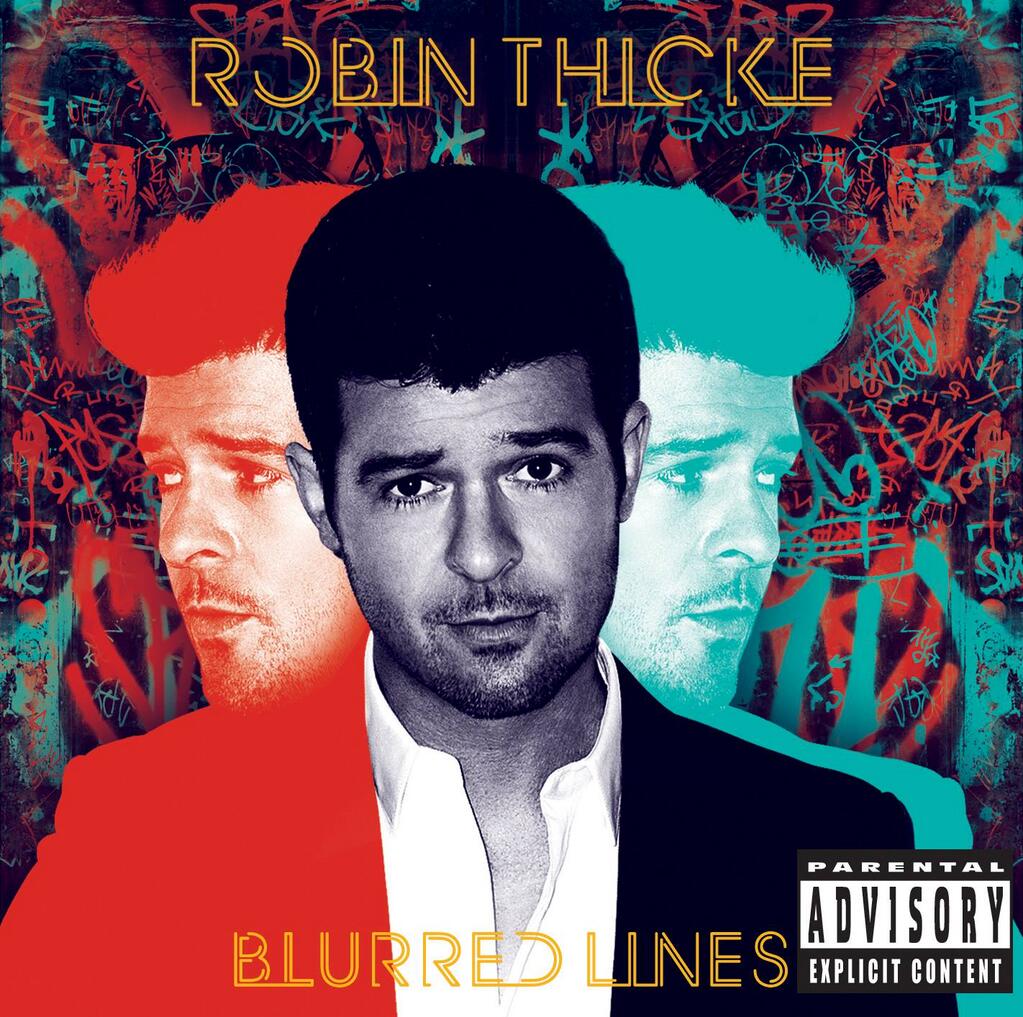
Sony/ATV has settled its legal dispute with the Gaye family over claims that Robin Thicke's 'Blurred Lines' borrowed from Gaye's "Got To Give It Up- as CMU Daily say: "possibly because Marvin Gaye's children raised issues around the music publisher's market dominance in their litigation. That's not something Sony/ATV chiefs want debated too much in the public arena, they having successfully speeded through their mega-acquisition of the EMI publishing". 


one of Daniel Morel's images
Lawyers representing Getty Images and AFP have filed a motion in U.S. District Court in New York seeking to overturn the verdict that resulted in the award of $1.22 million to Haitian photographer Daniel Morel for infringing eight of Morel’s images in the aftermath of his country’s devastating 2010 earthquake. The agencies are asking the also asking the courts to order a new trial, arguing that their conduct was “careless” but not wilfully malicious, thus shielding them from the maximum penalty. They argue the most Morel is entitled to is a single DMCA penalty of $2,500 and actual damages of $200,000 — although legal fees in the case are estimated to have reached northwards of $8 million.
.
The CopyKat would like to wish all of the 1709 readers a happy January 14th from Groningen in the Netherlands, where he is at the EuroSonic music conference and festival, just in time for the European Festival Awards tomorrow night. Happy days! 

Friday, 3 April 2009

Copyright and the Twitterverse: watch this space

"Copyright And Libel Questions Hit The Twitterverse" is the title of this short-but-sweet piece on Techdirt. Writes veteran group blogger Mike Masnick (with links added by 1709 for the benefit of non-US readers):
"A few weeks back, someone pointed me to a Twitter message where one Twitter user was (jokingly) accusing another of copyright infringement for repeating a message. While the situation was amusing, you knew it was only a matter of time until the question became more serious. Mark Cuban put up a blog post this weekend asking about the copyrightability of Twitter messages. His question revolves around whether or not it's copyright infringement for someone like ESPN to repeat what he wrote in a Twitter message, which he would have preferred they didn't quote.

I'm certainly no copyright lawyer -- so perhaps some could chime in in the comments -- but it seems like there would be two issues here. The first is whether or not the content is covered by copyright -- and, for most messages the answer would probably be yes (there would need to be some sort of creative element to the messages to make that happen, so a simple "hi" or "thanks" or whatever might not cut it). But, the more important question then would be whether or not ESPN could quote the Twitter message. And, there, the answer is almost certainly, yes, they could, just as they could quote something you wrote in a blog post".

If you ran down the fair use test, it's difficult to see how a public Twitter message wouldn't easily qualify. If it's ESPN, it would be for commercial use, but not in the sense of "selling" the content. Plus, it's for journalistic reasons, which is often given a fair use pass. Second is the nature of the copyrighted work -- which, being a Twitter message, I would guess most judges would assume it's expected that the content can (or even should) be repeated. The third test fails, since it would be the entire message, but the fourth test, on "the effect on the potential market for the copyrighted work" would almost certainly point towards fair use. Since the four factors aren't weighted equally, I think the only clear "failure" is the weakest and least important of the four tests (how much of the content was used -- which is way outweighed by the other factors), it's hard to see how this isn't a perfectly reasonable use".
After running through the parameters of the fair use test and mentioning similar problems faced in terms of defamation, Mike concludes: "... we're in for a long series of lawsuits and legal threats having to do with Twitter message".   I think this is a distinct possibility and have already commissioned an article for the Journal of Intellectual Property Law & Practice on this very subject.  1709 will be watching closely for developments.