Showing posts with label baidu. Show all posts

Thursday, 28 April 2016

The CopyKat.

The decade-long legal fight over Google’s effort to create a digital library of millions of books is finally over ... the Supreme Court has declined to hear a challenge from authors who had argued that the tech giant’s project was ‘brazen violation of copyright law’ — effectively ending the legal battle in Google’s favour. Without the Supreme Court taking up the case, a federal appeals court ruling from October, which found that the book-scanning program fell under the umbrella of fair use, will stand.” More here

Getty Images has filed a formal antitrust complaint with the European Commission about Google image search. According to reports, Getty claims that high-resolution Google image search results, “scraped” from its customers’ sites, are “siphoning traffic and profits from photographers.” Getty argues, because people can view high-quality versions of its photos in image search results, consumers don’t need to click through to publisher sites, and traffic and revenues are suffering accordingly.  Google and Getty Images had been in talks for some time over Getty’s concerns about high-resolution images in Google image search. However, Getty says that Google ultimately told the company to “accept the new image format or opt out of image search”. According to the Financial Times Getty said it felt coerced by Google’s market power into participating. Something it clearly now regrets doing. More here.

According to the IFPI's head of anti-piracy, calling illegal downloading "piracy" has become somewhat of a negative. The problem is that the concept of piracy is, well, just too 'romantic' and exciting. What's not to like about Pirates of the Caribbean (well quite a lot BUT the franchise got Keef in it). Graeme Grant is suggesting a name change -  but can simply changing the name of something really change the beast?

Baroness Lucy Neville-Rolfe, the UK's Minister for Intellectual Property, has confirmed that the British government is leaning toward the idea of increasing the sentence for online piracy,  to bring it into line with that for physical infringement: “Last year the government consulted on increasing the maximum term to 10 years. We received over a thousand responses, which have played a significant part in helping to shape the discussion” she said.

Baidu, China’s largest search engine, has signed a formal agreement with the United Kingdom concerning the platform's management of intellectual property rights. There are no clear details of the new Memorandum of Understanding about IP infringement, except that the signing was witnessed by Dr Ros Lynch, Director of Copyright and Enforcement at the UK Intellectual Property Office, who is currently in China to promote UK-China copyright week, and that also attending were Baidu president Ya-Qin Zhang and Robin Li, Baidu’s co-founder, chairman and CEO of Baidu. The MoU concerns ‘Copyright Protection Collaboration’. We await details in the next IPO China newsletter! More here!

Republican Congressman Bob Goodlatte has put out a statement and a video claiming that the House Judiciary Committee which he chairs is finally ready to start releasing some proposals in response to US Copyright Registrar Maria Pallante's call for Congress to create the "next great Copyright Act". Goodlatte says he is currently focussing on reforms where there is consensus, saying: "In the weeks ahead, we will identify areas where there is a likelihood of potential consensus and circulate outlines of potential reforms in those areas. Then we will convene stakeholders for further work on these potential reforms.  And you have my personal commitment that as the review shifts to more focused work on potential reforms, the process will be transparent and the Committee will continue to ensure that all interested parties have the opportunity to weigh in on issues of concern to them. Our copyright system deserves no less." and "...it is critical that Congress understand the overall impact of any changes in copyright law before proceeding with formally introduced legislation. It is also clear that neither a solely copyright owner focused bill, nor a copyright user focused bill, could be enacted by Congress today, nor should they be. Goodlatte said that the review of the country’s copyright law, which included 20 formal hearings as well as public roundtables in Nashville, Santa Clara and Los Angeles, helped "develop a comprehensive record of the issues facing the American copyright system today.” TechDirt has its own opinion here and more on MusicWeek here.


Wednesday, 1 January 2014

Friday, 15 November 2013

The CopyKat - and the Ring of Fire

Google has received over 200 million requests to remove links from its search engine so far this year, up from 50 million in 2012.  In 2011 Google was asked to remove less than 10 million links from its search engine. According to TorrentFreak, their research shows that record label trade bodies the BPI and RIAA are the most active issuers of take down notices, issuing 31 million and 43 million respectively. The site most targeted by copyright holders with take downs is FilesTube, with over 7.5 million notices issued against links to it in Google's system. In 2012 Google issued its own statistics for the organisations issuing the most take downs, with the Microsoft then the leading player, followed by the BPI. Is piracy really booming to that extent? Or are the content owners just catching up with a backlog of what is already online - or maybe just getting better at adapting to the take down system and removing infringing content more efficiently?

The leaked IP section from the planned Trans Pacific Partnership Treaty has cause quite a stir: The Treaty, now being negotiated between the USA, Canada, Mexico, Peru, Chile, Australia, NZ, Malaysia, Vietnam, Brunei and Singapore, is ostensibly a free trade agreement which is promoted as one which will modernise copyright and harmonise IP - but opponents have said the Wikileaks documents show that treaty “Focuses on the United States' federal and corporate interests, while largely ignoring the rights and interests of consumers” with Wikileaks founder Julian Assange saying If instituted "the TPP's IP regime would trample over individual rights and free expression, as well as ride roughshod over the intellectual and creative commons. If you read, write, publish, think, listen, dance, sing or invent; if you farm or consume food; if you're ill now or might one day be ill, the TPP has you in its crosshairs" and it will be interesting to see if a secretly negotiated treaty could effectively fetter Congress's ability to legislate on IP reforms in the future.

There currently seems to be little cohesion between the ten nations, and whilst the text is slated as US dominated, the US is being opposed by many potential signatories and there seems a lack of common ground. However, some provisions are seemingly US driven such an increased term of copyright protection for sound recordings and films (Article QQ.G.6), infringement would include temporary storage in electronic form of copyright material (Article QQ.G.1) and Article QQ.I.1 promotes a voluntary ‘3 strikes’ system. Interestingly the treaty provisions on parallel imports seemingly contradict the US Supreme court in Kirtsaeng v. John Wiley & Sons, Inc and there is no mention of fair use as an exception - something commentators have used to suggest that the Hollywood studios and other content owners have been busy drafting Articles for the USTR. There is an excellent blog on the IP Kat by Angela Daly on this topic.


And finally to China where Baidu, the largest Chinese language search engine, is facing legal action for copyright infringement by those pesky Hollywood studios. The Motion Picture Association of America (MPAA) is seeking 300m yuan (approx £31 million) in damages claiming Baidu has been using an automated system to obtain their content without permission and that aidu provides online access to pirated material, in some cases directing Internet users with direct links to websites that traffic in pirated content. Alleging that Baidu and software maker QVOD make it easier for users to find and download pirated video, Wei Feng, president of MPAA China, said in a press release sent by the group "A large number of Chinese and foreign films and television productions are distributed on rogue video sites that are easily built using light content management systems."  The search engine said it "has always attached high importance to the problem of protecting copyrights in the online video industry" and that amongst other steps, Baidu said it handles complaints on piracy around the clock and has a filter that screens out illegal content.


Monday, 4 November 2013

The CopyKat - a global feast of copyright news

Lady Gaga is facing controversy over her newly released single with R&B singer R. Kelly. The song, titled “Do What U Want”, is drawing criticism for sounding "suspiciously similar" to “The Deep”, a track from emerging dance-pop duo Dance With The Dead. Why so? Well, it seems both songs share the same musical key, and feature a virtually identical pulsating synth riff and drum pattern. Both are approximately 97 beats per minute, giving them the exact same driving dance rhythm. And says Gnomes "though each song ultimately travels in a different musical direction, it seems entirely plausible that whoever programmed Miss Gaga’s new hit took a little too much creative license in borrowing from the music of Dance With The Dead."

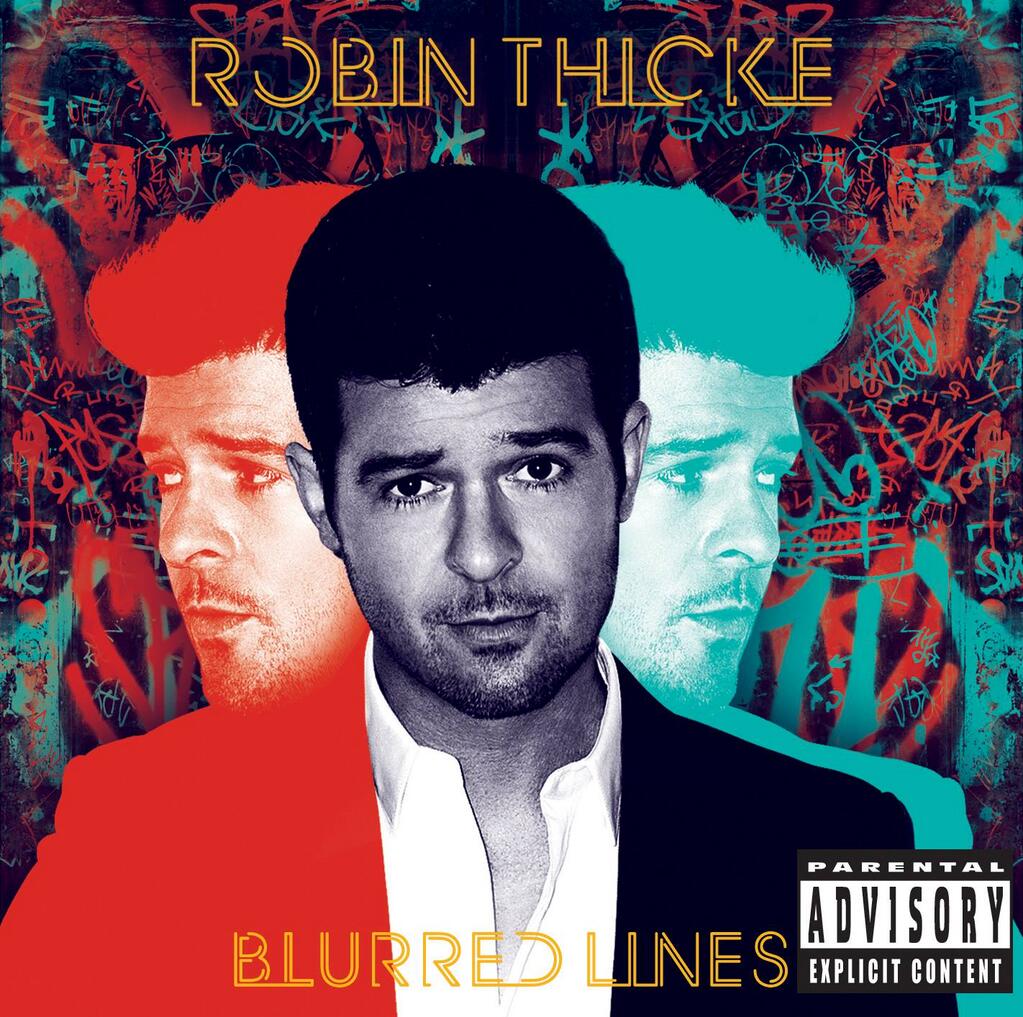
Soul legend Marvin Gaye’s family have now issued proceedings in an action involving Robin Thicke’s hit single “Blurred Lines”. Two of Gaye’s children have filed a suit against Thicke, producer and writer Pharrell Williams and rapper T.I. for copyright infringement of Marvin’s classic tune “Got to Give it Up” along with a claim against EMI Music, saying the music publisher failed to act on Gaye’s behalf and breached it's fiduciary duty, siding instead with Thicke and Williams. Williams is with EMI and from this relatonship the publisher has a controlling interest in the song. The claim also accuses the chair of EMI Music Publishing of intimidating family members.  According to Billboard, the suit claims that the Chairman of the publishing company personally contacted the Gaye estate's attorney and accused the family of "ruining an incredible song" and "killing the goose that laid the golden egg" and allegedly said that he believed the dispute had stopped Thicke from winning a VMA gong and could prevent Blurred Lines  taking the Grammy Award for Song Of The Year in 2014:  The lawsuit says that EMI's alleged failings are all the more worrying because of Sony/ATV/EMI's dominance in the music publishing sector. On the issue of market dominance, the lawsuit points to the  30% plus share of the global music publishing market controlled by Sony-EMI saying that there is a strong likelihood that conflicts of interest will occcur.  It goes on: "Based upon the blatant and egregious breach of the EMI defendants' fiduciary duty and their covenant of good faith and fair dealing, the EMI defendants have proven that they cannot be trusted to remain neutral and impartial, and that they are unworthy of the level of trust and professional conduct which is required of a copyright administrator charged with protecting the Gaye Family's important interests in copyrighted works created by Marvin Gaye". The lawsuit comes after Thicke and his collaborators filed a case with a federal court in August asking the judge to rule that they had not copied “Got to Give It Up” for their track. I am hoping my fellow blogger Patrick Goold will have a further update for us on this fascinating story in the very near future

Sky have won a victory in their first successful Scottish copyright infringement against Mark Daly, designated premises manager of Old College Bar in Glasgow,  who was ordered to pay £10,000 plus legal costs for showing Sky Sports without a viewing agreement. Daly must also fund advertising in newspapers and trade publications publicising the case. More on this on the Morning Advertiser. Sky has now obtained a number of injunctions and said it was bringing separate contempt of court action is being after alleging an injunction was ignored.

The US courts have been asked again if numbers can be copyrighted. Despite a Supreme Court ruling in 1991 that facts aren’t copyrightable,  Banxcorp v. Costco Wholesale Corp. (09-CV-1783 (S.D.N.Y. Oct. 17, 2013)) resulted in a thorough 70 page judgment from US District Judge Kenneth M Karas  who found that "3.95%" was not protected. More on Forbes here.

AGCOM, the Italian communications authority, is proposing a controversial new takedown system for the EU nation that goes far beyond the USA's DCMA provisions. The AGCOM proposals, which have been submitted to the European Commission for feedback, would seemingly set a 72 hour deadline for websites to respond to takedown notices. If they failed to do so, the telecoms regulator would have powers to seize or force blockades against offending websites, and also to force net firms to reveal the identities of a site's operators.


An update on the Krrish-3 saga:  The Bombay High Court has now rejected the somewhat last minute appeal against an order of a single judge, who had refused injunctive relief to script writer Uday Singh Rajput alleging copyright violation of his earlier script in the 'Krrish-3' script. A Division Bench headed by Justice Ashok Bhangale said it was not inclined to restrain the producer Rakesh Roshan from releasing the film for the simple reason that the prints were already in circulation - and that Rajput's evidence was inconsistent.

It seems Chinese search engine Baidu has shut down the e-mail system  it  launched to go  with it's new online shopping mall - and its all a matter of copyright issues. The e-mall service allowed users to trade electronic files, including videos, pictures, documents as well as music. Users can also post transaction information and comments - although all the transactions are done via Baidu's payment platform, baifubao. Baidu had made it clear that it did not the own copyrights in any (or all!) of the electronic files uploaded by its users, and went further saying it had no obligation to check the files: it seems the search engine required potential users to sell copyrighted resources based on an "honor system". Baidu said that if any copyright complaints were filed, the use of related electronic resources would be stopped. Now the whole service has been halted.

Whether or not collection societies are monopolies, or act like monopolies, is a tricky issue: Many in the business world want 'one stop shops' for effective licensing, especially in a global digital market - but no one wants a bully! Now the Tokyo High Court has overturned a previous ruling by the Japan Fair Trade Commission (JFTC) and has concluded that the Japanese Society for Rights of Authors, Composers and Publishers (JASRAC) violates the country’s anti-monopoly law. The court says the JFTC ruling in 2012 that JASRAC was not a monopoly was “a mistake.”

And finally ....... Isohunt is back ...... as a new domain and with many - but not all - of the original files, but seemingly no longer associated with founder Gary Fung.

Wednesday, 24 February 2010

Baidu found to infringe with lyric use

After a run of success in the Chinese courts, search engine Baidu has now lost a lawsuit in the Beijing courts. The new case centred on the use of lyrics of songs that Baidu posts next to its MP3 search function. It was sued by the Music Copyright Society Of China, which said the search firm did not have the appropriate licence to publish song lyrics owned by its members. The Beijing People's Court for the Haidian District agreed and fined Baidu, 50,000 yuan plus 10,000 yaun legal costs just over £5500).

Baidu’s usual (and so far successful) defence that it only provides links to infringing sites failed on the facts of this case as the lyrics were actually posted and published on Baidu’s site (rather than linked to) next to links to MP3 search functions. Baidu plans to appeal.