Showing posts with label criminal sanctions. Show all posts

Tuesday, 24 November 2015

The CopyKat

Minneapolis attorney Paul Hansmeier, who is most known to this blog for being associated with the Prenda Law 'trolling' saga, is facing suspension or disbarment. Minnesota's Office of Lawyers Professional Responsibility has now filed a petition with the state Supreme Court seeking disbarment or "otherwise appropriate discipline," citing Hansmeier's "unprofessional conduct." In 2013, Hansmeier, along with Chicago attorneys John Steele and Paul Duffy, filed multiple 'John Doe' copyright infringement claims, and faced scathing criticism from U.S. District Judge Otis Wright II, other federal judges and the US Court of Appeals for the 7th Circuit. Reports say Hansmeier remains an active civil litigation attorney. His solo practice -- a Minneapolis firm called Class Justice PLLC -- consists wholly of suing businesses that do not comply with disability access laws. Hansmeier's attorney, Eric Cooperstein, told reporters that they look forward to presenting their side of the case.

Rocky P. Ouprasith, who operated the website RockDizMusic.com website between May 2011 to October 2014 has been sentenced to three years in prison. Ouprasithhad  admitted obtaining copies of copyrighted songs and albums from online sources and encouraging others to upload music to the website. Court documents say the market value of Ouprasith's illegally obtained material was more than $6 million. Ouprasith was sentenced to serve 36 months in prison in the US. Chief U.S. District Judge Rebecca Beach Smith of the Eastern District of Virginia also sentenced Ouprasith to serve two years of supervised release and was ordered to forfeit $50,851.05 and pay $48,288.62 in restitution. Brad Buckles, EVP of Anti-Piracy at RIAA, said: “We congratulate the Department of Justice and Homeland Security Investigations and thank them for their diligence and hard work to bring to justice those who cause millions of dollars in damage to music creators" adding  “This sentence should send a message that operating a flagrantly illegal business that steals from others by engaging in criminal activity online has real consequences.” Indeed.
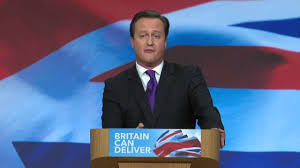

'YouTube sensation' CassetteBoy have been talking about copyright implications of the recent changes in United Kingdom coyright law and the new exception for parody at an event at Bournemouth University. The pair, whose 2014 'mash up' of David Cameron's speeches featured in their 'Conference Rap' has been seen by more than 6 milllion people, said: "We were infringing copyright for 20 years before the law changed, and never dreamt that our work would ever be legalised. The change in the law has had a huge impact on the work we've been able to do, and we're very happy to be able to talk about it and share our experiences." The event  was organised by the Centre for Intellectual Property and Policy Management. Co-director for the Centre and associate professor in law, Dr Dinusha Mendis, told the Bournemouth Daily Echo : “The reforms to copyright law which came about last year were certainly seen as a welcome change and much needed in a digital world dominated by user-generated content and collaborative creators.

The World Intellectual Property Organization Deputy Director General responsible for copyright, Anne Leer, has decided to resign her post, citing personal reasons.

YouTube has set up a $1 million fund to support video creators who have been targeted in Digital Millennium Copyright Act (DMCA) takedowns. The company’s copyright legal director Fred von Lohmann confirmed the new funding in a blog post saying that that  whilst YouTube will only provide its legal support “to a handful of videos,”  who would be arguing 'fair use' for the posting, the company will cover the cost of any copyright lawsuits brought against its creators and adding “We’re doing this because we recognize that creators can be intimidated by the DMCA’s counter notification process, and the potential for litigation that comes with it,” Lohmann himself is a former Electronic Frontier Foundation (EFF) staffer who have previously argued that YouTube is not doing enough to protect the so-called “fair use” provision. 

And TorrentFreak tells us that YouTube parent company Google is facing "a never-ending flood" of DMCA takedown requests from copyright holders, breaking records. The company currently processes a record breaking 1,500 links to "pirate" pages from its search results every minute, which is a 100% increase compared to last year.

Monday, 9 March 2015

Weatherley welcomes review of online copyright sanctions in the UK


Mike Weatherley
Mike Weatherley MP has welcome the UK's Intellectual Property Office's report into criminal penalties for copyright crimes. Weatherley had highlighted the disparity between penalties for offline and online copyright infringement, with copyright crimes leading to up to ten years custody for physical piracy - but a maximum of two years if the crime takes place online. The IPO has confirmed this and has now suggested that UK copyright law should be amended so that serious online copyright infringement is treated in a similar way to offline activities that those activities result in similar levels of harm to copyright owners. Responding to Weatherley, who had previously been Prime Minister David Cameron's advisor on IP, IP Minister Baroness Lucy Neville-Rolfe wrote: "I am writing to update you on the study commissioned by the Intellectual Property Office into criminal sanctions available for online copyright offences. I know that you have taken a keen interest in this matter and that you have pressed for action to be taken to address what you felt was an anomaly in the level of penalties available for online copyright offences" adding "Given the uncertainty surrounding the potential impact brought by the increase to custodial sentences, the Government agreed to commission an independent review of the issue. In assessing the need to amend legislation, researchers have since analysed a range of a conviction data, consulted with a range of stakeholders, and considered the impact of recent interventions in this area" although she then added "The report points towards there being some logic to increasing custodial sentences for serious online copyright offences. However it does emphasise the need for appropriate safeguards to ensure ordinary members of the public, whose copying is not motivated by criminal intent, are not inadvertently caught by any amended provision".

Welcoming the IPO's report, Weatherley told reporters: "It is encouraging that evidence shows the need for legislation to change in order to harmonise penalties for physical and online offences. Bringing about this change has required significant pressure on Government, but I am pleased that this report once again entrenches the fact that the UK is leading the way on IP enforcement".

Weatherley went on to say: "I hope that the Government after the next election will ensure that the recommendations in the report are adopted and that overdue changes in legislation are on the horizon. Additionally, I believe that the introduction of an IP Director General would hugely benefit the UK and be an important figure for international IP collaboration".

Friday, 2 November 2012

CETA negotiations: criminal sanctions provisions watered down

Criminal scantions to be watered down
not thrown out completely
Negotiations on the proposed free trade and copyright agreement between Canada and the European Union, the Comprehensive Economic and Trade Agreement (CETA), which started in 2009 might be concluded by the end of the year. Karel De Gucht, European Commissioner for Trade, has said in an interview with Vieuws.eu that he and his Canadian counterpart are hoping to "close the deal" but that "we should have no illusions, there are still a number of difficult issues to tackle".

As previously reported, it is no secret that many of the copyright provisions in CETA are copyright are identical to the controversial ACTA, which was recently rejected by the European Parliament. De Gucht, has however conceded that "since the negative vote of the European Parliament on ACTA, we have been changing the language obviously".

According to the Irish site TechCentral, following a meeting of the EU Member States on 5 October, documents leaked from the from the Cyprus Presidency of the EU have shown  that the EU plans to move away from criminal sanctions in CETA. The intellectual property protection chapter is now understood to say that countries "may" provide for criminal procedures and penalties.

Further the parties have yet to agree provisions regarding filming within cinemas, or "camcording". The Canadians have asked for criminal sanctions to be imposed in respect of camcording (Canada has had a law against camcording since 2007) however according to the leaked documents the EU isn't keen on the concept.

Will we see a final version of CETA before the end of the year? This blogger is not holding her breath.