 |
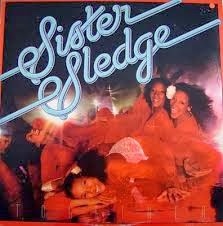
| Those Sledge sisters |
There have been a spate of actions in the USA between heritage artistes and their record labels, with the former trying to improve what are often considered desultory royalty rates, as the music industry shifts from the sale of physical units to the licence of online downloads. The key issue is how a 'sale' should be classified when it comes to paying royalties to artists, particularly with record contracts that pre-date iTunes, which launched in 2003. These contracts are usually silent on the issue of to digital sales - the internet simply did not exist when they were written. Most labels, including all three majors, have treated download income as 'record sales', but many veteran artists say that digital revenue originates in 'licensing deals' with iTunes and other digital platforms, and so should be treated as 'licensing' or 'other' income under their contracts. And it's a very important distinction, because most traditional recording contracts pay the artist a much bigger royalty on licensing revenue than from per unit sales - and the latter will also be subject to royalty reducers - contractual provisions such as a 'new technology' format reducer, TV advertising reducers (both sometimes to a half royalty rate), and/or a packaging deductions for CD and vinyl, and/or a reducer for units sold by mail order and/or a reducer for 'breakages'. Whilst artist royalties typically range from 1% in early contracts to about 20% - reducers can mean they are in reality actually almost nothing for some artistes.
A number of claims, beginning with the now settled law suit brought in 2006 by the Allman Brothers, Cheap Trick and others against Sony, revolved around the way in which record labels had calculated their digital royalties. In court papers filed in the United States District Court Southern District of New York in this case, a comparison of calculations was set out based on the sale of 1,000 downloads at 0.70c per unit – giving a total income of $700: Sony BMG thought the appropriate payment would be a royalty payment on 85% of all downloads sold after deducting mechanical royalties to the songwriters, a container charge of 20% and an royalty reducer for new technology of a further 50%. This gave a total royalty payment of $45.05. The Allman brothers felt they should be paid one half of the income from 100% of all units sold, less just the mechanical royalty payable to songwriters. This gave a royalty due of by Sony BMG to the Allman Brothers of $315.50. Some difference!
Legendary record label boss Morris Levy allegedly once told one of his acts “if you want royalties, go to Buckingham Palace” but a plethora of heritage artists including Toto Kenny Rogers, Peggy Lee, the estates Louis Armstrong, Billie Holiday, Patsy Cline, Ella Fitzgerald, Bill Haley, Mary Martin, Rick James, Rob Zombie and and Pearl Bailey as well as Chuck D, Peter Frampton, Public Enemy, Sister Sledge, Ras Kass, Dixie Chicks and Whitesnake have all sued on this issue, with all three major labels facing litigation, including class actions.
 |
| Weird Al Yankovic |
In another March 2012 lawsuit against Sony Music by Weird Al Yankovic, the successful US parody act again argued that Sony was improperly treating digital downloads as "sales" rather than "licenses" reducing his share of income from 50% to something more akin to 15%. Yankovic also alleged thhat Sony were improperly charging marketing costs for various VH1 and MTV specials, underpaying on domestic publishing royalties, failing to pay him for goods given or discounted to retailers, failing to properly account for streaming transmissions like ringbacks, and under reporting 'sync' income on music used on TV shows around the World. Yankovic also highlighted the equity stakes taken by Sony in YouTube, Vevo and Spotify and Yankovoc argued that his own videos - very popular on YouTube - had helped Sony get their equity stake and he was entitled to a share.
The landmark case is the action brought the producers of a number of early Eminen recordings, producers FBT Productions: In a claim against Universal Music, FBT succeeded in achieving the higher royalty rate: FBT argued they had a right to a 50/50 split of profits with Universal on sales of digital music and ring tones through online retailers as these were 'Master Licensing' deals attracting the higher royalty. The contract did not specifically mention income from download stores like iTunes, or what share the artist (and therefore FBT) should get from such sales but Universal had been treating download sales as being equivalent to CD sales paying a lower rate of 12-20%% as if these were physical sales. The District Court refused summary judgment saying the agreement was ambiguous, but The U.S. Ninth Circuit Court of Appeals in San Francisco agreed with FBT saying that the higher royalty should apply - not least as a digital 'sale' is not actually a sale - its a licence to consumers. Universal even belatedly tried to apply royalty reducers to digital income - something that Judge Philip Gutierrez was having none of. The Supreme Court refused UMG's request for a further appeal so the appellate court's decision set an important precedent i the USA - although UMG have publicly disputed this.
 |
| Ronee Blakely |
In the latest development, the smallest of the three major labels, Warner Music Group (WMG) has submitted a proposed settlement to its ongoing digital royalty disputes (a class action) over the Christmas break, which the courts will now consider. According to Billboard, the mini-major is proposing a two-part compromise to artists with record deals that pre-date 2002 - plaintiffs in the settlement agreement are named Kathy Sledge-Lightfoot, Gary Wright and Ronee Blakely.
Moving forward, WMG will increase digital payouts to artists by 5% from whatever record sale royalty figure is in their current contract, with a floor rate of 10%, but with a 14% cap, meaning the deal will favour more the artists with older record deals on lower royalty rates (because anyone with a 14% split already will see no benefit to their royalties - whereas an artiste on 1% will see an increase to the floor rate of 10%). The increase will be less on non-US download income. Billboard explain that the rate increase would be 2.5%. But since contracts typically call for artist to receive, in some countries, 90% of the U.S. rate, that means foreign downloads for an artist receiving a 10% rate in the U.S. would receive 90% of 12.5%, which equals 11.25% of wholesale.
In addition to the increased royalties, WMG will also set aside a one-off pool of $11.5 million, to be split between any artists who agree to the deal pro-rate based on their download sales between 2009 and 2012, though Billboard say that at least $3 million of that pot of cash will go to lawyers who have worked on this case.
 Any artiste accepting this deal will be barred for pursuing further action on the digital royalties point, their contracts being amended to explicitly define digital income. WMG is not admitting any wrongdoing. Moreover, Billboard says that the settlement allows the company to sidestep the issue of whether downloads should be paid as a license. More pragmatically, given that, if download revenue was simply treated as licensing income, artists could expect to receive probably near to 50% of those revenues, this must make this arrangement cost effective for WMG, and although participating artists will get an immediate pay off and avoid a long drawn out litigation, they might be giving up substantial future revenues as we move into a digital future.
Sony Music proposed a similar deal to settle its digital royalties class action in 2012, though rumour had it the two main artists who launched the litigation - the Allman Brothers and Cheap Trick - actually had a separate and more favourable agreement. Both of these settlements, along with a settlement agreed by Weird Al Yankovic, mean that the 'FBT' precedent has still to be tested in US courts.
Judge Richard Seeborg must now review the proposed settlement to the class action in the San Francisco federal court, which is in the Northern District of California. It remains to be seen if the court backs WMG's proposals and, if so, how many artists will then take up the offer. After the claims are put in, WMG will provide a report to the class counsel on what amounts will be paid out to each participant within six months, and then the class counsel and artist will have 90 days to object to any of WMG's calculations.
The Future of Music Coalition estimated that the major labels may have to hand over $2 billion in extra royalties to heritage acts if they lost the cases. The Dixie Chicks put it more simply in their claim against Sony– calling the royalties and accounting process “systematic thievery”.
F.B.T. Productions, LLC; EM2M, LLC v. Aftermath Records, DBA Aftermath Entertainment; Interscope Records; UMG Recording Inc.; Ary, Inc. September 03 2010 621 F.3d 958; No. CV 07-3314 PSG (MANx).
 Some of the criticsms levelled at the music industry in the digital age have been those directed at outdated and ineffective licensing models - especially where internet start ups are looking at a global market, whereas as rights owners, often territorially limited collection societies, are mandated to licence within their national borders only. Early entrants in the music sphere spoke of the need to negotiate with hundreds of different organisations each offering 'blanket' licences for just one country - to run a global music streaming service. It took Spotify two years to negotiate basic clearances - as the pirates made merry!
The problem has not escaped the European Commission who are keen to promote (at least) pan-European licensing regimes: Digital Commissioner Neelie Kroes recently said Digitisation
has fundamentally changed content industries, but licensing models simply have
not kept up with this. National licensing can create a series of Berlin
cultural walls. The price, both in pounds and frustration, is all too real, as
creators are stifled and consumers are left empty-handed. It is time for this
dysfunction to end. We need a simple, consumer-friendly legal framework for
making digital content available across borders in the EU".
Problems with digital licensing have also not escaped the attention of the UK government, currently advancing plans for the 'Digital Rights Exchange' proposed in the Hargreaves Report. But in my own opinion even a pan-European licensing regime is of little real use or relevance in the digital age. Surely a UK 'licence' for the digital age is becoming more and more redundant!
To solve Neelie Kroes' concerns, surely just one European society for, say, music might well be an effective solution - at least for potential licensees - as a 'one stop shop': BUT, a sole player might not be so good for content owners such as songwriters (who can presently shop around the various music collection societies such as PRS, GEMA and SACEM), or for the board members, or the staff at individual existing societies - although at least some of the latter could and would (I imagine) be redeployed. And I have some real concerns on behalf of the end users - customers. Actually, it will be the board members who offer the most resistance as they see their cosseted positions at certain societies threatened by the threat of closure, merger or takeover; but the conundrum that remains is one of competition law.
In 2005 when this who area was looked at, The EC's three solutions were (a) to do nothing (b) allow the existing (then 24) societies to offer pan-European licences in competition with each other (prompting speculation that this will just encourage a 'race to the bottom' on licensing tariffs or (c) allow rights holders to choose one EU online rights manager. At the moment the EC is waiting for the Court of Justice to determine the way forward in the CISAC case: where it stands now is that there is an order in place prohibiting the 24 European
collecting societies from restricting competition by limiting their ability to
offer their services to authors and commercial users outside their domestic
territory BUT the decision allowed collecting societies to maintain their current system of bi-lateral agreements
and to keep their right to set levels of royalty payments due within their
domestic territory.
Why bother with all that - lets go for efficiency! Lets have just the one society! A super society! Digital start ups - especially offering content - want access to ALL content in their sector (whether its films, music, books, news content, whatever) and almost always want to be able to offer and sell that content Worldwide. Whilst I am sure that the EU would need to consider consumers as a sole European collection society would be a monopoly - and a monopoly based on the 'monopoly' of music copyrights (if you want Kylie's songs - you can only come to us) surely one society is a potential solution? Just one collection society for recorded music and just one for songs in Europe - or even just one covering all music rights - at least the EC could potentially regulate this, possibly in the same way the Copyright Tribunal reviews licensing schemes in the United Kingdom. But globally, now that is a bit more tricky .....
Europe good - global better? Surely any solution has got be be global? If we have leant nothing else in the last 10 years, we have learnt that this is a 'must have' generation of consumers - if they can't get content legally - they will get it illegally.
The Universal Music Group's proposed acquisition of EMI's recorded music division from Citigroup has again focussed thoughts on global licensing, with some supporters of the merger pointing to the fact that with a near 50% combined market share, a combined Universal-EMI could be an effective one stop shop on its own for licensing recorded music content, There is the counter argument of course - a combined UMG-EMI (or indeed in the publishing world a combined SonyATV-EMI music publishing) could equally block any new entrant if they so wanted which must surely be an issue worrying competition regulators.
One problem is that the music industry's record on anti-competitive (antitrust) behaviour is not wonderful, not least because of that nagging antitrust case called Starr v Sony which I am sure the labels would like everyone (including the US courts to forget) about; it's all about the major labels madcap digital start-ups all those years ago called PressPlay and MusicNet. On top of that there is the rather public 2002 settlement by the majors and three of the biggest high street retailers in the USA for price fixing of CDs - and two separate 2005 and 2007 settlements for payola. That said, the recorded
music industry is a significantly different business than it was ten years ago
– and whatever your views are on digital piracy – it cannot be ignored – and
nor can the rise of new independent distribution systems such as Apple’s
iTunes, and streaming services such as Spotify.
But whether that justifies the creation of a dominant player with a
possible 50% market share is debatable. But at least the concentration of rights into one 'manager' makes licensing easier - and payment possible - doesn't it ..... ?

But that got me thinking, and as I am very uneasy about having just two 'super-majors' in the music industry, surely to prevent further consolidation in the recorded music sector and yet allow for effective licensing, it would be better for Sony, EMI, Warners and UMG along with the independent record sector (represented perhaps by Merlin) to form their own 'super society' to collectively licence ALL recorded music on a global basis. Then potential licensees could have their much wanted 'one stop shop' - and consumers would have legal access to to the World's music. Perfect eh?
Except it would be a super monopoly ....... so I am back to the problem the EC faces trying to balance the need to have effective licensing and the need to have a competitive market place (and we know post MPS v Murphy competition law trumps copyright!). But at least within Europe there is at least the potential for a mechanism to regulate such a monopoly - even if it were a European wide Digital Rights Exchange. But with a global super society ....... who would be the 'World Police'?
Anyway, thoughtful comments would be MOST WELCOME ......
The CISAC case: COMP/C2/38.698 CISAC and CISAC v. Commission; Case T442/08
Starr v. Sony BMG Music Entertainment, 592 F. 3d 314 - Court of Appeals, 2nd Circuit 2010
Karen Murphy v Media Production Services / Football Association Premier League Ltd v QC Leisure and others joined cases C-403/08 and 429/08


