Wednesday, 8 May 2013

Prenda: copyright trolls and Star Trek references

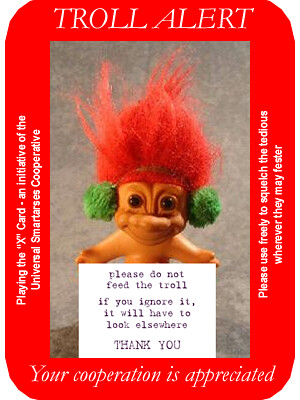
US District Judge, Otis D Right II, has handed down his decision in the Prenda copyright troll case, saying that Prenda (a firm that claimed to fight copyright piracy) ran a fraudulent scheme to extort millions of dollars from people who shared pornographic videos online.

As Ben has reported before (here and here) Prenda came to prominence as a "porn troll", filing lawsuits against internet subscribers whom it alleged had downloaded copyright protected X-rated films and then demanding a sum of money to settle the matter.
This blogger is not particularly knowledgeable when it comes to Star Trek, however it is hard to ignore the plethora of references in this decision which opens with a quote:

The needs of the many outweigh the needs of the few.

—Spock, Star Trek II: The Wrath of Khan (1982).
Aside from providing an entertaining read (it's not often that judgments are so blatantly and inexplicably littered with Star Trek references) this decision is a salient reminder that the aim of copyright should not be forgotten. As the judge said, "copyright laws originally designed to compensate starving artists allow, starving attorneys in this electronic-media era to plunder the citizenry."

In his decision, the judge condemned Prenda for its "brazen misconduct and relentless fraud," which justified his order for damages of $81,319.72.5. Further he said that some of Prenda's controlling parties (Steele, Hansmeier, Duffy and Gibbs) suffered from "a form of moral turpitude unbecoming of an officer of the court" and that he would therefore refer them to their respective state and federal bars.
Finally, though the claimants "boldly probe the outskirts of law" he said that "the only enterprise they resemble is RICO. The federal agency eleven decks up is familiar with their prime directive and will gladly refit them for their next voyage. The Court will refer this matter to the United States Attorney for the Central District of California. The [he?] will also refer this matter to the Criminal Investigation Division of the Internal Revenue Service and will notify all judges before whom these attorneys have pending cases."
So although the damages awarded were comparatively low, the real damage is to the reputation of Prenda and its associates.

Tuesday, 7 May 2013

Orphans: Much ado about … what?

Many of you will know Martin Kretschmer, Director of CREATe and Professor of Intellectual Property Law at the University of Glasgow, and Martin has just published this post on the CREATe blog and I am delighted to say has agreed that we can re-blog his thoughts:

Much ado, even an air of conspiracy, surrounds the passing of the Enterprise and Regulatory Reform Act (EERA) on 25 April. The main focus has been on the Copyright Provisions in Part VI (“Miscellaneous and general“) that will insert a new section 116A into the Copyright, Design and Patent Act 1988, entitled “Orphan works licensing and extended collective licensing”. 

The section will enable the government to set up (through the statutory instrument of regulations) a body with the authority to license so-called Orphan works, i.e. those works whose owner of copyright “has not been found after a diligent search made in accordance with the regulations” (s. 116A(3)). 

Campaigning photographers (http://www.stop43.org.uk/) have argued that identifying metadata are routinely removed before images are published online, and a misinformed section of the blogsphere has trumpeted a message of expropriation. Eleonora Rosati of the IP Kat and Ben Challis of the 1709 Blog [see our previous post here] offer a nice range of quotes, including Dominic Young’s assertion that the UK had “abolished copyright”, and the Telegraph’s Instagram Act headline: “social media users lose ownership of their own photos”. 

Paul Briden’s KnowYourMobile blog is another typical example: 

“Within the new legislation is a change to UK copyright law which will effectively allow companies to use images which don’t include information identifying the owner for commercial gain. In other words, your holiday snap taken on your iPhone which you shared to your public-facing Facebook page, could end up in someone’s glossy brochure and you wouldn’t even get a penny, let alone a note asking if it’s ok. 

There’s also no section of the new Act which forbids sub-licensing practices, ie: someone can get your photo and sell it to someone else with little risk of repercussions. This is a very serious problem and I can see it only getting worse. 

Interestingly, Instagram tried to enact this kind of commercial sharing approach to users’ content fairly recently but was (quite rightly) shouted down by angry consumers – and yet here it’s happening on a broader scale, by a national government and quietly through the back door.”  

There are many misunderstandings in these short paragraphs. Here are three reasons why social media services will not attempt to rely on the Orphans provisions of the ERR Act for the use of digital images. 

First, users would have to evidence diligent search (which photographers can pre-empt by registering their images on any public database). 

Secondly, users will have to obtain a formal licence from a public body. 

Thirdly, user will have to pay a market price for commercial use (and deposit that fee so that it could be claimed by a reappearing author). 

Why would a social media service want to jump through these hoops? 

Prior to the ERR Act, none of these processes were formalised. The current media practice to strip images of meta data, and even use such images in prominent positions (e.g. on newspaper covers, as is common with Twitter photographs after accidents and atrocities) will now attract greater scrutiny. While these practices may be undesirable (and indeed constitute an infringement under copyright law, both before and after the ERR Act), this a matter for legal remedies (such as the damages available for stripping metadata and indeed for unlawful use). This is where the photographers’ scrutiny should be. 

It is misleading to claim that the ERR Act would permit digital images to be used without permission and compensation for the rights holder, and it is surprising that the claim has gained such currency. 

The Orphan works provisions of the ERR Act are really designed for the large body of copyright works that lie barren because of the long copyright term. For example, Mulligan and Schultz found that only 2.3% of in-copyright books and 6.8% of in-copyright films released pre-1946 remained commercially available in 2002: Mulligan, D.K. & Schultz, J.M., ‘Neglecting the National Memory: How Copyright Term Extensions Compromise the Development of Digital Archives’, 4(2) Journal of Appellate Practice & Process 451 (2002). 

Archives currently run considerable risks making their collections available online. While the intentions of the ERR Act are thus well meaning, and entirely consistent with the overall purpose of copyright law (to release creativity), the details of implementation will matter greatly. I have to declare an interest here, as I am co-author of a study commissioned by the UK IPO which aims to offer a clearer understanding of how Orphan works are regulated and priced in other jurisdictions, and how a pricing system could be structured to ensure that “parents” are fairly remunerated if they re-appear, and users are incentivised to access and exploit registered orphan works. 

Our study (with colleagues Favale, Homberg, Mendis and Secchi) simulated the clearance of Orphan works in several jurisdictions which have an operational system for licensing Orphan works (including Canada, Denmark, Hungary, Japan and India). Another example of the bizarre reception of the ERR Act is the Register’s claim that “[f]or the first time anywhere in the world, the Act will permit the widespread commercial exploitation of unidentified work“. 

Simply not true. Our study found that in most of these systems in particular non-profit, non-commercial uses do not happen in the way anticipated, i.e. Orphan works are not released, or reunited with their parents, as the legislators claim. (I’ll write another blog once we can reveal the data with the publication of the full study.) 

Lastly, I also should put on record that I consider the legislative process of the ERR Act to be problematic (http://www.create.ac.uk/blog/2013/03/17/copyright-in-artistic-designs/). The first version of the ERR Bill (as introduced in May 2012) did not contain any Orphan works provisions at all, and I still do not think the appropriate scope of copyright exceptions should be a matter for secondary legislation. 

Martin's original blog can be found here  http://www.create.ac.uk/blog/2013/05/06/orphans-much-ado-about-what/

Image: publicity shot for Orphan, the 2009 American psychological horror film directed by Jaume Collet-Serra.  (from http://en.wikipedia.org/wiki/Orphan_(film) ).

Sunday, 5 May 2013

Harper Lee files action to reclaim To Kill A Mockingbird copyright


To Kill a Mockingbird is the Pulitzer prize winning book written by Harper Lee. The quasi autobiographical novel is based around the trial on a innocent black American, Tom Robinson,   wrongfully accused and then convicted of raping a white woman. Set over three years of the Great Depression in the fictional "tired old town" of Maycomb, Alabama, the novel focuses on six-year-old Scout Finch, who lives with her older brother Jem and their widowed father Atticus, a middle-aged lawyer who defends Tom Robinson. It was made into a motion picture, starring Gregory Peck as Atticus, which won three Academy Awards, quickly grossing more than $20 million from a $2 million budget. Published in 1960, the book is hugely popular and a set text in many US schools, and has been through numerous subsequent printings and became widely available through it's inclusion in the Book of the Month Club and editions released by Reader's Digest Condensed Books. In the years since publication, it has sold over 30 million copies and been translated into over 40 languages.

However, it has now been made clear that Harper Lee, now aged 87, does not own the copyright to her book. That is owned by Samuel Pinkus,  the son-in-law of Lee's former literary agent, and a company he allegedly created. The author has now filed a lawsuit in federal court in Manhattan, to re-secure the copyright and claiming unspecified damages: the lawsuit alleges that when her long-time literary agent, Eugene Winick, became ill in 2002, his son-in-law, Pinkus, switched several of Mr Winick's clients, who were with Winick's firm McIntosh and Otis, to his own company. Those authors included Lee.  

Pappa's gonna buy you a mockingbird 
The 87-year-old author alleges that in 2007, in a "scheme to dupe”, Pinkus took advantage of her declining hearing and eyesight to get her to assign the book's copyright to him and a company he controlled. Mr Pinkus is alleged to have transferred the rights to secure himself "irrevocable" interest in the income derived from Lee's book. The lawsuit also says that Pinkus sought to avoid paying legal obligations he owed to his father-in-law's company for royalties.  Lee also alleges that Pinkus failed to properly protect the copyright of the book and failed to respond to offers on e-book rights and a request for assistance related to the book's 50th anniversary. The lawsuit bids the court to assign any rights in the book owned by Mr Pinkus to Lee and asks that she be returned any commission he took from 2007 onwards saying

"The transfer of ownership of an author's copyright to her agent is incompatible with her agent's duty of loyalty; it is a gross example of self-dealing".


Friday, 3 May 2013

Craigslist's claim for copyright in user listings fails


Craigslist is the global classified advertisements website with sections devoted to jobs, housing, personals, for sale, items wanted, services, community, gigs, résumés, and discussion forums which began in the USA in 1995 when Craig Newmark started an email distribution list of friends, featuring local events in the San Francisco Bay Area, before becoming a web-based service in 1996 and expanding into other classified categories. It started expanding to other U.S. cities in 2000, and currently covers 50 countries with a search engine, discussion forums, flagging system, self-posting process, homepage design, personals categories and 'best-of-Craigslist' feature. Over 100 million classified ads run on its site each month.   Now let’s be clear – postings are usually user generated and the only moderated content was for the now defunct US ‘adult’ section.

So what’s the fuss? Well, back in 2012 mashup sites such as padmapper.com and housingmaps.com began overlaying Craigslist data with additional data such as Google Maps, and adding their own search filters to improve usability. PadMapper took real estate listings and added ‘value’ to them, taking a series of data points such as the  cost of apartment, location, size and then allowed the customer to search on that basis. And when the customer found what they wanted, they would then be directed back to Craigslist to read the full posting and complete the transaction .

Despite what might be considered a ‘win win’ situation, Craigslist were not best pleased, and In June 2012, Craigslist changed its terms of service to disallow the practice. In July 2012, Craigslist filed a lawsuit against padmapper.com along and 3taps, who ‘scraped’ the data from Craigslist, and a third defendant, Lovely. The claim was twofold: A copyright claim and then claims relating to the  violation of the Craigslist terms of service (ToS) and further claims under the Computer Fraud & Abuse Act (CFAA): Craigslist’s ToS do allow for websites like Google and Bing to “scrape” and index their website, but do not allow for other non-general indexing websites to do so. Some of these latter claims continue – somewhat controversially.

The copyright claim was based on Craigslist argument that (1) Craigslist retained copyright to postings made by its customers and (2) taking these data points of cost and location constituted infringement. US District Judge Charles Breyer has now said that the copyright claim must fail as Craigslist never owned the copyright material, save the Judge allowed the copyright claims to proceed for user-created posts submitted between July 16, 2012 and August 8, 2012 because Craigslist required that users provide the site with “exclusive” rights to their submissions during those weeks. That language was dropped from it's submission form after widespread criticism.  Judge Breyer said that although Craigslist posts were “original” enough to warrant copyright protection, save for that short period, the ToS didn’t give Craigslist exclusive rights to the users’ posts.

As an aside, the CFAA claim continues - but to widespread criticism: 

“It’s curious that a company that prominently displays opposition to the CFAA and encourages customers to get involved to fix the CFAA, is at the same time suing start-ups for violating the CFAA for precisely the problems for which tech activists have ridiculed the CFAA”.

It’s worth noting In 2005, San Francisco Craigslist's ‘men seeking men’ section was attributed to facilitating sexual encounters and was the second most common correlation to syphilis infections and the company was facing pressure from the San Francisco Department of Public Health, which prompted CEO to say that the site has a very small staff and that the public must "police themselves".  However advertisements for "adult" (previously "erotic") services were initially given special treatment, then closed entirely on September 4, 2010. At the time Matt Zimmerman, senior staff attorney for the Electronic Frontier Foundation, said, "Craigslist isn't legally culpable for these posts, but the public pressure has increased and Craigslist is a small company" whilst Brian Carver, attorney and assistant professor at UC Berkeley, said that legal threats could have a chilling effect on online expression. "If you impose liability on Craigslist, YouTube and Facebook for anything their users do, then they're not going to take chances. It would likely result in the takedown of what might otherwise be perfectly legitimate free expression."

So once the darling of the tech world, it's now in the doghouse, accused of bullying and trying to stifle innovation - and competitors - with one commentator saying

“A lawsuit of this nature is much more suited to an old legacy gatekeeper, rather than a company that is supposedly of the internet generation. To say it's disappointing that Craigslist would engage in these kinds of tactics is an understatement”


SABAM launch pre-emptive strike against ISPs


SABAM, the Belgian collection society for authors, composers and music publishers, has launched a legal action against the country’s three biggest ISPs, arguing that they should be paying copyright levies for offering access to their members' copyrights. No stranger to the courts, SABAM wants the court to rule that Internet access providers Belgacom, Telenet and Voo should pay 3.4 percent of their turnover in copyright fees for the use of music, because they make substantial profits from offering high speed Internet connections that give users easy access to copyright protected materials – legally and illegally – whilst hiding behind their status as intermediary “without taking responsibility for the information transmitted over their networks”

In a press release, SABAM noted that since 2000, revenues generated from music featured in the physical media (primarily CD sales) have declined by 54 percent, adding that this “huge loss” has not been compensated by collections from online services like iTunes, YouTube and Spotify.

SABAM have been asking for voluntary levies from ISPs since November 2011 and have now launched their claim in the  Brussels Court of First Instance.


Thursday, 2 May 2013

The Copyright Pentalogy


The lovely city of Ottawa
A little Canadian news before this blogger heads back to the UK: this week the University of Ottawa Press has published The Copyright Pentalogy: How the Supreme Court of Canada Shook the Foundations of Canadian Copyright Law, a book which collates the work of a number of Canada's leading copyright scholars to attempt to examine the implication s of the five copyright decisions handed down by the Supreme Court of Canada last summer (see here and here). The five decisions all touched on different aspects of copyright law and different industries, so this book should provide a pretty comprehensive analysis of the state of copyright law in Canada at the moment.
The book is for sale, but the great (and unusual, for an academic work) news, is that it is also available as a free download under a Creative Commons licence. The book can be downloaded in its entirety or each of the 14 chapters can be downloaded individually. This is the first of a new collection from the UOP on law, technology and society, of which Michael Geist is the editor, that will be part of the UOP's open access collection.

In analysing the five decisions, this book covers fair dealing, technological neutrality, the scope of copyright law (in particular the establishment of a new "right" associated with user generated content) and the implications of the decisions for copyright collective management.
For those looking for more detail, editor Michael Geist will be writing more about the individual contributions on his blog in the days ahead and will provide more information on the plans for a conference on the copyright pentalogy being planned for autumn.

Wednesday, 1 May 2013

The Content Map: can you spread the word?

From our friend Désirée Fields (Associate, McDermott Will & Emery UK LLP) comes news of a project that ran out of funds just at the wrong time:
"The MarkMonitor Spring Symposium, which took place on 23 April 2013 at BAFTA, was an enlightening day with presentations about developments in the area of online brand protection.

Richard Mollet of the Publishers Association spoke about digital publishing and infringements and various initiatives to combat the illegal downloading of digital content. One of the key developments that Mr Mollet was keen to highlight was “The Content Map”.

The Content Map was developed by members of the Alliance for Intellectual Property and is funded by the BPI (The Recorded Music Industry), Industry Trust for IP Awareness, Premier League, Publishers Association and UK Interactive Entertainment. The website – www.thecontentmap.com – went live in November 2012.

According to its website, 
“The Content Map is a site designed to showcase the wealth of legal services available to consumers, across films and tv, ebooks, music, games and sports sectors.” 
In essence, it is a tool which allows consumers to find out where they can legally acquire digital content and to help consumers weed out the illegal sites from those which are legal. In addition, the site contains a useful section in which FAQs are answered as well as a section explaining the jargon around online downloading and copyright. Helpfully, The Content Map also explains to consumers that just because a website charges for accessing digital content does not necessarily mean that it is legal.

The Content Map does not contain every website which offers legal content from these various industries.  However, it is intended to be updated on a regular basis by representatives from each of the various sectors.

So you never heard of The Content Map? According to Mr Mollet, this is due to the fact that the entire budget which was allocated to the project was consumed in the creation of the actual website so that there were no longer any funds available to promote and raise consumer awareness of The Content Map. This is rather unfortunate given the brilliant concept behind the project. Luckily, in the days of social media and blogging, there are certainly other avenues to spread the word"

Photographs in focus as smudgers vent their fury at ERR

Beyonce by Denis O'Regan (c) Glastonbury Festivals Ltd 2011
Photographs are in the news in the UK as the snapper community in the UK digests the ramifications of the Enterprise and Regulatory Reform Bill which received Royal Assent last week. The Telegraph leads with the headline that the 'Instagram Act' could see 'social media users lose ownership of their own photos' comparing the provisions of the Act that relate to orphan works with Instagram's hastily withdrawn privacy  policy that caused such a stir back in December last. As many images available online have been stripped of all data, photographers fear that their images, however commercially valuable, will simply be deemed as orphan works when a 'diligent search' is made relating to the image by the new user uncovers no metadata. Dominic Young wrote that the UK had 'abolished copyright' saying that UK copyright owners no longer control the right to copy their work

Eleonora has just posted up a blog on the IPKat on the ramifications of the Act under the headline 'The end of copyright as we know it?' and it's well worth a read.

In other snapper news, and with a very dfferent approach to controlling images, Beyonce has reportedly banned professional photographers from her entire 'Mrs Carter Show' world tour, which began in Serbia earlier in April. Purportingto be taken from information for media outlets wishing to cover the shows, Facebook page Music Photographers has posted a paragraph of text saying: "There are no photo credentials for this show. Local news outlets, including print and online, will be given a link to download photos from every show. They will need to register to access the photos"  for media use. Those official photos are apparently all taken by one photographer, Frank Micelotta for Associated Press. The move seemingly stems from  the incident this year in which Buzzfeed posted, and then refused to take down, photographs from Beyonce's Super Bowl performance, which Beyonce’s PR team deemed to be "unflattering". The star has asked fans for no flash photography and not to post photos online either. The Huffington Post says that 'B' has failed here, with fans posting thousands of images on Instagram, Facebook and Twitter - and with fan shots possibly replacing snaps by professionals in the media - which may not quite be what was intended by Mrs Carter's minders ........

http://ipkitten.blogspot.co.uk/2013/04/the-end-of-copyright-as-we-know-it.html