Tuesday, 12 November 2013

UK, US top GIPI copyright chart

The fourth report of the Global Intellectual Property Index (GIPI 4  -- nothing to do with this Gipi though), produced by the Z/Yen Group with support from the City of London Corporation, has just been launched at the London office of sponsoring law firm Taylor Wessing LLP.  The Report tabulates and analyses some 14,000 assessments of the performance of the IP laws of 36 jurisdictions, broken down by 74 objective criteria.  Some general comments on GIPI 4 can be found on the IPKat weblog.

GIPI 4: a sort of IP Olympics ...
Regarding copyright, the country that heads the chart is the United Kingdom, closely followed by the United States and Singapore.  Fourth is Germany, trailed closely by Sweden, France, Switzerland and Austria. Japan lies ninth, ahead of Hungary. At the bottom of the table sits Indonesia beneath, in ascending order, India, Ukraine, South Africa and China. As GIPI 4 points out, there has been a considerable degree of bunching in the countries' ratings -- the top country is rated 10% lower than the US was two years ago in GIPI 3, while the lowly Indonesia was rated around 30% higher than China was when it stood at the foot of the list in 2011. On the whole, the better-rated territories scored well for effective enforcement but less well for cost-effectiveness and, as might be expected, jurisdictions seen as positively inclined towards copyright scored higher than those that did not.

In terms of movement since 2011, Singapore, New Zealand and South Korea have done best, while the Netherlands, Australia, Ireland and South Africa were the biggest fallers. Japan and Canada (where much attention has been focused on last year's Supreme Court litigation on the parameters of fair user) remain more or less static.

You can download a copy of GIPI 4, from the Taylor Wessing website here

To participate in the GIPI survey by rating those jurisdictions with which you are familiar, click on the Z/Yen Group's GIPI login here.

Monday, 11 November 2013

The Case of Text and Data Mining

A reminder that the text and data mining event, which Eleonora recently mentioned, is taking place tomorrow in Brussels.

Nearly a year ago a number of MEPs co-signed a letter to President Barroso on the need to reform the Information Society Directive. The Commission's response was Licences for Europe, an initiative which sought "to deliver rapid progress in bringing content online through practical industry-led solutions". Tomorrow's event has been set up to continue the discussion on copyright reform in Europe, focussing on text and data mining.

The event will bring together MEPs, NGOs, industry representatives, policy experts and will be moderated by Eleonora.

The first panel session, entitled Research & Innovation: The Potential of Text & Data Mining for Europe, will see Mr Niluka Satharasinghe, co-founder Sparrho, a UK start-up that created a platform for discovery of scientific information, Mr John McNaught, Deputy Director UK National Centre for Text Mining (NaCTeM) and Mr Wilfried Rütten, Director European Journalism Centre present on the uses of text and data mining in research and innovation.

The second, "The Legal Question Marks & The Way Ahead" will consider the legal challenges faced when using text and data mining techniques and the way ahead. The panel will consist of Ms Anne Bergman-Tahon, Director Federation of European Publishers, the umbrella association of book publishers’ associations, Mr Brian Hole, Founder Ubiquity Press, a publisher specialised in open access academic journals and open data, and Mr Mathias Schindler, Project Manager Wikimedia, a global movement aiming to bring free educational content to the world.
The event promises an interesting discussion on important and topical issues. For those who can't attend, the event will be streamed live.

Who owns the TARDIS?


The First Doctor and the TARDIS
Stef Coburn, the son of the writer of the first  ever episode of the iconic British sci-fi series Dr Who, is launching a legal action against the BBC in the 50th anniversary year of the global success story. His father, Tony Coburn, wrote An Unearthly Child, the first episode of the serial which then featured William Hartnell as the Doctor, and created The Tardis - a time travelling machine - "the blue police phone box that is bigger inside than out". Coburn Junior now claims that the BBC is failing to give his father, who died in 1977,  "the public recognition that should by rights always have been his due" - not least for inventing the Tardis (Time and Relative Dimension in Space) time machine. He has demanded that the corporation either stop using the Tardis in the show or pay his family for its every use since its creation. He said: "It is by no means my wish to deprive legions of Doctor Who fans (of whom I was never one) of any aspect of their favourite children's programme. The only ends I wish to accomplish, by whatever lawful means present themselves, involve bringing about the public recognition that should by rights always have been his due, of my father James Anthony Coburn's seminal contribution to Doctor Who, and proper lawful recompense to his surviving estate." Interestingly the BBC own a 1976 UK registered Trade Mark in class 28 for the blue police box combining the word 'The Tardis' and an image of the box (UK00001068700), a 1988 mark for the words 'The Tardis', and a 1996 Community Trade Mark for the word 'The Tardis' in classes 09, 16, 25, 28 and 41.
The Tardis

Now I am only guessing, but I would have thought that Anthony Coburn would have assigned across any rights in his script at the time to the BBC. Tthat script obviously included the first description of the Tardis - itself based on a traditional British blue 'Police Box' on the outside. Stef Coburn has said that the Tardis's inspiration came from a walk on Wimbledon Common, in south-west London, when his father saw two blue police boxes. Struck by the alien sight, he says, Coburn was inspired to make them the physical basis of his fantastical machine. And since that first outing, as far as I have spotted, the inside of the time travelling box has changed radically with each new series and Doctor. So - a pre-existing design, the 'idea' of a time travelling box with a space defying interior - and a new interior. Who owns what ........... ? That remains to be seen.  The claim for a breach of copyright has inflamed the Twitter community, and a veritable legion of Dr who fans have rushed to rubbish the claims as, amongst other things, being "spurious". With the BBC owing their trade marks, and the recent decision in another 'sci-fi' case, Lucasfilm Limited v Ainsworth [2011] UKSC 39 where the Supreme Court held that no copyright subsisted in a replica 'Stormtrooper' helmet, it being a utilitarian item (a film prop) and not a sculpture that would attract full copyright protection, and a presumed assignment of the original script, leads me to wonder if Mr Coburn is heading for a Mission to the Unknown, rather than spreading the Seeds of Doom for Dr Who fans. It could be a Long Game.  


Smith, Hurt and Tennant
That said, Coburn Junior seems to be particularly upset that a programme made to mark the show's birthday about how the first programme came to be created doesn't feature his dad. Mr Coburn said he was "extremely angry" that the programme excludes his father. One can sort of see why if he was the writer, but the BBC said: "The film reflects on myriad issues behind the scenes of the production, and to ensure the strongest narrative possible focuses on the core team of Sydney Newman, Verity Lambert, William Hartnell and Waris Hussein." But will that omission prove to be a costly mistake for the BBC, or just an somewhat insulting oversight? Coming Full Circle, an exhibition at Bradford's National Museum of Media, and a 50th anniversary special featuring David Tennant, Matt Smith (both Doctors) and John Hurt, which will be screened on BBC1 on the 23rd November,  are just some of the other events planned for the 50th anniversary.

Saturday, 9 November 2013

Old Czech composers, current German MS owners and restrictions on use: can you help?

From the Concerto for Oboe and Bassoon in F major
by Antonín Reichenauer, who died in Prague in 1730
One of the 1709 Blog's readers has written to ask as follows:
"I am a musicologist and occasional performer of pre-1800 music. Copyright is seldom an issue in dealing with old musical manuscripts as the copyright protection (on the whole) has long since expired on such musical works. I understand that the owners of musical manuscripts, for example, maintain some rights on the reproduction of those documents in facsimile. I have been in contact with the music manuscript department at a well-known library and in terms of recordings, they couldn't find a reason that owning a music manuscript from the 18th century afforded the owner any copyright protection (at least under UK law) for an audio recording.

Here's my question: what is the legal status of the modern German owner of a musical manuscript that was composed by a Czech composer in the 1730s (without any kind of legal bequest from the composer to the owner)? The owner of this manuscript made a facsimile of that manuscript available to the public (in a public library in Germany) but with the explicit understanding that no audio recording would be made without the owner's permission. However, I don't see that the owner (despite demanding such a signature in order to get a photocopy) has a legal leg to stand on. If there is no copyright on the music and no physical reproduction has been made (facsimile or modern transcription), could the German owner conceivably sue someone in the UK for making an audio recording of this music?"
Readers' responses are very much welcome -- on the understanding, naturally, that they do not constitute legal advice.

Thursday, 7 November 2013

La Moncloa considers the private copying levy and State liability

From our good friend Fidel Porcuna (Bird & Bird, Madrid) comes the following update:
La Moncloa
"Readers might be interested in the recent news from La Moncloa, the seat of the Spanish Government. 
Every Friday a Cabinet meeting is held to decide on a variety of matters; its utterances are the last word on all such matters at an administrative level, although the legitimate interests of anyone who believes he is negatively affected can still be decided on the Courts. 
One of the issues discussed at a recent Cabinet meeting was the Spanish State's potential liability following amendment of the private copying compensation which caused the annulment of the copyright levy system as a whole. That law was passed by the Royal Decree of 30 December 2011, in force as of 1 January 2012, the new system having been enacted by Royal Decree 1657/2012 in force as of 8 December 2012. 
It was simple to calculate the effective harm caused to right holders by private copying over a period of 12 months, by applying a set of objective rules and subtracting the resulting sum from the State Budget. That sum was then given to the collecting societies along with strict rules for its distribution among right holders (phonograms, audiovisual works and books). It was established that, for 2012 the amount would be €5 million, the same for year 2013. 
A controversial element of the law was its transitional provisions: there would be no refunds for levies paid under the old system (despite Case C‑467/08, Padawan SL v Sociedad General de Autores y Editores de España (SGAE)- see earlier Kat posts here and here), and the levies accrued up to 1 January would still be payable to the collecting societies. These issues were discussed in a previous entry in The 1709 Blog here. The situation became even more uncertain when the Supreme Court also annulled some minor legislative provisions (the implementing regulations concerning the amounts payable for each digital item) that were in force prior to the suppression of the copyright levy, on the grounds that the passing process was not correctly applied. In particular, said the Court, the Government passed it without the perceptive report of the Consejo de Estado, sitting as a State consultative board. That made definitive the fact that users of digital devices had paid copyright levies according to an invalid regulation from 2008 to 2011. The situation was then delicate, as the consequences were unpredictable (one dared to draft speculative scenarios). The only certain fact was that the collecting societies announced that they were taking legal action against the Government to recover unpaid levies as a consequence of the suppression of the digital levy, and to arm themselves vis-á-vis potential actions from they electronics sector. They indeed did launch proceedings, seeking damages of up to €105.2 million.

The recent Cabinet meeting maintained that the modification of the private copy compensation system created no liability for the Government (the Cabinet can decide on this according to the procedural rules of the State's liability claims, where these are examined by the corresponding Ministry or, as the case here, by the Cabinet).  The reasons for dismissing the collecting societies' claims are twofold: the Government believes the new system is in accordance with EU law and with the CJEU's doctrine by which the Member Estates are entitled to modify their copyright levy system (in particular, the structure, financial models, gathering and quantity), as long as that is based on the effective harm. On the other hand, there is not real so much as hypothetical harm to authors -- which is therefore not subject to damages according to the particulars of the law on the State's liability. Should eventually the effective harm's value turn out to be more than €5 million, the State Budget has resources to increase the provisional compensation set as €5 million".  

Tuesday, 5 November 2013

Originality competition: and the winner is ...

The 1709 Blog contest launched on 28 October last attracted more than 40 entries from talented and witty readers. The prize was a free copy of this blogger's new book Originality in EU Copyright.

It was not easy to select the winner, but eventually a choice had to be made. So - ladies and gentlemen - the winner of the 1709 Blog originality contest is Pedro Malaquias, an LLM student at Queen Mary, University of London, who provided a helpful and funny synopsis of originality's current health status:


“Originality is a Luxembourg infection. Early symptoms include a slight headache after minor distress. Despite some early confusion, sweat of the brow is considered to be unrelated. Most advanced treatments claim that using traditional knowledge (namely, skill and judgement) to cure outbursts  may yet prove efficient.”

Pedro Malaquias
Well done Pedro!

There were many great entries, including two (from Marc Dominic Mimler, Queen Mary, and Francisco J Cabrera) that nicely recalled that originality may be something akin to obscenity, at least following Justice Potter Stewart's observation that one knows it when he/she sees it.

But not all entries necessarily compared originality to pornography. Here's a selection:

“Originality is eleven letters that aren't original. But these eleven words might be.”
--Gareth Dickson, Edwards Wildman

“Originality is
the art of concealing your sources
the best form of rebellion
achieved only through work and struggle
that which creates a new origin
hard.”
--Tom Bishop, The Royal College of Surgeons of England

“Originality is winning Eleonora's competition but not having a clue how I did it!”
--Alex McKenna, University of Kent

“Originality is a combination of something old, something new and nothing blue.”
--Grace Teoh

Originality is ... overrated.”
--Florian Koempel

Originality is an illusion ..eppur si muove!"
“Originality is a serviceable substitute for copying.”
--Francisco J Cabrera
Is dressing up your cat as ET original enough? 

“Originality is showing you're a smart Alecky by not copying anybody.”
--Kwaku, BBM/BMC

“Originality is ... never having to say you're sorry
 --Keigh-Lee Paroz, National Library of Scotland

“Originality is whatever your favorite judge says it is.”
--Robert Panzer, VAGA

“Originality is always admirable, sometimes discernible, never wholly achievable.”
--Graham Smith, Bird&Bird LLP

“Originality is winning a book with these 11 words, absent perspiration.”
--João Pedro Quintais, University of Amsterdam

Monday, 4 November 2013

Term Extension - the UK moves forward

Sir Cliff - timeless
Well, we blogged it was coming, and now the term of copyright protection for sound recordings in the UK runs for a marvellous 70 years, rather than the paltry 50 years that was previously the case. The move, which came into effect on November 1st and was dubbed "Cliff's Law" after the veteran hitmaker Sir Cliff Richard (who backed the campaign to extend the copyright period) has not been without its critics, many of who said the move would only benefit record labels: The European Directive (2011/77/EU) that implemented the change requested that each country introduce measures to ensure artists received some benefit from extra 20 years of copyright protection. The specifics of those benefits in the UK have been in development for most of the year, and the Intellectual Property Office has now announced the following initiatives

- A "session fund" paying many performers (such as session musicians) 20% of revenues from sales of their recordings.

- A "clean slate" provision, whereby a producer may not make deductions from payments to performers (such as advances of royalties) from publication of a recording.

- A "use it or lose it" clause - which allows performers and musicians to claim back their performance rights in sound recordings if they are not being commercially exploited.

What will be interesting will be the detail. Whilst the EU had said that the extended term would benefit record producers who would generate additional revenue from the sale of records in shops and on the internet allowing them to adapt to the rapidly changing business environment and help them maintain their investment levels in new talent, major record labels are extremely good at reducing artiste royalties to next to nothing, often by reducing revenues on which those royalties apply. To be frank, 20% of nothing is, well,  nothing. So the detail of how session players and featured artists get paid remains to be seen. If labels are required to "set up a fund into which they will have to pay 20% of their revenues earned during the extended period" then the key will be what those revenues actually are: 20% of gross revenues would be nice. 20% of net revenues will probably be next to nothing if labels are allowed to deduct costs and overheads.  Many heritage artistes already only receive a minute shares of revenues - which often look even more one-sided in the digital age where record label manufacturing, packaging and distribution costs are virtually zero:  prolonging that situation for 20 years won't help musicians and performers very much.

Confirming the new measures, IP Minister James Younger said "The new rules bring lasting benefits for our world class recording artists. These changes demonstrate the government's ongoing commitment to, and support for, our creative industries - who are worth billions to our economy. Artists who performed on sound recordings will benefit from this extension of copyright protection from 50 to 70 years. The changes should help ensure that musicians are rewarded for their creativity and hard work throughout their careers".

Meanwhile Jo Dipple of cross-industry trade body UK Music said: "UK Music welcomes today's announcement on extending the term of copyright for sound recordings. We are pleased that the government is implementing changes that acknowledge the importance of copyright to performers and record companies. This change will mean creators can rightfully continue to make a living from their intellectual property and works".

The extension will not be applied retrospectively, so tracks that have already fallen into the public domain, including the Beatles Love Me Do, remain outside of copyright protection.

https://www.gov.uk/government/news/musicians-benefit-from-extended-copyright-term-for-sound-recordings

The CopyKat - a global feast of copyright news

Lady Gaga is facing controversy over her newly released single with R&B singer R. Kelly. The song, titled “Do What U Want”, is drawing criticism for sounding "suspiciously similar" to “The Deep”, a track from emerging dance-pop duo Dance With The Dead. Why so? Well, it seems both songs share the same musical key, and feature a virtually identical pulsating synth riff and drum pattern. Both are approximately 97 beats per minute, giving them the exact same driving dance rhythm. And says Gnomes "though each song ultimately travels in a different musical direction, it seems entirely plausible that whoever programmed Miss Gaga’s new hit took a little too much creative license in borrowing from the music of Dance With The Dead."

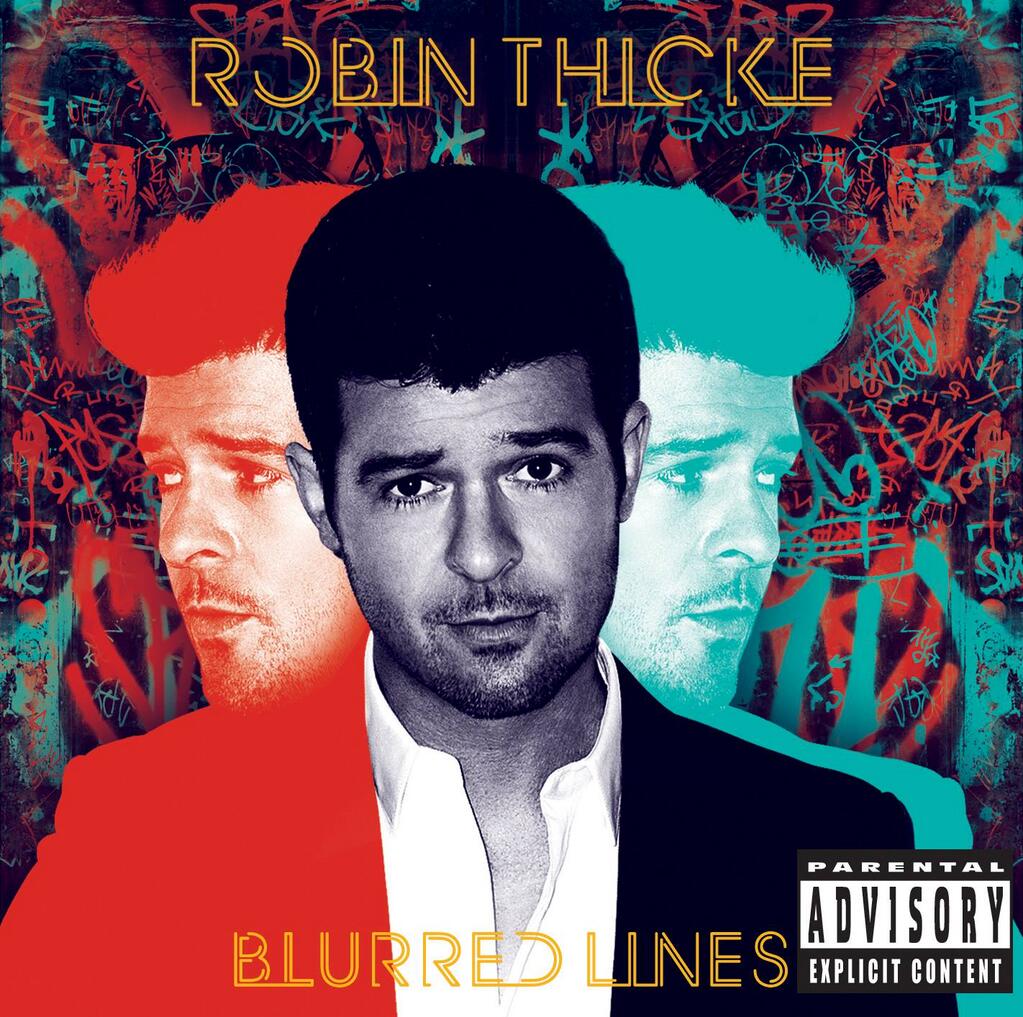
Soul legend Marvin Gaye’s family have now issued proceedings in an action involving Robin Thicke’s hit single “Blurred Lines”. Two of Gaye’s children have filed a suit against Thicke, producer and writer Pharrell Williams and rapper T.I. for copyright infringement of Marvin’s classic tune “Got to Give it Up” along with a claim against EMI Music, saying the music publisher failed to act on Gaye’s behalf and breached it's fiduciary duty, siding instead with Thicke and Williams. Williams is with EMI and from this relatonship the publisher has a controlling interest in the song. The claim also accuses the chair of EMI Music Publishing of intimidating family members.  According to Billboard, the suit claims that the Chairman of the publishing company personally contacted the Gaye estate's attorney and accused the family of "ruining an incredible song" and "killing the goose that laid the golden egg" and allegedly said that he believed the dispute had stopped Thicke from winning a VMA gong and could prevent Blurred Lines  taking the Grammy Award for Song Of The Year in 2014:  The lawsuit says that EMI's alleged failings are all the more worrying because of Sony/ATV/EMI's dominance in the music publishing sector. On the issue of market dominance, the lawsuit points to the  30% plus share of the global music publishing market controlled by Sony-EMI saying that there is a strong likelihood that conflicts of interest will occcur.  It goes on: "Based upon the blatant and egregious breach of the EMI defendants' fiduciary duty and their covenant of good faith and fair dealing, the EMI defendants have proven that they cannot be trusted to remain neutral and impartial, and that they are unworthy of the level of trust and professional conduct which is required of a copyright administrator charged with protecting the Gaye Family's important interests in copyrighted works created by Marvin Gaye". The lawsuit comes after Thicke and his collaborators filed a case with a federal court in August asking the judge to rule that they had not copied “Got to Give It Up” for their track. I am hoping my fellow blogger Patrick Goold will have a further update for us on this fascinating story in the very near future

Sky have won a victory in their first successful Scottish copyright infringement against Mark Daly, designated premises manager of Old College Bar in Glasgow,  who was ordered to pay £10,000 plus legal costs for showing Sky Sports without a viewing agreement. Daly must also fund advertising in newspapers and trade publications publicising the case. More on this on the Morning Advertiser. Sky has now obtained a number of injunctions and said it was bringing separate contempt of court action is being after alleging an injunction was ignored.

The US courts have been asked again if numbers can be copyrighted. Despite a Supreme Court ruling in 1991 that facts aren’t copyrightable,  Banxcorp v. Costco Wholesale Corp. (09-CV-1783 (S.D.N.Y. Oct. 17, 2013)) resulted in a thorough 70 page judgment from US District Judge Kenneth M Karas  who found that "3.95%" was not protected. More on Forbes here.

AGCOM, the Italian communications authority, is proposing a controversial new takedown system for the EU nation that goes far beyond the USA's DCMA provisions. The AGCOM proposals, which have been submitted to the European Commission for feedback, would seemingly set a 72 hour deadline for websites to respond to takedown notices. If they failed to do so, the telecoms regulator would have powers to seize or force blockades against offending websites, and also to force net firms to reveal the identities of a site's operators.


An update on the Krrish-3 saga:  The Bombay High Court has now rejected the somewhat last minute appeal against an order of a single judge, who had refused injunctive relief to script writer Uday Singh Rajput alleging copyright violation of his earlier script in the 'Krrish-3' script. A Division Bench headed by Justice Ashok Bhangale said it was not inclined to restrain the producer Rakesh Roshan from releasing the film for the simple reason that the prints were already in circulation - and that Rajput's evidence was inconsistent.

It seems Chinese search engine Baidu has shut down the e-mail system  it  launched to go  with it's new online shopping mall - and its all a matter of copyright issues. The e-mall service allowed users to trade electronic files, including videos, pictures, documents as well as music. Users can also post transaction information and comments - although all the transactions are done via Baidu's payment platform, baifubao. Baidu had made it clear that it did not the own copyrights in any (or all!) of the electronic files uploaded by its users, and went further saying it had no obligation to check the files: it seems the search engine required potential users to sell copyrighted resources based on an "honor system". Baidu said that if any copyright complaints were filed, the use of related electronic resources would be stopped. Now the whole service has been halted.

Whether or not collection societies are monopolies, or act like monopolies, is a tricky issue: Many in the business world want 'one stop shops' for effective licensing, especially in a global digital market - but no one wants a bully! Now the Tokyo High Court has overturned a previous ruling by the Japan Fair Trade Commission (JFTC) and has concluded that the Japanese Society for Rights of Authors, Composers and Publishers (JASRAC) violates the country’s anti-monopoly law. The court says the JFTC ruling in 2012 that JASRAC was not a monopoly was “a mistake.”

And finally ....... Isohunt is back ...... as a new domain and with many - but not all - of the original files, but seemingly no longer associated with founder Gary Fung.