Monday, 8 June 2015

Questions from Coimbra as yet another reference is made to the CJEU

From Axel Paul Ringelhann comes news of another copyright-related reference to the Court of Justice of the European Union for a preliminary ruling. It's Case C-151/15 Sociedade Portuguesa de Autores CRL v Ministério Público and it's a request from the Tribunal da Relação de Coimbra, Portugal. Again, its theme is that of "communication of works to the public". Asks the referring court:
1. Is the concept of the communication of works to the public within the meaning of Article 3(1) of Directive 2001/29 [the InfoSec Directive] to be interpreted as encompassing the transmission of broadcast works in commercial premises such as bars, cafes, restaurants or other such establishments with similar characteristics, via television receiving apparatus, where the transmission of such works is amplified by speakers or amplifiers, thus constituting, in that context, a new use of copyright-protected works?

2. Does the use of speakers and/or amplifiers, that is, technical means other than television broadcast reception equipment, to amplify broadcast sound have any affect on the answer to the first question?
This blogger will confine himself to the observation that technology-neutral legislation such as Article 3(1), which reads
"Member States shall provide authors with the exclusive right to authorise or prohibit any communication to the public of their works, by wire or wireless means, including the making available to the public of their works in such a way that members of the public may access them from a place and at a time individually chosen by them",
has not succeeded as a means of preventing technology-specific questions being asked of the CJEU, since -- however general the terms of the legislation may be -- communication to the public is a phenomenon that is in practice anything but technology-neutral.

Friday, 5 June 2015

Not a Bog Standard Copyright Case


Thursday 30th April 2015 was a pleasant, sunny day and so not a bad one to sit in the IPEC Small Claims court, listening to a battle between two toilet brushes. No, not a design rights case, but a case about copyright in a yellow toilet brush known as Brush Lee. When you know that the character seems to be a Kung Fu expert, the pun based on the film legend Bruce Lee's name becomes clearer.

The case being heard was Beverley Isaacs v Edward Bignell and Naughty Tortoise Ltd.
 
District Judge Clarke explained about how the proceedings would be conducted, without the need for evidence on oath, and with the judge playing an active role in getting to the essence of the evidence and keeping formalities to a minimum. Once two adjournments, one midway through the morning session, and hour for lunch, were discounted, the actual hearing took around three and a half hours.

Devotees of the Fox Kids TV Channel may be familiar with the Brush Lee character who appeared in various 90 second escapades inserted into the advert breaks between the main programming. We learned that these fillers were called interstitials. Those who are not aficionados of children's television can see an example of these 'interstitials' here.
The case concerned a claim that the likeness of the defendant's Brush Lee character was copied from a drawing by Beverley Isaacs of one of a series of characters created jointly by Ms Isaacs and the TV personality Benjamin Zephaniah, which were intended to form part of an animation series centred on Webster Spider (later to be renamed Rasta Spida), which the authors were jointly developing with Granada TV.

Mr Edward Bignell is the director and sole shareholder of the second defendant Naughty Tortoise Ltd (NTL) but in the late 1990s he was employed by Granada TV, and as such he attended these early meetings between Ms Isaacs, Ben Zephaniah and Granada's head of animation Annie Miles. A development agreement between the creators and Granada TV was draw up and signed on 22 March 1999. There then followed a number of meetings to develop the series concept, including one on 29 March 1999 when Ms Isaacs produced a drawing of a character she called Lu Brush, and it was claimed that a further more detailed drawing of the character was sent to Mr Bignell some days later. The Lu Brush character was visually based on a simple yellow toilet brush figure with oriental eyes and a propensity for kung fu. Following one of these meetings, the participants adjourned to the bar and during the ensuing hospitality, Mr Zephaniah had suggested the name 'Brush Lee' for the character, making a pun on the ever popular Bruce Lee. However while the Rasta Spida idea was developed, the toilet brush character was dropped and did not feature in the later work.

In 2000 Mr Bignell left Granada to set up as a freelance programme consultant using a predecessor company to NTL, Naughty Tortoise Productions Ltd. In September 2001 he was hired in this capacity by his old boss from Granada, Annie Miles, who had by then moved to become managing director of the Fox Kids Channel. Miles and Bignell then discussed a number of ideas for interstitials using characters based on household objects, to be used on the Fox Kids Channel. It was said that these discussions were merely a continuation of ideas about parodies of classic film genres, like westerns and kung fu, which the two had been discussing at Granada prior to the Isaacs/Zephaniah pitch of the Webster Spider idea. Mr Bignell gave evidence about how he, along with a team at Fox, developed a character based on a ninja toilet brush who was locked in battle with his adversary Jackie Chain (a wash basin plug and chain). In essence, cheap household items were bought on the high street and eyes and mouths drawn on plastic were then fixed to them, and the resulting figures were then simply manipulated by hand (as can be seen in the YouTube video link given above), to create the drama.

The defendant's position was that Ms Isaac's and his characters were created independently of each other, and that the choice of name for the Fox Kids Channel character was taken from Mr Zephaniah's suggestion, with the latter's approval. Indeed it was alleged that Mr Zephaniah had been aware of the development work going at Fox Kids and had not objected to it. Mr Zephaniah did not give evidence in person but in his statement, said he could not recall ever having given permission or to having acquiesced to the Brush Lee character being developed by Fox Kids. However neither party contended that the name 'Brush Lee' was subject to copyright.

The claimant spent some time during the hearing itemising the similarities between the two characters, which largely came down to the fact that both featured toilet brushes of a conventional design, used in such a way that the long thin handle was the head and body, and the bristles effectively represented the lower legs. And both were yellow in colour.
Mr Bignell claimed that although the idea was similar, the expression of it was very different. What's more, the defendant claimed that the idea of an animated toilet brush with human features was not at all uncommon in the advertising world or elsewhere.

The 25 short interstitial sequences were broadcast on Fox Kids in 2002, and in 2008 Mr Bignell obtained permission from the Channel to have the IP in the videos assigned to him. The following year, he licensed the rights in the videos to Target Entertainment in Australia, and subsequently, using his NTL company, put DVDs of the series on sale in the UK, along with copies some videos posted on YouTube which were intended to boost sales.

Mr Bignell and Ms Isaacs were the only witnesses to be called. Written statements from a number of other people were relied on by both sides. Mr Bignell's evidence was cross-examined at length, and he came across as someone who, although sure of the rightness of his version of events, often could not recall the details with sufficient clarity to back up his assertions. And although not technically a witness of fact, Mr Bignell's representative, Mr Andrew Baker, was able to assist the court with some additional generic background information about why and when development agreements might be drawn up and what sort of IP they would ordinarily seek to protect. This was based on his experience in the legal department at Granada TV, albeit at a different time to that pertaining to this case.

The hearing involved argument from both sides about the early sequence of events (much of which was disputed) and about the similarities between the works. Further time was spent discussing how the name Brush Lee came about, although the name was not really at issue. This was then followed by argument about whether the claim was time barred, given that the broadcast of the Fox Kids interstitials took place in 2002, which was rebutted by the claimant, who argued that since the DVDs were still on sale, the infringement was still continuing up to the date of the hearing. Lastly there was some discussion about the correct basis for assessing damages, and whether referring to a scale of fees set out in a US publication, The Graphic Artist's Handbook, was appropriate in this case. Understandably District Judge Clarke reserved her judgment, but today this has been handed down. She found in favour of the defendant, on the basis that none of the specific creative elements which Ms Isaacs gave to her character in order to transform it from an ordinary toilet brush into something with human characteristics were copied in Mr Bignell's character. Mr Bignell was awarded costs of £522.30, and the claimant was denied permission to appeal. 


_______________________________________________________________
The Doctor Fun cartoon © David Farley, reproduced here by kind permission of David Farley (dfarley@uchicago.edu)

The CopyKat

Azerbaijan’s Copyright Agency has issued a statement saying Armenians have been stealing the Azerbaijani peoples’ musical compositions, folklore samples and other intangible values for years. The statement came after the Armenian Culture Ministry apparently tried to submit the Azerbaijani folk dance "Kocheri" to UNESCO as part of the Armenian 'intangible cultural heritage' and the statement goes on to say 'Armenians are trying to present Azerbaijan’s “Sari gelin”, “Susen Sunbul” and dozens of other folk songs, “Yalli, “Kocheri”, “Uzundere”, “Mirzeyi” dances, ancient musical instruments (tar, balaban, zurna), even works of famous Azerbaijani composers Uzeyir Hajibeyli, Gara Garayev, Fikret Amirov and modern composers like Armenian examples'. More here.

Steve Albini, the renowned musician, record engineer, producer and songwriter has voiced a number of controversial but interesting opinion at the Primavera Pro conference and festival in Barcelona. You can read all about it here but gems included his view that the music industry “makes me angry that it exists as a parasite on the music scene, which is the fans, bands, shows, and the people who help them" and “The idea that you have to have contracts to do [business] agreements, that you have to have formal understanding between people in order to have a long relationship, is a complete fallacy" and “If you enjoy working with someone and both feel the relationship is working out, you naturally carry on indefinitely" and on copyright "“The old copyright model – the person who creates something owns it and anyone else that wants to use it or see it has to pay them – has expired in the same way that around the world you’re seeing structures and social norms [lapse] that were standard for many years.


In the UK, "recent controversy over the Green party's copyright policy illuminates not only the workings of the literary world but the essence of the Party’s shortcomings", argues Hana Gudelis in a well written piece in Varsity. Its well worth a read with Gudelis saying "Not only have the Green party failed to fully consider the negative consequences of their policy on one of the most vulnerable professions in society, but the members of the party have not even reached a clear understanding amongst themselves about the details of the copyright policy. "

Also in the UK, the High Court in London has granted The Publishers Association a blocking order under s97A of the CDPA, meaning the UK's leading ISPs will be required (within 10 working days) to block customer access to seven sites containing infringing content. The Publishers Association has issued almost one million take down requests to the sites. Chief Executive of Publisher's Association, Richard Mollet, said: “A third of publisher revenues now come from digital sales but unfortunately this rise in the digital market has brought with it a growth in on-line infringement. Our members need to be able to protect their authors’ works from such illegal activity; writers need to be paid and publishers need to be able to continue to innovate and invest in new talent and material." And Mr Justice Birss in the High Court has ordered a group of ISPs to block access to the “Popcorn Time” application for copyright film and TV content: Twentieth Century Fox Film Corporation and others v Sky UK Ltd and others.  More here.and more here.


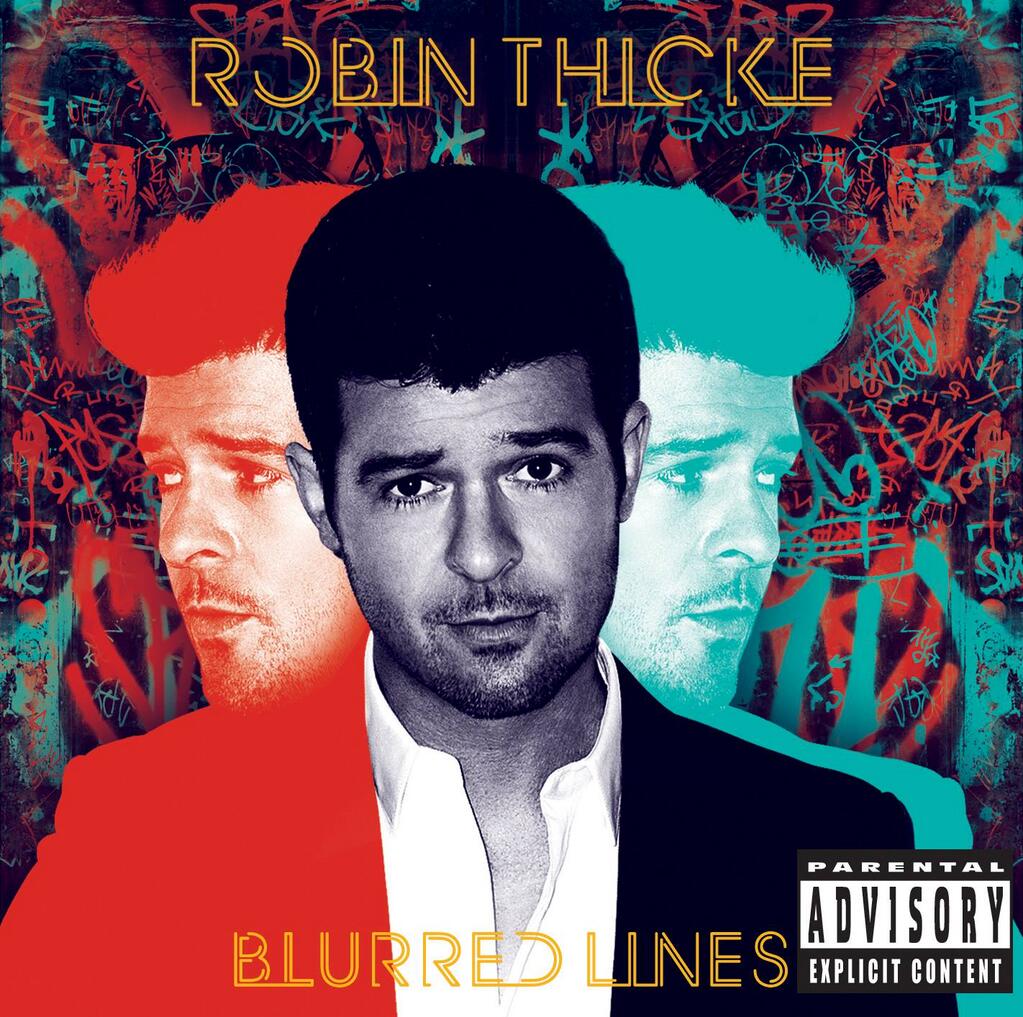
Universal has submitted papers to the US Courts arguing that despite Pharrell Williams and Robin Thicke being found liable by a jury for plagiarising Marvin Gaye's "Got to Give It Up" - rapper TI (real name Clifford Harris) and their Interscope label cannot be held liable in the "Blurred Lines" litigation - because the said jury didn't find against them: "The court may not enter an order declaring that Clifford Harris Jr and the Interscope parties 'are directly liable to the Gaye family for copyright infringement' because the jury found, as to this very issue, that Harris and the Interscope parties are not liable to the Gaye parties for copyright infringement. Once a jury has decided an issue, a court may not 'declare' the opposite on that same issue without violating the prevailing parties' Seventh Amendment right to a jury trial".

Justice Robert A. Blair has been appointed  chair of the Copyright Board of Canada for a five-year term, effective immediately. Blair was appointed to the Court of Appeal for Ontario in November 2003, after serving for 12 years as a trial judge on the Superior Court.

And finally, the fall out from the shuttering of the original Grooveshark continues: U.S. District Judge Alison Nathan (sitting in Manhattan) has widened a preliminary injunction against the operators of the cloned Grooveshark service - and the injunction now include California based CloudFlare, Inc,.which optimizes the speed of websites and allows Internet users to connect to them without having to type in the numerical Internet address. But this "makes CloudFlare and other Internet Service Providers the copyright and trademark police for other rights holders" according to the company's general counsel, Kenneth Carter and CloudFlare, which does not host websites or register domain names, had said in court papers filed on May 28th that its services were passive and automatic, and that even without CloudFlare, the new Grooveshark would be able to continue (Arista Records LLC et al v. Vita Tkach et al, in the U.S. District Court for the Southern District of New York, No. 15-cv-3701).

Thursday, 4 June 2015

Reha Training and GS Media: a call for comments

Apologies for a spot of double posting, but this is a slightly slimmed down version of a post that appeared on the IPKat weblog earlier today.  Given that the readership of the two weblogs is not coterminous and that this post is of substantial interest to the copyright community, it seemed prudent to make sure that readers of the 1709 Blog got to see and, if necessary, act upon it.

Two Court of Justice of the European Union (CJEU) copyright cases are the subject of an invitation to comment, issued by the UK Intellectual Property Office as a means of evaluating whether the UK government should make observations to the court.

The first is Case C-117/15 Reha Training Gesellschaft für Sport- und Unfallrehabilitation mbH v Gesellschaft für musikalische Aufführungs- und mechanische Vervielfältigungsrechte (GEMA), a request for a preliminary ruling from the Landgericht Köln (Germany) in a case that involves a rehabilitation facility. This establishment has a number of TV screens showing various TV programmes in recreation and training rooms: these screens, and presumably the programmes shown on them, can be watched by people making use of those rooms. In the underlying action Reha Training is seeking to resist the collecting societies claim for royalties on the basis that the availability of the TV screens constitutes a “communication to the public”. The questions referred for a preliminary ruling read as follows:
Is the question as to whether there is a ‘communication to the public’ within the meaning of Article 3(1) of Directive 2001/29 [on the harmonisation of certain aspects of copyright and related rights in the information society: the InfoSoc Directive] and/or within the meaning of Article 8(2) of Directive 2006/115 [on rental right and lending right and on certain rights related to copyright in the field of intellectual property] always to be determined in accordance with the same criteria, namely that
(a) a user acts, in full knowledge of the consequences of its action, to provide access to the protected work to third parties which the latter would not have without that user’s intervention,

(b) the term ‘public’ refers to an indeterminate number of potential recipients of the service and, in addition, must consist of a fairly large number of persons, in which connection the indeterminate nature is established when ‘persons in general’ — and therefore not persons belonging to a private group — are concerned, and ‘a fairly large number of persons’ means that a certain de minimis threshold must be exceeded and that groups of persons concerned which are too small or insignificant therefore do not satisfy the criterion; in this connection not only is it relevant to know how many persons have access to the same work at the same time but it is also relevant to know how many of them have access to it in succession;

(c) the public to which the work is communicated is a new public, that is to say, a public which the author of the work did not contemplate when he authorised its use by communication to the public, unless the subsequent communication uses a specific technical means which differs from that of the original communication; and

(d) it is not irrelevant that the act of exploitation in question serves a profit-making purpose and also that the public is receptive to that communication and is not merely ‘reached’ by chance, although this is not an essential condition for the existence of a communication to the public?
In cases such as that in the main proceedings, in which the operator of a rehabilitation centre installs television sets on its premises, to which it transmits a broadcast signal and thus makes it possible for the television programmes to be viewed and heard, is the question whether there is a communication to the public to be assessed according to the concept of ‘communication to the public’ under Article 3(1) of Directive 2001/29 or under Article 8(2) of Directive 2006/115 if the copyright and related rights of a wide range of persons concerned — in particular composers, songwriters and music publishers, but also performing artists, phonogram producers and authors of literary works as well as their publishing houses — are affected by the television programmes which have been made accessible?

In cases such as that in the main proceedings, in which the operator of a rehabilitation centre installs television sets on its premises, to which it transmits a broadcast signal and thus makes television programmes accessible to its patients, is there a ‘communication to the public’ pursuant to Article 3(1) of Directive 2001/29 or pursuant to Article 8(2) of Directive 2006/115?

If the existence of a communication to the public within this meaning is confirmed for cases such as that in the main proceedings, does the Court of Justice thereby uphold its case-law according to which no communication to the public takes place in the event of the radio broadcasting of protected phonograms to patients in a dental practice (see the judgment of 15 March 2012 in SCF, C-135/10, EU:C:2012:140 or similar establishments?
Readers may be getting a slight sense of déjà vu at this point, recalling that another CJEU reference, Case C-351/12 Ochranný svaz autorský pro práva k dílům hudebním, os (OSA) v Léčebné lázně Mariánské Lázně as [noted by Eleonora for the IPKat here], dealt with a similar set of facts involving a health spa.

If you would like to advise the UK Intellectual Property Office of your opinion, which might just precipitate a British submission in these proceedings, just email policy@ipo.gov.uk by 12 June 2015. You don't have to British to offer your thoughts -- and it probably doesn't even help if you are.

*********************************

The second is Case C-160/15 GS Media, this being a reference from the Hoge Raad der Nederlanden, The Netherlands to which the IPKat has already alluded here and here. In the underlying proceedings GS Media is a company which runs a website which allegedly infringed copyright in relation to photographs taken for a feature by publishing a hyperlink on its website that allowed the public to access those photos on an external, third party hosted site which also did not have consent to publish the photos in question. The questions asked here are these:
1(a) If anyone other than the copyright holder refers by means of a hyperlink on a website controlled by him to a website which is managed by a third party and is accessible to the general internet public, on which the work has been made available without the consent of the rightholder, does that constitute a ‘communication to the public’ within the meaning of Article 3(1) of Directive 2001/29? 
(b) Does it make any difference if the work was also not previously communicated, with the rightholder’s consent, to the public in some other way? 
(c) Is it important whether the ‘hyperlinker’ is or ought to be aware of the lack of consent by the rightholder for the placement of the work on the third party’s website mentioned in 1(a) above and, as the case may be, of the fact that the work has also not previously been communicated, with the rightholder’s consent, to the public in some other way? 
2(a) If the answer to question 1(a) is in the negative: in that case, is there, or could there be deemed to be, a communication to the public if the website to which the hyperlink refers, and thus the work, is indeed findable for the general internet public, but not easily so, with the result that the publication of the hyperlink greatly facilitates the finding of the work?

(b) In answering question 2(a), is it important whether the ‘hyperlinker’ is or ought to be aware of the fact that the website to which the hyperlink refers is not easily findable by the general internet public?

3. Are there other circumstances which should be taken into account when answering the question whether there is deemed to be a communication to the public if, by means of a hyperlink, access is provided to a work which has not previously been communicated to the public with the consent of the rightholder?
Again, if you would like to advise the UK Intellectual Property Office of your opinion, which might just precipitate a British submission in these proceedings, just email policy@ipo.gov.uk by 12 June 2015.

French Highest Court “Casse” in Foldable Bag Copyright Infringement Case


This post is about a recent French case which shows that, while French copyright law protects original handbags, explaining what exactly makes a bag original has to be carefully worded, by the parties of course, but for the courts as well. The Cour de cassation, France highest civil court, “broke” (‘casser’) a holding of the Paris Court of appeals which, after having listed the various elements which made a bag original, found no copyright infringement of this bag evenwhile referring to other original elements of the bag. 

Longchamp is a French bag and accessories company. Its most famous model is the Pliage bag, a nylon bag which can be folded to fit in a smaller bag (pliage means ‘folding’ in French). Its success led to the creation of a whole range of Pliage bags, which are now available in nylon and leather, may or may not be foldable, and can even be personalized.

Longchamp discovered in 2010 that bags similar to its Pliage bag were sold online. The company and the original designer of the bag sued the seller and the manufacturer of the bags sold online for copyright infringement. The court of first instance, the Tribunal de Grande Instance de Paris (TGI) rejected their claims. For the TGI, the Pliage bag was indeed protectable, but the defendants had not infringed on any of the plaintiff’s rights. Plaintiffs appealed, but the Paris Court of Appeals confirmed the judgment on September 13, 2013. Longchamp and the Pliage bag designer then took their case to the Cour de cassation.
Pliage Bag, from the back


The Pliage bag is indeed famous. Plaintiffs even claimed on appeal that it is the most copied bag in the world. Appellees did not dispute the originality of the Pliage bag, but argued instead that, because the bag was an original combination of several mundane elements, only this original combination could be protected by copyright, not the separate elements. They further argue that the Pliage bag was a combination of elements ordinarily used by every bag designer, and specific, original characteristics, “namely the specific form of the flap highlighted by the thick stitched sewing, the gold button [closing the snap], highly visible seams on all sides of the leather elements, the combination of brown leather stitched with other materials, and specific proportions.”

The Court of Appeals agreed that the Pliage bag is original, as it combines these elements:

- small flap with snap, located between the two handles and a cap portion of the zipper;  
- slightly rounded shape of this little flap, highlighted by a thick stitched sea


-         -  sewing stitches on the front of the bag, in the extension of the flap and evoking the outline of the inner bag;
-          - affixing of the flap on the back of the bag by a double stitched seam;
-          - two handles finishing by rounded edges affixed on each side of the bag opening by affixed tabs;
-          -two small rounded tabs on each end of the zipper which highlight the top corners of the bag, curving upward;
-         - the trapezoidal shape of the body, seen from the front;
-         - the rectangular bottom and
-        -  the triangular profile.

The Court of Appeals then compared the Pliage bag with the allegedly counterfeiting bag and did not find it infringes on Pliage. To come to this conclusion, the Court of Appeals noted that the Appellee’s bag had a wider flap, did not feature stitched seams and did not have a small gold button to snap close the front flap. Also, both flaps had different shapes, and the stitches of Appellee’s bag used the same color than the bag’s overall material, whereas the bag’ s stitches contract in color with the body of the bag. The handles of Appellee’s bag did not feature stitches, and the ending part of the handles had a different shape. Also, both bags had different shape, rectangular for Appellee’s bag and trapezoidal for the Pliage bag. 

The Court of Appeals noted that Appellee’s bag would have been counterfeiting the Pliage bag if it had  used “the distinguishing characteristics of the combination of Longchamp bag model: the specific form of the flap emphasized by the thick stitched sewing, gold button, highly visible seams on all leather parts, the alliance of brown leather stitched with other materials and colors, the specific proportions, which are the dominant elements of the combination giving the model its originality.”

The Court of Appeals found that Appellee’s bag had “its own physiognomy, a particular aesthetic bias which alter the overall visual impression of this model as compared to the Longchamp bag, which precludes any risk of confusion, especially since the discriminating consumer of the famous Longchamp bag would immediately perceive these differences.” Somehow, the right holders of a famous bag would have to meet an even higher burden of copyright infringement proof because their work is famous.

But the Cour de cassation found that, by this ruling, the Court of Appeals had violated article L. 122-4 of the French IP Code, which makes it illegal to reproduce fully or partially a protected work without authorization of the right holder. For the high court, “the existence of a golden button, the alliance of brown leather stitched with other materials and colors, and the "specific proportions" [of the bag] were not the elements that the Court had chosen to assess the originality of the bag, and also, the existence of a likelihood of confusion is irrelevant to the characterization of the infringement of copyright.” 

This last phrase is a welcome addition to the French fashion copyright attorney’s toolbox,especially when defending the rights of famous bags, such as the Pliage, or, say, the Birkin, which would otherwise have to convince courts that the sophisticated clientele would never take a $75 plastic Birkin for the real McCoy. French Copyright does not serve as an indication of the source, but, rather, protects the patrimonial and moral rights of the author of the work.

Picture is courtesy of Flickr user Cyril Attias under a CC BY-NC-ND 2.0 license.


Tuesday, 2 June 2015

What's the story with digital exhaustion? A new article

A few months ago the Court of Justice of the European Union ('CJEU') issued its decision in Allposters [Katposts here; 1709 Blog posts here]

Article 4(2) of the InfoSoc Directive directive provides that the authorised first sale of a work within the territory of the EU exhausts the right of the copyright owner to control any subsequent distribution of the work in question. 

What the CJEU had been asked to clarify in Allposters was whether this rule also applies to works that, following their authorised first sale, are subject to an alteration of their mediums and are then re-marketed in this new form.

The court referred to both Recital 28 in the preamble to the InfoSoc Directive and Article 6 of the WIPO Copyright Treaty, including the Agreed Statement on Articles 6 and 7, to hold the view that exhaustion of the right of distribution only applies to the tangible copy of a work.

In so doing, albeit rooted within a very specific (analogue) background, the CJEU appeared to rule out any possibility of having digital exhaustion under the InfoSoc Directive. 

Whether EU law allows digital exhaustion arguably remains however an unresolved issue, with diverging interpretations being provided at the level of national courts. Yet, despite the legal and economic relevance of allowing markets for second-hand digital works, current EU copyright reform plans seem regrettably not to include any consideration of issues facing general digital exhaustion, or its lack thereof.

If you are interested in this case and its implications, I have just completed an article [available herewhich will be published in the Journal of Intellectual Property Law & Practice in due course.

Richard Prince Re-purposed?

This summary is not available. Please click here to view the post.

Monday, 1 June 2015

Cheap at the price? Ukraine Supreme Court upholds Lily Allen infringement claim

The Ukrainian Supreme Commercial Court has recently ruled in favour of Ukrainian record company Comp Music Publishing in its copyright dispute against Astelit, one of the largest Ukrainian mobile telephone network operators, which trades under the life:) trade mark. Comp Music Publishing sought compensation for infringement of copyright owned by its client, the multinational music recording and publishing company EMI Music Publishing.

Between February and March 2010, life:) conducted an advertising campaign in which it ran a total of 4,369 broadcasts of a commercial, on 20 Ukrainian TV channels, that contained a musical composition based on the British recording artist Lily Allen’s 2009 hit single F*** You, authored by Lily Allen and American producer and songwriter Greg Kurstin.

In response to the copyright infringement allegation. Astelit claimed that the music was produced by its contractor, Shootgroup, which had employed the composer Vitaliy Rozinko, who only used part of the disputed song in his remix. In proceedings before the Kiev Commercial Court against Astelit, Shootgroup and Rozinko, Comp maintained that it had the exclusive rights to the song in Ukraine, under an agreement with EMI, demanding  21,000 euro (US$ 23,000) in damages. After two years of litigation, the Supreme Commercial Court of Ukraine has recently upheld the claim and awarded the damages sought.

Source: Olga Goncharova, "Lily Allen Song Basis Of Copyright Infringement Battle In Ukraine", in a Petosevic news item based on the Ukrainian newspaper Ekonomichna Pravda and the State Register of Court Decisions.

You can read the full judgment in Ukrainian (assuming that you can read Ukrainian) here

This blogger notes that the damages paid out by Astelit worked out at 4.81 euros per broadcast. A bargain?