Showing posts with label IPEC. Show all posts

Sunday, 1 November 2015

Battle of the Bed Linen


At the end of September, a case was heard in the Intellectual Property Enterprise Court (IPEC) which highlights both the strengths and weaknesses of that court and its streamlined procedures. The case was T & A Textiles v Hala Texile UK Ltd and others, and it was heard before Mr Douglas Campbell sitting as a Deputy High Court Judge. The judgment has just been handed down.

This was primarily a case about copyright infringement of the artistic designs for bed linen, although there was also a complaint concerning the registered design of some packaging and a counter-claim of making threats contrary to s 26 of the Registered Designs Act 1949. Although a number of designs were involved, the court looked specifically at the claimant's design known as Chantilly, and the defendant's design known as Richmond, which are shown here.
Claimant's 'Chantilly' design

Defendant's 'Richmond' design

Having established that the defendant had had access to the claimant's designs, it might seem that all the court had to do was assess the extent to which the one design copied the other. But this was not necessary, since the defendant's defence was not only one of independent creation, but of prior creation. And the court took the view that the defendant had in fact been selling their Richmond product before the date that the claimant claimed to have designed their product, and so the copyright infringement claim failed.

However as is evident from the judgment, the court had to make this finding based on inadequate evidence and in some instances, poor cross-examination of the witnesses. As many readers will know, the major 'selling point' for the IPEC is its procedures to maintain a tight control over both the cost and the complexity of the overall case. Thus the case management (CMC) aspect is key to keeping the hearings slick and relevant. But where matters are complicated, or become more complicated than at first appreciated, such limitations may have an adverse impact on the administration of justice.

In this particular case two things occurred to make the otherwise sensible CMC directions rather too rigid when it came to trial. The first was that discovery did not go well: the claimant needed extra prompting to deliver the original digital design files and even when they were made available, there were discrepancies between the dates on the files, and the dates the claimant asserted the works had been created. This matter was not adequately resolved at trial. Furthermore, the defendant was unable to deliver up the design files for its products as these were the property of a company in Pakistan which was not prepared to release them. But potentially more damaging to the defendant's case was the accusation that a statement by one of its key witnesses (Mr Amin, said to be the designer of the Richmond and other alleged infringing designs) had been forged without his knowledge. There were counter claims that the claimant had tried to coerce Mr Amin into providing a statement which supported the claimant's case. Since Mr Amin lives in Pakistan and did not appear either in person or via video link before the court, this posed difficulties in testing his evidence. The judge was therefore forced to look very carefully at the balance of probabilities when assessing both the incomplete evidence and the less than probing cross examination. In addition, both parties sought to submit new evidence just two days before the trial, some of which the judge agreed to, and thus it meant that counsel had much less time to prepare their respective cases than would normally be expected with careful case management.

On the matter of the registered designs, the court found that the claimant's registered design was invalid by virtue of there being a previous existing design in use by a number of other people. With regard to the defendant's counter-claim, the claimant was found to have made threats contrary to s 26 RDA. This was in respect of a letter from the claimant's solicitors to eBay which referred to the impending legal action. This letter was found to have gone beyond what is normally acceptable under s 26(3) RDA - 'mere notifiction' of a rightsowner's claim to a particular piece of intellectual property - as it implied that eBay could also become liable in the same action, if they (eBay) did not remove the listings complained of.

I doubt if the claimant T & A Textiles will seek to appeal. They are unlikely to count this case as being their finest hour, and can truly be said to have lost the case. Had the parties spent more time prior to trial in trying to achieve a settlement, during which the salient facts about dates might have become available, a great deal of the legal costs might have been avoided. For the IPEC, although undoubtedly the correct findings were made, this sort of rushed and half prepared case does not serve as a good advertisement for justice, or as a good use of the court's time. Perhaps a second CMC and a postponed (and then possibly unneeded) trial would have produced a more satisfactory outcome.

Wednesday, 16 September 2015

Quantum Surveying the IPEC Way


When we report cases of copyright infringement, we all too often concentrate just on the arguments and evidence which lead to the outcome at trial: the winners and losers. For obvious reasons it is rarely possible to look in detail at those cases which settle, because the agreements usually bind the parties to confidentiality, and slightly less rarely do we examine the separate hearings in which quantum is assessed and awarded. There are  two possible reasons why these hearings are less commented upon: they are intrinsically less interesting as they have little bearing on the law per se (ie they tend to be very fact specific to each case therefore hard to draw inferences from), and they also tend to be less extensively reported on Bailii and in the law reports.

However for those less conversant with litigation - and this includes the growing number of litigants in person - the process(es) by which quantum is assessed can form an important element when considering whether to fight or settle. For the layman to only consider such matters as the likely damages after liability has been established, is rather too late. And from lawyer’s point of view, occasionally a costs hearing can involve a determining of which law which should be applied.

And so it was with a recent judgment from the IPEC under His Honour Judge Hacon in the matter of Absolute Lofts Ltd v Artisan Home Improvements Ltd and Anor [2015] EWHC 2608 (IPEC). The case provides both a welcome insight into the current thinking on assessing quantum in copyright cases, and the extent to which the UK law may be at variance with the EU Enforcement Directive (2004/48 EC) (pdf) brought into force by the Intellectual Property (Enforcement etc) Regulations 2006. This is the second time that Judge Hacon has published a judgment concerning an inquiry into damages - the first being Henderson v All Around The World Recordings Ltd, which was a case about unpaid royalties and performer’s rights, reported on by Eleonora here.

Returning to the current case, it is only necessary to set out the facts in the most outline of terms, because the defendant admitted liability at trial. The claimant, Absolute Lofts, is as its name suggests, a company which specialises in loft conversions. It is based and operates in London and has its own website. The owner of the company, Mr Craig Colton takes photographs of work he has completed and posts them on his company's website. There was no dispute that he owned the copyright in these images and that he had assigned the copyright to his company.

Artisan Home Improvements Limited is a company operating in the Bradford area. In around 2009, the company's owner (and second defendant) Mr Darren Ludbrook expanded his existing small building business to include the loft conversion market. He needed images of conversions for his website in order generate interest in this new area of work. Although he blamed his website designer, the court found that he either took 21 images from the website of Absolute Lofts and included them on the Artisan website, or there were reasonable grounds for believing he knew they were infringing images. The fact that potential customers of Artisan were being misled in this way was not at issue in the proceedings, although the judge took this into account when assessing Mr Ludbrook’s integrity and general approach to business.

In something of a departure from the normal structure of a court judgment, Judge Hacon first outlined in some detail the methodology chosen to calculate the quantum, before addressing the law which governs the awarding of damages. In this case, the so-called 'user principle' was followed. This principle is based on the construction by the court of a hypothetical negotiation between claimant and defendant before the act complained of, where each party would have been acting willingly and without duress to achieve the same state of affairs (ie the use of the 21 images) in a legal way. This differs from quantum based on presumed (or provable) losses suffered by the claimant, or the presumed ( or provable) profits made by the defendant arising out of the infringement.

The first thing the court looked at were the alternatives to using Mr Colton's images: Mr Ludbrook could have commissioned his own photographer, or he could have purchased licensed images from a stock agency (which is ultimately what he did, once the letter before action was received and he was obliged to take down Mr Coltan's images). Counsel for each side provided their own estimates, supported by expert testimony, of the cost of commissioning 21 similar photographs, which ranged between £9,000 (the claimant's figure) and £700 (the defendant's lowest estimate), but the court rejected this analysis on the basis that Mr Ludbrook was seen as a man "prepared to use the cheapest images he could find that looked good enough and could pass for photos of loft conversions done by Artisan" [22]. Instead, the judge took the view that the best evidence was provided by what actually happened when Mr Ludbrook was forced to find substitute images - he obtained them from a stock agency for a total of £300. This was the level of ordinary damages the court awarded.

The claimant had also sought aggravated damages under Section 97(2) of the CDPA. This subsection says a court may award additional damages having regard to all the circumstances, but in particular to the flagrancy of the infringement and any benefit accruing to the defendant by reason of the infringement. However the judge found that he needed to consider whether s 97(2) had been made redundant by the Enforcement Directive, specifically Art. 13(1). This came about because the UK Regulations which brought the Directive into force, state in Reg 3 (2) that damages may be awarded based on taking all appropriate aspects into account (this would include those factors covered in s 97(2)), or damages based royalties or fees which would have been due if the parties had agreed beforehand (the user principle outlined above). However this strict either/or approach was not to be found to be so rigid in the Directive (Art 13 1a and 1b). In the directive, the wording for the second condition is: damages “such as at least the amount of royalties or fees …” (my added emphasis). The court decided at [48] that the Directive thus allowed the national courts to consider additional damages, such as those contemplated by s 97(2), since Art 2 of the Directive permitted national differences in the means of enforcement if they were more favourable for rightholders than those provided for in the Directive. On this basis the court felt it was appropriate to award additional damages on the basis of the indirect benefits the defendant gained from the infringement, that is to say the increased business in loft conversions following the use of the images on the website. The business accounts for Artisan over the relevant period were inadequate to show the actual profits but turnover was clearly substantial (around £500,000 in 2013 for example), and it had to be assumed that this was in part due to orders won of the strength of the website. The judge awarded an extra £6,000 in damages under this head. This figure would have been the same he concluded, whether it was calculated under the Art 13(1) process, or s 97(2) CDPA.

This is a somewhat simplified version of the judgment, which interested readers are encouraged to read  for themselves in order to gain the full nuance of the deliberations.

Postscript.   Following the hand down of this judgment, counsel for Absolute Lofts returned  to the court to ask for an amendment to the award of ordinary damages (the figure of £300). Their grounds for seeeking this were that when the court had taken the Shutterstock fees as good evidence of the real world  cost of obtaining a licence for 21 similar images of loft conversions. However the full terms of the licence had been omitted from the trial bundle. The claimant had subsequently obtained these terms  and found that amongst other things they contained the following:
    “YOU [the licensee of the images] MAY NOT”:
[...]
12. Use an Image in a manner that infringes upon any third party’s
trademark or other intellectual property, or would give rise to a claim of deceptive advertising or unfair competition.
[...]
18.  Use any Image (in whole or in part) as a trademark, service mark,  logo or other indication of origin, or as part therefore, or to otherwise endorse or imply the endorsement of any goods and/or services.’
19.  Falsely represent, expressly or by way of reasonable implication, that any Image was created by you or a person other than the copyright holder(s) of that image."
Clearly Artisan's use of the licensed images was in breach of these terms and so the licence was invalid. It follows that Shutterstock would either have charged more for the actual use, or would not have permitted such use at all. Either way the figure of £300 was the wrong basis for the award.

The judge then had to decide whether he was permitted to reconsider his judgment and award of damages without the necessity a new trial or an appeal. Fortunately earlier this year Mr Justice Birss had had cause to examine much the same issue in Vringo Infrastructure Inc v ZTE (UK) Limited [2015] EWHC 214 (Pat). Birss J  concluded that where evidence was adduced after judgment had been given, the principles set out in Ladd v Marshall [1954] 1 WLR1489 might well be applied by the trial judge since he would have a better view of the facts than an appeal court.

HHJ Hacon stressed that while these principles are not decisive they are highly relevant to the current case:
“First, it must be shown that the evidence could not have been obtained without reasonable diligence for use at the trial. Secondly, the evidence must be such that, if given, it would probably have an important influence on the result of the case, though it need not be decisive. Thirdly, the evidence must be such as is presumably to be believed or, in other words, it must be apparently credible, though it need not be incontrovertible.”
Counsel for Absolute Lofts argued that this was not new evidence, and therefore the first principle did not apply, but the judge disagreed. On the basis that these additional terms could have been discovered with reasonable diligence before the trial or at least before judgment, the first principle was not met and so the application must fail.

Full details of the judgment here


Monday, 6 April 2015

Small claims triumph as aerial photographer routs flagrant infringers

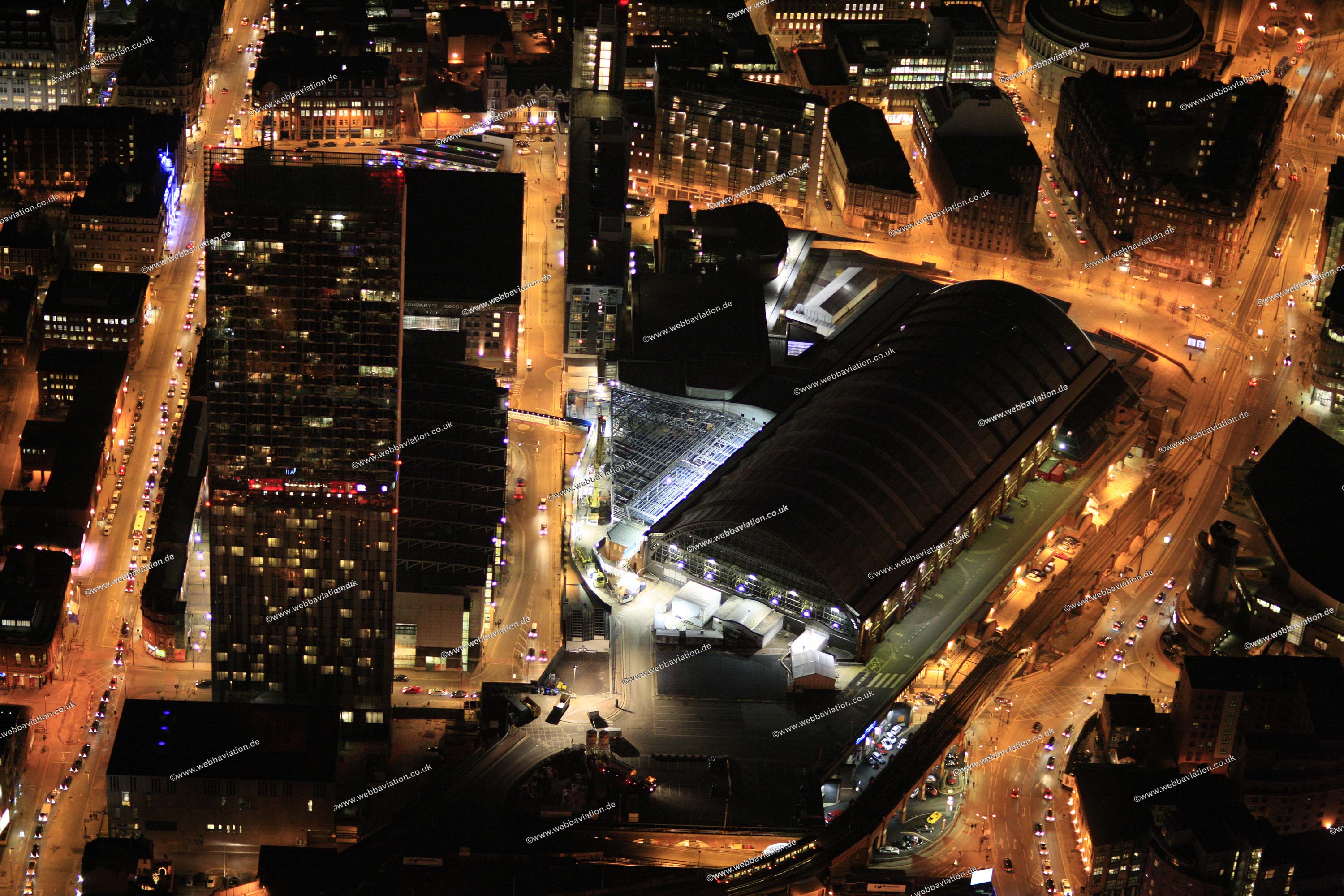
There's so much doom and gloom in the world of copyright enforcement, and few readers of this weblog can have failed to notice that life is rarely rosy for photographers.  It is therefore with great pleasure that the 1709 Blog can give some space to a bit of jubilation on the part of a small claims track litigant in the Intellectual Property Enterprise Court (IPEC) for England and Wales. The litigant in question is aerial photographer Jonathan Webb of Webb Aviation (here and here), whose stunning photograph -- portrayed below -- was brutally and callously infringed, with results that turned out to be far better for the victim than the infringers could ever have imagined.  This is what he writes:
Hi, I have news from the IPEC small claims track which may be of interest. The short version is that I was awarded a 500% Flagrancy uplift plus costs which I believe is a new record for the IPEC small claims track. The undisputed value of my images was £300 (ex VAT) so I got that plus £,1500 plus court costs, plus train fair plus £90 witness expenses, making a grand total of £2,716.

Another big first for IPEC small claims is that the corporate veil was well and truly pierced. The two directors were held to be personally jointly and severally liable along side their now dissolved limited company.

In the IP world generally this is probably not big news but for small-time creative like me, the IPEC small claims track has proved to be very effective and has changed the IP scene dramatically. Before the IPEC small claims track opened in 2012 the UK had become a copyright wild west. Copyright of IP worth just a few hundred pounds was effectively unenforceable with legal fees threatening to top £20,000 for a case arguing over a work with only a three figure value. In my own case only a very tiny proportion of commercial users of my images were doing so lawfully. The vast majority of people wanting to use my images were simply illegally copying the image from my website and removing any copyright info from my images.

In 2011 I was at the point of almost giving up and had reduced my expenditure on stock photography in the UK dramatically, preferring to invest more in my German photography, where copyright infringement is much less of a problem. Once the IPEC small claims track opened all that changed dramatically. Not only can I make a few of the infringers pay me, but much more importantly many previous infringers are now having to actually take a licence in my works, which has led to a big increase in normal sales over in addition to the small additional infringement settlement income. This has saved my business form destruction and I am investing in photography once again.
Jonathan then provides further detail.
The Case Number is IP14S01982 Jonathan C K Webb (Claimant:) v 1.VA Events Ltd, Carl Jason Austin and Dale Stanley Vicker, 5 March 2015.

 
The image that was infringed is shown above. In the infringement the image was converted to black and white and each and every one of the copyright notices (©www.webbaviation.co.uk) was removed . Here and here are a couple of close-ups showing the original and infringing versions side by side showing just two of the 33 instances where the script was carefully removed, using the Clone tool as found in photo editing software such as “Photoshop”. Considerable time over many hours has been spent on removing this copyright script as each script has been expertly removed a tiny bit at a time so that the replacing texture matches into the rest of the photograph. Great care and effort has been devoted to ensuring that what was previously covered by the copyright script is replaced by something which looks like what should have been there beforehand, so for example, where © www.webbaviation.co.uk had previously covered a section of tram lines, in the infringing version of the image, new tram lines have been carefully painted into place so that little trace of the removed copyright script remains. Similarly where the script previously crossed a series of roof trusses over the Great Northern Railway Goods warehouse, new roof trusses have been painted in by the infringer to replace those previously covered by the copyright script. The result is that to the layman the image looks like an original image, however to an expert when viewed magnified, the clone tool leaves behind tell tale evidence of its use.

The defendant had put all blame on their elusive web designer who was also a dissolved limited company and apparently could not be contacted. The defendant did not provide any supporting evidence for the web designer's alleged involvement such as the web designers contract.

The big issue of the case was the piercing of the corporate veil. The defendants in this case are a limited company and the two directors against whom I personally issued proceedings as joint tortfeasors with their company. One of the directors was present and represented himself, his co-director and his company. He reiterated in court that the website had been contracted to a third party and that any liability on their side should be the liability of the company and not the directors.

The judge found in the claimant's favour and found the directors to be personally liable with the judge citing MCA Records Inc v Charly Records [2002].

I had thought much of the veil-piercing would rest on the fact that the defendants had abused the corporate veil by dissolving the company in the middle of proceedings (the form to dissolve the company was by amazing coincidence signed the day before the defendants received the claim form!). Anyway, that was not mentioned but much was said over the two directors controlling the company alone. The phrase "directing mind" from the above case was used.

Clearly veil-piercing is not for every situation but in cases like this the directors must have been party to the decisions around the infringement which was criminal in nature, they are personally liable.

The defendants' other defence was the usual Copyright, Designs and Patents Act section 97(1) one: "We didn't know it was copyright protected". This got short shrift from the judge who quoted the Hoffman v Dare judgment. The judge said it was naive to suggest that a company involved in promotion and marketing could say they thought images found on the net were not covered by copyright.

When it came to flagrancy I was shown two letters which the defendants had written to the court, describing the claim as ludicrous and preposterous. I had not been copied with these letters but was given time to read them during the hearing. As well as denying their own liability and placing blame on the uncontactable web designer the defendants' letter also stated that the claimant was responsible for the infringement because I had put the images on the internet. Now if we go back to the original image I linked earlier, you can see that in the entire history of photographs on the internet there has never been a more clearly copyright marked photograph displayed so there is no doubt that the defendants' unwise comments and attitude to copyright contributed greatly to the amount of the flagrancy award -- and indeed the judge commented on the defendants' attitude to copyright in her summing up.

Also coming back to haunt them, the defendants had described the removal of 33 instances of “© www.webbaviation.co.uk” and unlawful use of the image as "inadvertent"! The judge commented that the use of this word was misleading and indicative of the defendants' attitude. The removal of 33 copyright scripts was described by the judge as deliberate, deceitful, calculated and not easy to do with each script being individually removed. This also had the consequence of orphaning the work.

There was also derogatory treatment as the defendants had added their own assertion of copyright on the web page, deliberately removing the claimant;s copyright notice and inserting their own copyright notice at the bottom of each web page which indicates they knew about copyright.

Damages were awarded as the value of the image (uncontested) £300 plus 500% for flagrancy, making £1,800 In total. To that were added court issue fee £205, hearing fee £335, train fare £82, and witness fee of £90 plus interest at 4% making a grand total of £2,716.

With regard to interest, this was added to both the principle and to the flagrancy element. Previously it had been turned down for the flagrancy element but in this case the particulars of claim put more justification on the bases that the flagrant act was carried out in the beginning.

All in all a very interesting day and, for me, the most important thing is not the £2716 I will get from the defendant, but the fact that the defendant has to pay £1,800 for a £300 picture, plus costs, will deter other image users from infringing my work. This will be worth far more than £2,716 in extra sales from people who will now buy instead of infringe.