Showing posts with label small claims track. Show all posts

Friday, 5 June 2015

Not a Bog Standard Copyright Case


Thursday 30th April 2015 was a pleasant, sunny day and so not a bad one to sit in the IPEC Small Claims court, listening to a battle between two toilet brushes. No, not a design rights case, but a case about copyright in a yellow toilet brush known as Brush Lee. When you know that the character seems to be a Kung Fu expert, the pun based on the film legend Bruce Lee's name becomes clearer.

The case being heard was Beverley Isaacs v Edward Bignell and Naughty Tortoise Ltd.
 
District Judge Clarke explained about how the proceedings would be conducted, without the need for evidence on oath, and with the judge playing an active role in getting to the essence of the evidence and keeping formalities to a minimum. Once two adjournments, one midway through the morning session, and hour for lunch, were discounted, the actual hearing took around three and a half hours.

Devotees of the Fox Kids TV Channel may be familiar with the Brush Lee character who appeared in various 90 second escapades inserted into the advert breaks between the main programming. We learned that these fillers were called interstitials. Those who are not aficionados of children's television can see an example of these 'interstitials' here.
The case concerned a claim that the likeness of the defendant's Brush Lee character was copied from a drawing by Beverley Isaacs of one of a series of characters created jointly by Ms Isaacs and the TV personality Benjamin Zephaniah, which were intended to form part of an animation series centred on Webster Spider (later to be renamed Rasta Spida), which the authors were jointly developing with Granada TV.

Mr Edward Bignell is the director and sole shareholder of the second defendant Naughty Tortoise Ltd (NTL) but in the late 1990s he was employed by Granada TV, and as such he attended these early meetings between Ms Isaacs, Ben Zephaniah and Granada's head of animation Annie Miles. A development agreement between the creators and Granada TV was draw up and signed on 22 March 1999. There then followed a number of meetings to develop the series concept, including one on 29 March 1999 when Ms Isaacs produced a drawing of a character she called Lu Brush, and it was claimed that a further more detailed drawing of the character was sent to Mr Bignell some days later. The Lu Brush character was visually based on a simple yellow toilet brush figure with oriental eyes and a propensity for kung fu. Following one of these meetings, the participants adjourned to the bar and during the ensuing hospitality, Mr Zephaniah had suggested the name 'Brush Lee' for the character, making a pun on the ever popular Bruce Lee. However while the Rasta Spida idea was developed, the toilet brush character was dropped and did not feature in the later work.

In 2000 Mr Bignell left Granada to set up as a freelance programme consultant using a predecessor company to NTL, Naughty Tortoise Productions Ltd. In September 2001 he was hired in this capacity by his old boss from Granada, Annie Miles, who had by then moved to become managing director of the Fox Kids Channel. Miles and Bignell then discussed a number of ideas for interstitials using characters based on household objects, to be used on the Fox Kids Channel. It was said that these discussions were merely a continuation of ideas about parodies of classic film genres, like westerns and kung fu, which the two had been discussing at Granada prior to the Isaacs/Zephaniah pitch of the Webster Spider idea. Mr Bignell gave evidence about how he, along with a team at Fox, developed a character based on a ninja toilet brush who was locked in battle with his adversary Jackie Chain (a wash basin plug and chain). In essence, cheap household items were bought on the high street and eyes and mouths drawn on plastic were then fixed to them, and the resulting figures were then simply manipulated by hand (as can be seen in the YouTube video link given above), to create the drama.

The defendant's position was that Ms Isaac's and his characters were created independently of each other, and that the choice of name for the Fox Kids Channel character was taken from Mr Zephaniah's suggestion, with the latter's approval. Indeed it was alleged that Mr Zephaniah had been aware of the development work going at Fox Kids and had not objected to it. Mr Zephaniah did not give evidence in person but in his statement, said he could not recall ever having given permission or to having acquiesced to the Brush Lee character being developed by Fox Kids. However neither party contended that the name 'Brush Lee' was subject to copyright.

The claimant spent some time during the hearing itemising the similarities between the two characters, which largely came down to the fact that both featured toilet brushes of a conventional design, used in such a way that the long thin handle was the head and body, and the bristles effectively represented the lower legs. And both were yellow in colour.
Mr Bignell claimed that although the idea was similar, the expression of it was very different. What's more, the defendant claimed that the idea of an animated toilet brush with human features was not at all uncommon in the advertising world or elsewhere.

The 25 short interstitial sequences were broadcast on Fox Kids in 2002, and in 2008 Mr Bignell obtained permission from the Channel to have the IP in the videos assigned to him. The following year, he licensed the rights in the videos to Target Entertainment in Australia, and subsequently, using his NTL company, put DVDs of the series on sale in the UK, along with copies some videos posted on YouTube which were intended to boost sales.

Mr Bignell and Ms Isaacs were the only witnesses to be called. Written statements from a number of other people were relied on by both sides. Mr Bignell's evidence was cross-examined at length, and he came across as someone who, although sure of the rightness of his version of events, often could not recall the details with sufficient clarity to back up his assertions. And although not technically a witness of fact, Mr Bignell's representative, Mr Andrew Baker, was able to assist the court with some additional generic background information about why and when development agreements might be drawn up and what sort of IP they would ordinarily seek to protect. This was based on his experience in the legal department at Granada TV, albeit at a different time to that pertaining to this case.

The hearing involved argument from both sides about the early sequence of events (much of which was disputed) and about the similarities between the works. Further time was spent discussing how the name Brush Lee came about, although the name was not really at issue. This was then followed by argument about whether the claim was time barred, given that the broadcast of the Fox Kids interstitials took place in 2002, which was rebutted by the claimant, who argued that since the DVDs were still on sale, the infringement was still continuing up to the date of the hearing. Lastly there was some discussion about the correct basis for assessing damages, and whether referring to a scale of fees set out in a US publication, The Graphic Artist's Handbook, was appropriate in this case. Understandably District Judge Clarke reserved her judgment, but today this has been handed down. She found in favour of the defendant, on the basis that none of the specific creative elements which Ms Isaacs gave to her character in order to transform it from an ordinary toilet brush into something with human characteristics were copied in Mr Bignell's character. Mr Bignell was awarded costs of £522.30, and the claimant was denied permission to appeal. 


_______________________________________________________________
The Doctor Fun cartoon © David Farley, reproduced here by kind permission of David Farley (dfarley@uchicago.edu)

Monday, 6 April 2015

Small claims triumph as aerial photographer routs flagrant infringers

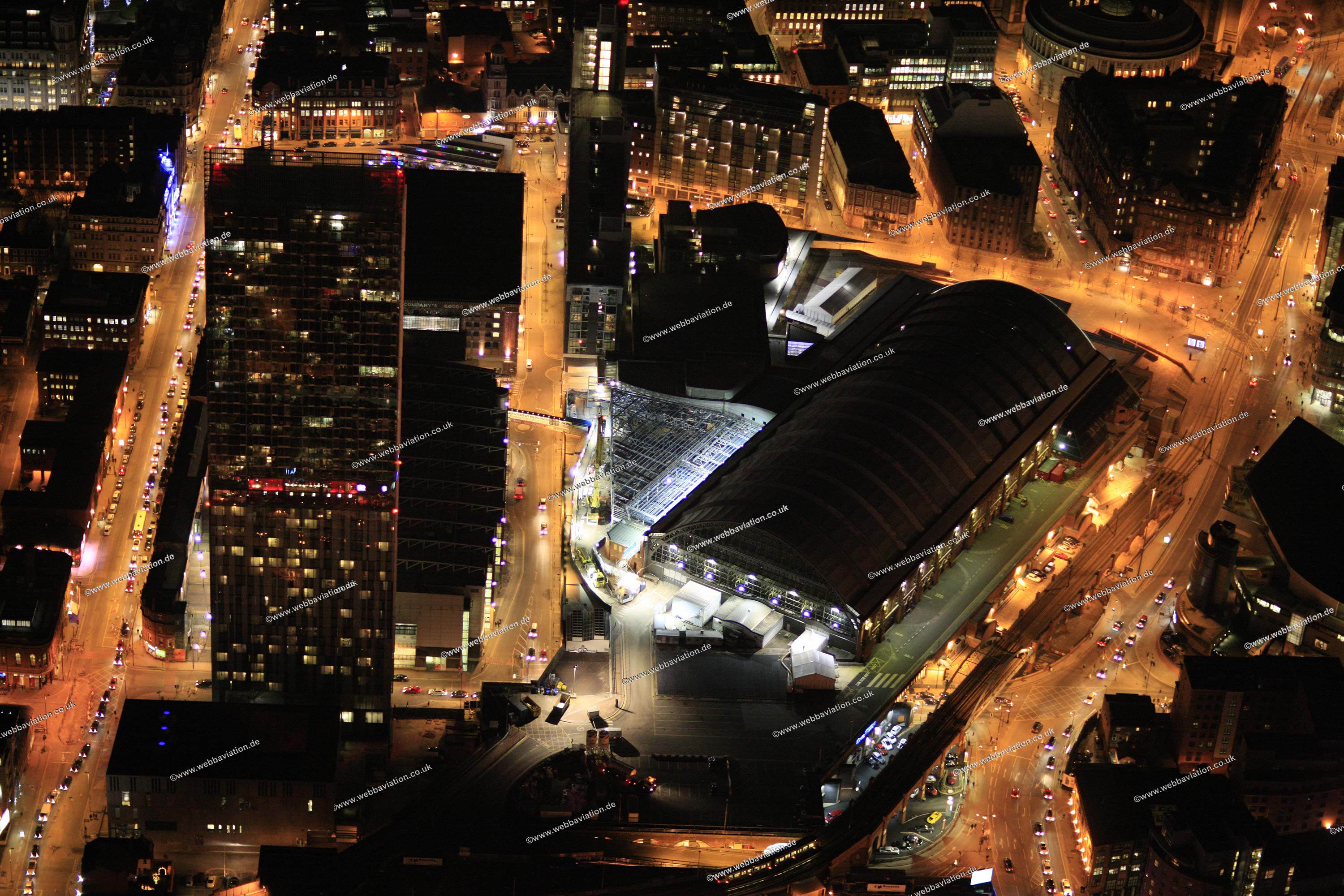
There's so much doom and gloom in the world of copyright enforcement, and few readers of this weblog can have failed to notice that life is rarely rosy for photographers.  It is therefore with great pleasure that the 1709 Blog can give some space to a bit of jubilation on the part of a small claims track litigant in the Intellectual Property Enterprise Court (IPEC) for England and Wales. The litigant in question is aerial photographer Jonathan Webb of Webb Aviation (here and here), whose stunning photograph -- portrayed below -- was brutally and callously infringed, with results that turned out to be far better for the victim than the infringers could ever have imagined.  This is what he writes:
Hi, I have news from the IPEC small claims track which may be of interest. The short version is that I was awarded a 500% Flagrancy uplift plus costs which I believe is a new record for the IPEC small claims track. The undisputed value of my images was £300 (ex VAT) so I got that plus £,1500 plus court costs, plus train fair plus £90 witness expenses, making a grand total of £2,716.

Another big first for IPEC small claims is that the corporate veil was well and truly pierced. The two directors were held to be personally jointly and severally liable along side their now dissolved limited company.

In the IP world generally this is probably not big news but for small-time creative like me, the IPEC small claims track has proved to be very effective and has changed the IP scene dramatically. Before the IPEC small claims track opened in 2012 the UK had become a copyright wild west. Copyright of IP worth just a few hundred pounds was effectively unenforceable with legal fees threatening to top £20,000 for a case arguing over a work with only a three figure value. In my own case only a very tiny proportion of commercial users of my images were doing so lawfully. The vast majority of people wanting to use my images were simply illegally copying the image from my website and removing any copyright info from my images.

In 2011 I was at the point of almost giving up and had reduced my expenditure on stock photography in the UK dramatically, preferring to invest more in my German photography, where copyright infringement is much less of a problem. Once the IPEC small claims track opened all that changed dramatically. Not only can I make a few of the infringers pay me, but much more importantly many previous infringers are now having to actually take a licence in my works, which has led to a big increase in normal sales over in addition to the small additional infringement settlement income. This has saved my business form destruction and I am investing in photography once again.
Jonathan then provides further detail.
The Case Number is IP14S01982 Jonathan C K Webb (Claimant:) v 1.VA Events Ltd, Carl Jason Austin and Dale Stanley Vicker, 5 March 2015.

 
The image that was infringed is shown above. In the infringement the image was converted to black and white and each and every one of the copyright notices (©www.webbaviation.co.uk) was removed . Here and here are a couple of close-ups showing the original and infringing versions side by side showing just two of the 33 instances where the script was carefully removed, using the Clone tool as found in photo editing software such as “Photoshop”. Considerable time over many hours has been spent on removing this copyright script as each script has been expertly removed a tiny bit at a time so that the replacing texture matches into the rest of the photograph. Great care and effort has been devoted to ensuring that what was previously covered by the copyright script is replaced by something which looks like what should have been there beforehand, so for example, where © www.webbaviation.co.uk had previously covered a section of tram lines, in the infringing version of the image, new tram lines have been carefully painted into place so that little trace of the removed copyright script remains. Similarly where the script previously crossed a series of roof trusses over the Great Northern Railway Goods warehouse, new roof trusses have been painted in by the infringer to replace those previously covered by the copyright script. The result is that to the layman the image looks like an original image, however to an expert when viewed magnified, the clone tool leaves behind tell tale evidence of its use.

The defendant had put all blame on their elusive web designer who was also a dissolved limited company and apparently could not be contacted. The defendant did not provide any supporting evidence for the web designer's alleged involvement such as the web designers contract.

The big issue of the case was the piercing of the corporate veil. The defendants in this case are a limited company and the two directors against whom I personally issued proceedings as joint tortfeasors with their company. One of the directors was present and represented himself, his co-director and his company. He reiterated in court that the website had been contracted to a third party and that any liability on their side should be the liability of the company and not the directors.

The judge found in the claimant's favour and found the directors to be personally liable with the judge citing MCA Records Inc v Charly Records [2002].

I had thought much of the veil-piercing would rest on the fact that the defendants had abused the corporate veil by dissolving the company in the middle of proceedings (the form to dissolve the company was by amazing coincidence signed the day before the defendants received the claim form!). Anyway, that was not mentioned but much was said over the two directors controlling the company alone. The phrase "directing mind" from the above case was used.

Clearly veil-piercing is not for every situation but in cases like this the directors must have been party to the decisions around the infringement which was criminal in nature, they are personally liable.

The defendants' other defence was the usual Copyright, Designs and Patents Act section 97(1) one: "We didn't know it was copyright protected". This got short shrift from the judge who quoted the Hoffman v Dare judgment. The judge said it was naive to suggest that a company involved in promotion and marketing could say they thought images found on the net were not covered by copyright.

When it came to flagrancy I was shown two letters which the defendants had written to the court, describing the claim as ludicrous and preposterous. I had not been copied with these letters but was given time to read them during the hearing. As well as denying their own liability and placing blame on the uncontactable web designer the defendants' letter also stated that the claimant was responsible for the infringement because I had put the images on the internet. Now if we go back to the original image I linked earlier, you can see that in the entire history of photographs on the internet there has never been a more clearly copyright marked photograph displayed so there is no doubt that the defendants' unwise comments and attitude to copyright contributed greatly to the amount of the flagrancy award -- and indeed the judge commented on the defendants' attitude to copyright in her summing up.

Also coming back to haunt them, the defendants had described the removal of 33 instances of “© www.webbaviation.co.uk” and unlawful use of the image as "inadvertent"! The judge commented that the use of this word was misleading and indicative of the defendants' attitude. The removal of 33 copyright scripts was described by the judge as deliberate, deceitful, calculated and not easy to do with each script being individually removed. This also had the consequence of orphaning the work.

There was also derogatory treatment as the defendants had added their own assertion of copyright on the web page, deliberately removing the claimant;s copyright notice and inserting their own copyright notice at the bottom of each web page which indicates they knew about copyright.

Damages were awarded as the value of the image (uncontested) £300 plus 500% for flagrancy, making £1,800 In total. To that were added court issue fee £205, hearing fee £335, train fare £82, and witness fee of £90 plus interest at 4% making a grand total of £2,716.

With regard to interest, this was added to both the principle and to the flagrancy element. Previously it had been turned down for the flagrancy element but in this case the particulars of claim put more justification on the bases that the flagrant act was carried out in the beginning.

All in all a very interesting day and, for me, the most important thing is not the £2716 I will get from the defendant, but the fact that the defendant has to pay £1,800 for a £300 picture, plus costs, will deter other image users from infringing my work. This will be worth far more than £2,716 in extra sales from people who will now buy instead of infringe.