Showing posts with label PETA. Show all posts

Wednesday, 20 September 2017

THE COPYKAT

It's been a busy few days!

Another US lawsuit has been added to the mounting litigation against Spotify and the streaming platform's alleged failure to pay mechanical royalties in the USA for the right to 'copy' a song (rather than the 'perfoming' right).  In fact there have been three developments: an objection to Spotify's proposed settlement of the original class action on this issue, a rebuttal of its most recent legal arguments, and a brand new lawsuit. Hypebot's take is this: "The recorded music industry is in the midst of a renaissance thanks to revenue from a single source - streaming. But a growing string of lawsuits filed by songwriters and publishers, and an aggressive new legal tactic by Spotify, threatens the company's pending IPO and could derail the industry's delicate recovery"

Chance The Rapper at Hovefestivalen by Rashid Akrim / NRK
Three-time Grammy-winning Chance the Rapper (Chancellor Bennett) is being sued for copyright infringement. The suit was filed by Abdul Wali Muhammad on in the Illinois District Court. Muhammad is a musician-turned lawyer, who copyrighted the composition of ‘Bridge Through Time’ in 1979.  Muhammad’s claim rests on Bennett’s sampling of his composition in the track ‘Windows’ from his debut mixtape as Chance, 10 Day.  Whilst the use of copyrighted material is fairly obvious, Bennett’s particular approach to the music industry makes the case interesting. Bennett wrote 10 Day after being suspended from school in 2011. ‘Waves’ was released in December 2011 and soon after Complex listed him as one of ‘10 New Chicago Rappers To Watch Out For’ in February 2012. The mixtape itself was only self-released on DatPiff.com in April 2012. Since then it has been downloaded for free 538,617 times. It will be interesting to see how this develops. 

"There's a tattoo as a design, and then there's that same tattoo after it's inked on the human body. Tattoo artists often copyright their tattoos. But does that copyright stick once the image is inked on the human body?" A useful update on Ars technica looks at the interesting world of copyrght and tattoos and Solid Oak Sketches action against Take-Two Interactive Software, makers of  the highly popular NBA 2K game series based on the claim that Take-Two is infringing its copyrighted works because the game shows players incuding LeBron James abd Kobe Bryant with their real-world inked tattoos that Solid Oak Sketches created - and copyrighted in the US.  Even if the tattoos are copyrightable, Take-Two argued that it has a fair-use right to show the players with their tattoos, which are not a prominent feature of the video game. "Solid Oak's profit-making litigation should be halted in its tracks by dismissing Solid Oak’s copyright claim as a matter of law under the de minimis use and fair use doctrines," Take-Two claims.More on Ars Technica here and on this Blog here and here and the IPkat here.  


China's National Copyright Administration (NCAC) has told music companies operating in China that they must stick to market rules, and that all market players must adopt international practices to widen licensing and spread online music. The NCAC told an assembly of over twenty companies that they must work together to avoid giving exclusive music copyright to online music providers. The administration also underlined the laws and international conventions on copyright, warning companies against infringement. The NCAC said that music companies must not allow online music providers to bid up licensing prices, and must support the work of copyright organizations to protect the rights of copyright holders, especially lyricists and songwriters. They should also set up a more effective framework for licensing, cooperation and operation of online music copyright to improve order and for the industry to prosper, the NCAC said.

China's top legislature has passed a  law to protect the nation's national anthem and to ensure appropriate use of the song. The law was adopted after a second reading at the bimonthly session of the Standing Committee of the National People's Congress. China's national anthem is "March of the Volunteers," has lyrics by poet Tian Han and music by Nie Er. The song will only be allowed at formal political gatherings, including the opening and closing of NPC sessions, constitutional oath ceremonies, flag raising ceremonies, major celebrations, award ceremonies, commemorations, national memorial day events, important diplomatic occasions, major sport events and other suitable occasions. It will be illegal to use the national anthem during funerals, "inappropriate" private occasions, commercials or as background music in public places. The law says that violators, including those who maliciously modify the lyrics or play/sing the national anthem in a distorted or disrespectful way, can be detained for up to 15 days or held criminally liable.

US TV star Dr. Phil is involved in a novel copyright decision Involving a woman who has alleged he falsely imprisonmed her: Leah Rothman, a former director on his show, used her iPhone to record nine seconds of outtakes to possibly aid herself in a legal battle. Rothman alleges suffering emotional distress and false imprisonment when, during a meeting, Dr. Phil locked the door, yelled profanities and threatened employees for supposedly leaking internal information to the press. Before she brought her action, Rothman says she attempted to get evidence by accessing a database of videos from the Dr. Phil Show archives and using her iPhone to record a nine-second clip of magterial she thought would be valuable to her litgation. But now a court has concluded that his wasn't 'fair use' with U.S. District Court Judge Rodney Gilstrap saying “Rothman did not copy to then educate the masses or to further the greater good. She copied to aid her pending lawsuit seeking money damages where she is the only plaintiff and sole potential beneficiary.” Therefore, Rothman could not hide behind fair use. This isn't the typical copyright story! 

The creator of Pepe the Frog has stepped up his fight against far-right activists who appropriated the cartoon character as a meme. Matt Furie has vowed to "aggressively enforce his intellectual property" after the character he created for a comic strip was plastered across social media and even merchandise, particularly by fans of US President Donald Trump as he fought his election campaign. Eleonora has posted an update on the IPKat here.

Taylor Swift may is facing a new copyright challenge over her 2014 hit “Shake It Off". Songwriters Sean “Sep” Hall and Nate Butler are suing Swift, arguing that the lyrics for “Shake It Off” borrow too heavily from “Playas Gon’ Play,” a 2001 song they wrote for the R&B trio 3LW.  Musician Jessie Braham having previously accused Swift and her co-writers of lifting lyrics from his song 'Haters Gonna Hate'. The claim failed. And two Canadian songwriters have filed a lawsuit alleging copyright infringement against country superstar Carrie Underwood and others. The lawsuit alleges Ronald McNeill and Georgia Lyons-Savage composed the chorus, melody and lyrics to a song called, “Something in the Water” in August 2012. The pair say they completed a vocal mix of the demo in September 2012 and pitched it to Underwood’s team, who declined to use it on her album. But according to the lawsuit, a song by the same name ended up on Underwood’s 2014 “Greatest Hits” album.

And finally and just in case you missed these two big stories ......

"We Shall Overcome" was labelled by the US Library of Congress as “the most powerful song of the 20th century”. It was a unifying anthem for the 1940s labour protests and the 1960s Civil Rights Movement led by Dr Martin Luther King, and came to symbolise the spirit of protest.  Now a federal judge has struck down the copyright for part of the civil rights anthem saying that the song’s adaptation from an older work, including changing “will” to “shall”,  was not original enough to qualify for protection.  Judge Cote said “This single word substitution is quintessentially trivial and does not raise a question of fact requiring a trial to assess whether it is more than trivial … The words ‘will’ and ‘shall’ are both common words. Neither is unusual” adding "The fact that a trivial change to the lyrics became a part of a popular version of a song does not render that change nontrivial and automatically qualify the popular version for copyright protection". More from George Chin here.

Is it the end of the 'monkey selfie' case? It seems so!  The People for the Ethical Treatment of Animals has settled its federal lawsuit that sought to establish the right for animals to own property - in this case the black macaque Naruto's right to own the copyright in a selfie taken with photographer David Slater's equipment in Indonesia. In a joint statement PETA and Slater say: "PETA and David Slater agree that this case raises important, cutting-edge issues about expanding legal rights for non-human animals, a goal that they both support, and they will continue their respective work to achieve this goal. As we learn more about Naruto, his community of macaques, and all other animals, we must recognize appropriate fundamental legal rights for them as our fellow global occupants and members of their own nations who want only to live their lives and be with their families. To further these goals, David Slater will donate 25% of future gross revenue from the Monkey Selfie photographs to charitable organizations dedicated to protecting and improving the welfare and habitat of Naruto and crested black macaques in Indonesia." This may be the end of this case, but is ot the end of the story? If the monkey cannot be the author, but does that mean that Mr Slater owns the copyright in the picture taken by the monkey? And if he doesn't - who does?
More on the settlement here.


Wednesday, 16 August 2017

The CopyKat - mid August musings for copyright monkeys


For years in the USA, there's been ample debate and scholarly literature over whether there really exists a crime for secondary copyright infringement. On Friday, a federal judge in Illinois probably made the day for big copyright holders by ruling that the U.S. Government has properly indicted Artem Vaulin, the alleged founder of KickassTorrents. A copy of the judgment can be viewed in full here.
Vaulin is currently in a jail cell in Poland after the 31-year-old was charged last year by U.S. authorities with running one of the world's most popular places to illegally obtain movies, television shows, songs and video games.
Judge John Lee takes up the issue of whether secondary liability for copyright infringement can be extended from the civil realm to the criminal one. In his decision the judge says that Vaulin is basically missing the big picture.
"[A]s should be clear by now, the indictment does not charge Vaulin with common law secondary liability... Rather, the indictment relies on the text of the congressionally enacted conspiracy and aiding and abetting statutes... Thus, the indictment charges Vaulin not with crimes based upon common law theories, but for conduct made unlawful under unambiguous statutes."
Dawn of Planet of the Apes Halted as Peta call time on Monkey Selfie Case


Naruto, via his self-appointed lawyers from the People for the Ethical Treatment of Animals, is in the process of dropping his lawsuit over the now infamous monkey selfies. That's according to a Friday legal filing with the San Francisco-based 9th US Circuit Court of Appeals, which is being asked to hold off on issuing a ruling that everybody believes is going to go against Naruto.
Nobody would say publicly what the deal is, or why this is happening. However, during oral arguments in the case last month, a three-judge panel of the court of appeals eviscerated Naruto's arguments.

On the positive side though, PETA's lawsuit has prompted public discourse about the idea of animals owning property. And that's why this lawsuit may have been about nothing more than monkey business all along.

Sony is being sued for using a song by glam rock band T. Rex in summer blockbuster Baby Driver "without permission".
The son of late frontman Marc Bolan has filed a lawsuit accusing the studio of copyright infringement over the use of the band's hit Debora. A full copy of the suit can be viewed here.
Feld Bolan won the rights to the works of his father's band three years ago and is seeking punitive damages.
"Inexplicably, defendants failed to obtain - or even seek - the permission of the composition's US copyright holder Rolan Feld," said the complaint filed in Los Angeles federal court.
Feld was made aware of the use of 'Debora' when a Sony Music representative contacted his lawyer to request a licence to use the track on the movie's soundtrack release. The complaint claims that Feld then let Sony know that use of the song in the movie was "unauthorised", but Sony is said to have responded with "conflicting explanations", and Feld says they have now ceased communications.


Cards Against Humanity owns copyright number TX0007492177 at the US Copyright Office for its “base” set and numerous other copyright for its expansion packs.

The company has used the trademark ‘Cards Against Humanity’ since 2009, along with the tagline “A party game for horrible people”, its trade dress, which consists of white lettering on a black background with vertically aligned text, and a three-card design.

Cards Against Humanity is sold to US consumers through Amazon, its own website, eBay and, since 2014, various selected retail stores. A US judge has granted the owners of card game Cards Against Humanity an injunction against Skkye Enterprises, a company accused of selling counterfeit versions of the game. 

Cards Against Humanity filed a copyright and trademark infringement claim(pdf) against Skyye in September 2016 at the US District Court for the Eastern District of Missouri.
District Judge Audrey Fleissig granted (pdf) a permanent injunction and default judgment on Wednesday, August 9.On copyright infringement, Fleissig said that an award of $12,000 per infringement, totalling $60,000—or three times the highest estimated sales of defendants’ infringing game—in combination with the other damages, is a “just and suitably deterrent outcome”.The court awarded $20,000 per trademark infringement, for a total award of $60,000, which Fleissig said “compensates plaintiff in a fashion consistent with the purposes of the Lanham Act and case law”.

Cards Against Humanity was also granted an injunction against Skkye, along with an order for destruction of infringing goods.It was also awarded attorneys’ fees, subject to a further submission to the court on their reasonableness.

This CopyKat from Matthew Lingard

Thursday, 4 August 2016

THE COPYKAT - the macaque is back

New research from the UK's Intellectual Property Office (IPO) shows that internet streaming services such as Spotify and Netflix have resulted in online piracy falling to its lowest rate in years.The research shows that that 15% of internet users illegally accessed films, music and other material between March and May. This is down from 18% a year ago and was the lowest recorded rate in the five years the study has been carried out. Muasic, TV and films dominate piracted material. 
Naruto by ...... ??

We have repeatedly reported on Naruto, the rare crested macaque that took the now internationally famous 'selfie' - and the recents and unsuucesful arguments by animal rights group  PETA (People for the Ethical Treatment of Animals) to persuade the courts that the monkey should be considered the author and copyright owner of the photo saying "While the claim of authorship by species other than homo sapiens may be novel, 'authorship; under the Copyright Act, 17 U.S.C. § 101 et seq., is sufficiently broad so as to permit the protections of the law to extend to any original work, including those created by Naruto". US District Judge William Orrick was unimpressed and ruled that the monkey, who borrowed British photographer David Slater's camera and took the selfies, cannot own the copyright in the pictures. During a brief hearing the judge, dismissing the suit, stated: "I'm not the person to weigh into this. This is an issue for Congress and the president. If they think animals should have the right of copyright they're free, I think, under the Constitution, to do that."  Now the group has filed an apeal with the 9th Circuit Court of Appeals. More here and here.


An infringement case against rapper Ghostface Killah has been revived after a judge ruled that composer Jack Urbont could move forward with the case. The initial lawsuit was dismissed, but in April, 2015 judges for the 2nd Circuit Court of Appeals overturned that decision. Urbont, who created the theme song for the 1960s TV version of Iron Man, filed a lawsuit in 2011, claiming Ghostface sampled the Iron Man Theme twice on his 2000 album 'Supreme Clientele'. Now Judge Peter Hall has ruled that Urbont could argue he owns the rights to the Iron Man Theme, and also suggested Ghostface and the songs' producer RZA may have infringed on the audiovisual rights for the tune, because the Iron Man track was never officially released as a single and was likely lifted from the Marvel Super Heroes show, according to RollingStone.com.


LeBron James by Keith Allison
Tattoo artists Solid Oak Sketches have lost an important battle in their claim against the animators behind the NBA 2K video game series - which feature  several NBA stars including James, Kobe Bryant and Eric Bledsoe - tattoos and all! The tattoo designers were seeking actual damages in an amount to be determined at trial, or statutory damages and attorneys' fees — but a New York federal judge on Tuesday ruled out the latter. "[I]n order to obtain statutory damages and attorneys' fees, a plaintiff must have registered its copyright prior to the alleged infringement," U.S. District Judge Laura Taylor Swain wrote. And the copyrights in the tattoos were not registered until 2015 - AFTER the alleged infringements began in 2013 with the Judge saying "[W]hen the same defendant infringes on the same protected work in the same manner as it did prior to the work's registration, the post-registration infringement constitutes the continuation of a series of ongoing infringements" The judge also dimissed a claim of willful infringemet by 2K Games and Take-Two Interactive Software, saying willfulness is not relevant to analysis of Section 412 of the Copyright Act, which imposes a bright-line rule barring statutory damages and fees if the first act of infringement happened before the work was registered.

The U.S. Copyright Office has criticized the Federal Communications Commission's plans to open up the market for pay-TV set-top boxes, FCC Chairman Tom Wheeler has been pushing for new FCC rules to open up the market for the costly set-top boxes, currently dominated by cable and satellite pay-TV providers, to let in new entrants such as Alphabet Inc.’s Google. .Mr. Wheeler’s plan has prompted strong objections from pay-TV providers and TV-program producers. They argue that the current plan could upset their carefully-negotiated contractual arrangements with pay-TV providers on issues such as channel placement and advertising. The letter from the Copyright Office appears to back those concerns, saying, “As currently proposed, the [FCC] rule could interfere with copyright owners’ rights to license their works as provided by copyright law” adding that Copyright Office is “hopeful that the FCC will refine its approach as necessary to avoid conflicts with copyright law and authors’ interests under that law.”

Its not April Fool's day is it? Anyway, the lawyer of a 90-year-old woman identified as Hannelore K, who mistakenly started filling in an art exhibit in the form of a crossword puzzle, now claims that she holds the copyright of the "new" work. The 1977 creation by the 20th-century artist Arthur Köpcke was lent to Nuremberg’s Neues Museum by a private collector, and is said to be worth around £70,000 and the woman, a retired dentist, said that she started filling in the artwork's crossword puzzle because it bore the phrases "Insert words" and "so it suits." Whilst the artwork has been clensed of her additions in biro, the lawyer has had to rebutt a police investigation into his client's behaviour and has now said that far from harming the work in question, his client has increased its value by bringing the relatively-unknown Köpcke to the attention of a wider public. Moreover, her "invigorating re-working" of the exhibit further increased its worth. Indeed, Frau K.'s lawyer claimed that her additions meant that she now held the copyright of the combined artwork - and that, in theory, the private collector might sue the museum for destroying that new collaborative work (made without his permission) by restoring it to its original state. More on Arts Technica here. Image by Chip Griffin. 

Thursday, 24 September 2015

Return of the Macaque


Animal rights charity PETA has filed a  federal lawsuit in San Francisco seeking to vest copyright in that infamous 'Monkey Selfie' in the crested black macaque who snapped the image with photographer David Slater's unattended camera.  PETA - People for the Ethical Treatment of Animals - is suing on behalf of the macaque, dubbed Naturo, claiming he is the author of his selfies allowing Peta to administer all proceeds from the photos for the benefit of the monkey, and other crested macaques living in a reserve on the Indonesian island of Sulawesi:  "While the claim of authorship by species other than homo sapiens may be novel, 'authorship; under the Copyright Act, 17 U.S.C. § 101 et seq., is sufficiently broad so as to permit the protections of the law to extend to any original work, including those created by Naruto," PETA said in the suit.

The The U.S. Copyright Office has already addressed the dispute in the latest draft of its “Compendium Of U.S. Copyright Office Practices”, which was published on August 19th. The previous compendium stated that “Materials produced solely by nature, by plants, or by animals are not copyrightable.” The new 1,222-page report again makes their stance on animal artwork clear by referring specifically to photographs taken monkeys (and other species of course). “[T]he Office will refuse to register a claim if it determines that a human being did not create the work." Jeffrey Kerr, a lawyer with Peta, told the Guardian that the copyright office policy “is only an opinion”, and the US Copyright Act itself does not contain language limiting copyrights to humans.

It waxs hard enough to work out who 'owned' the infamous Ellen DeGeneres Oscar's selfie. But a monkey? 

PETA have used the courts before but not with any great success: In 2011 PETA filed a lawsuit against marine park operator SeaWorld, alleging five wild-captured orca whales were treated like slaves. A San Diego court dismissed the case


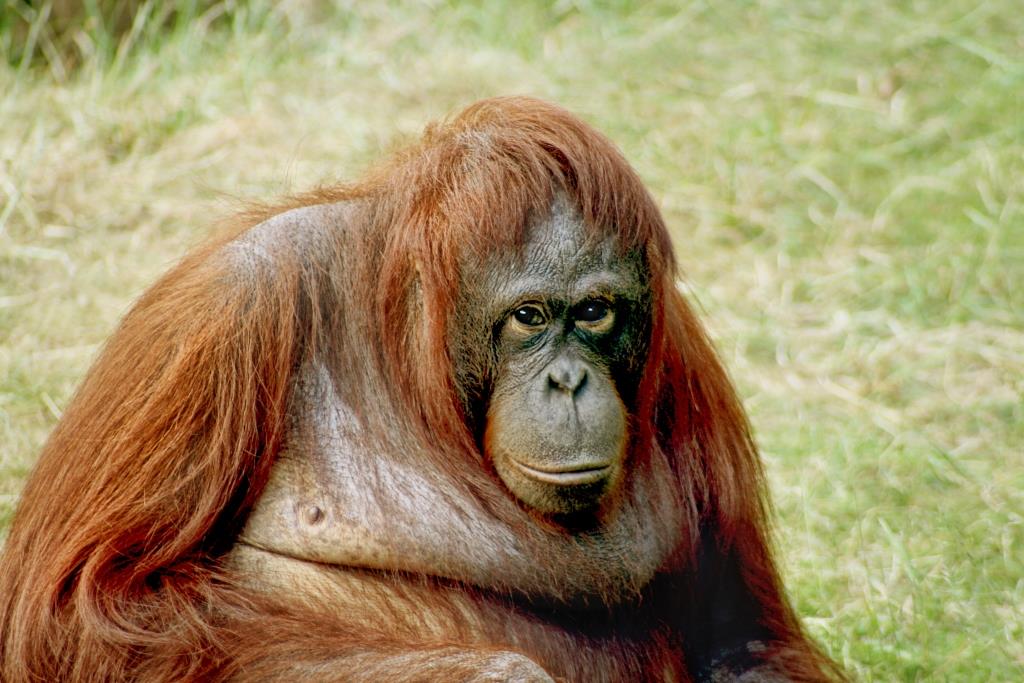
At the end of 2014, the appeals court in New York state said that a caged chimpanzee called Tommy could not be recognised as a "legal person" as it "cannot bear any legal duties" although the Nonhuman Rights Project say the state has previously conferred legal "personhood" status on domestic animals who were the beneficiaries of trusts, as well as extending rights to non-human entities such as corporations. Similarly in 2007 an Austrian Supreme Court refused to appoint a woman as legal guardian of a 26 year old chimpanzee called Hiasl as he was not a person, in a case that was referred to the European Court of Human Rights. Interestingly in December 2014, in another case brought by the Nonhuman Rights Project, a court in Argentina allowed a claim for habeas corpus - for orang-utan Sandra - who had been born in captivity and was being held at Buenos Aires Zoo - finding she deserved the basic rights of a non human person, including the right to life, liberty and freedom from harm, and pending appeal should be released to a sanctuary; but does that extend to the right to copyright authorship one must ask?

In this case, Slater licensed the image to the Caters News Agency, and Slater argued that he had "engineered" the shot, and that "it was artistry and idea to leave them to play with the camera and it was all in my eyesight. I knew the monkeys were very likely to do this and I predicted it. I knew there was a chance of a photo being taken" and claimed copyright. The photographs were uploaded to Wikimedia Commons and the website listed the selfie photograph as being in the public domain on the grounds that it was the creation of an animal, and not a person. Slater requested that the Wikimedia Foundation, the owners of Wikimedia Commons, either pay for the photographs or remove them from Wikimedia Commons: His claim was rejected by the organisation, which determined that no one owned copyright as the monkey was the author of the photograph.

The results of the 1709 reader's poll into who owns the 'black macaque image can be found here -  52%  of 1709 readers polled thought that "there is no copyright in works authored by animals: they are a gift to humanity which we can all use" although 30% thought that only humans are authors so the photographer owns the copyright as the nearest relevant human" - and aurelia J Schutlz's 2011 opinion can be found here.

Over on the IPKat, Lucy Harrold examines how the case would proceed under the provisions of the Copyright Designs & Patents Act here in the UK - opining (just as a starter) that as the monkey is neither an individual nor a body corporate so on similar facts in the UK, its case would fall at the first hurdle, before turning to the somewhat complex issues of authorship. well worth a read.

Orang-utan image: "Orangutan-bornean" by Julie Langford - Own work. Licensed under CC BY 3.0 via Commons - https://commons.wikimedia.org/wiki/File:Orangutan-bornean.jpg#/media/File:Orangutan-bornean.jpg

Return of the Mack by Mark Morrison here