Marie-Andree tells us that photographer Donald Graham has filed a copyright infringement suit against notorious 'appropriation artist' Richard Prince, the Gagosian Gallery, and its owner Larry Gagosian. Graham claims that Prince used the “Rastafarian Smoking a Joint” photograph without permission in the New Portraits exhibition. Prince presented inkjet prints on canvases of images he had found on Instagram, complete with his own comments as @richardprince4nd. This did not fare well with several authors of the photographs, but so far Donald Graham is the only one who has taken legal action - despite the earlier mostly unsuccessful attempts by Patrick Cariou to claim infringement on a similar basis. TechDirt have a robust examination of the issues here including the view "The next we heard of Richard Prince -- who, it should be admitted, sounds like a real jerk -- he had set up an exhibit where he had printed out people's Instagram photos along with some fake "comment" text added by Prince himself, and was charging obscene amounts of money for them" ........

PETA, the not for profit organisation that campaigns to for animals' rights, has failed in its attempt to get copyright in the infamous monkey selfie transferred to the black macaque monkey Naruto, who too the snap. US District Judge William Orrick ruled that the monkey, who borrowed British photographer David Slater's camera and took the selfies, cannot own the copyright in the pictures. During a brief hearing the judge, dismissing the suit, stated: "I'm not the person to weigh into this. This is an issue for Congress and the president. If they think animals should have the right of copyright they're free, I think, under the Constitution, to do that." Works "produced by nature, animals, or plants" cannot be granted copyright protection, the US Copyright Office said in 2014. Slater's Motion to Dismiss said "A monkey, an animal rights organization and a primatologist walk into federal court to sue for infringement of the monkey's claimed copyright." .... "What seems like the setup for a punch line is really happening" adding "monkey see monkey sue is not good law".
BoingBoing tells us that Tommy Funderburk, who was previously was known as a "copyright troll" and whose company, Payartists, sent legal threats to people accused of copyright infringement, has ditched that business model and his new startup, Muzit, uses the same Bittorrent surveillance software and DMCA process to send letters on behalf of musicians, but these letters don't demand money - instead, they invite fans to collaborate with musicians, offering them membership in fan clubs and asking them to sign up for mailing lists. "Fans not Foes." is the new company's mantra it seems.
A group of German publishers has filed a civil complaint against Google. The group, constituted as VG Media, claims to be enforcing Germany’s “Ancillary Copyright” Law, passed in 2013. This is the latest episode in an ongoing dispute between German news publishers and Google.
And finally, a private company in China has been found to be unlawfully acting as a collecting society. The Jiangsu High People’s Court has ruled that Shenzhen Shengying Internet Technology Ltd had, since 2013, wrongfully collected license fees from karaoke bars and had filed lawsuits across the country to enforce its 'rights'. The company acted on behalf of record companies but was also alleged to have fraudulently obtained copyright certificates for other works. The Court reiterated that only the five collective management societies designated by the National Copyright Administration of China (NCAC) have legitimate authority to carry out collective rights management. More here (in Chinese).
 Animal rights charity PETA has filed a federal lawsuit in San Francisco seeking to vest copyright in that infamous 'Monkey Selfie' in the crested black macaque who snapped the image with photographer David Slater's unattended camera. PETA - People for the Ethical Treatment of Animals - is suing on behalf of the macaque, dubbed Naturo, claiming he is the author of his selfies allowing Peta to administer all proceeds from the photos for the benefit of the monkey, and other crested macaques living in a reserve on the Indonesian island of Sulawesi: "While the claim of authorship by species other than homo sapiens may be novel, 'authorship; under the Copyright Act, 17 U.S.C. § 101 et seq., is sufficiently broad so as to permit the protections of the law to extend to any original work, including those created by Naruto," PETA said in the suit.
The The U.S. Copyright Office has already addressed the dispute in the latest draft of its “Compendium Of U.S. Copyright Office Practices”, which was published on August 19th. The previous compendium stated that “Materials produced solely by nature, by plants, or by animals are not copyrightable.” The new 1,222-page report again makes their stance on animal artwork clear by referring specifically to photographs taken monkeys (and other species of course). “[T]he Office will refuse to register a claim if it determines that a human being did not create the work." Jeffrey Kerr, a lawyer with Peta, told the Guardian that the copyright office policy “is only an opinion”, and the US Copyright Act itself does not contain language limiting copyrights to humans.
It waxs hard enough to work out who 'owned' the infamous Ellen DeGeneres Oscar's selfie. But a monkey?
PETA have used the courts before but not with any great success: In 2011 PETA filed a lawsuit against marine park operator SeaWorld, alleging five wild-captured orca whales were treated like slaves. A San Diego court dismissed the case
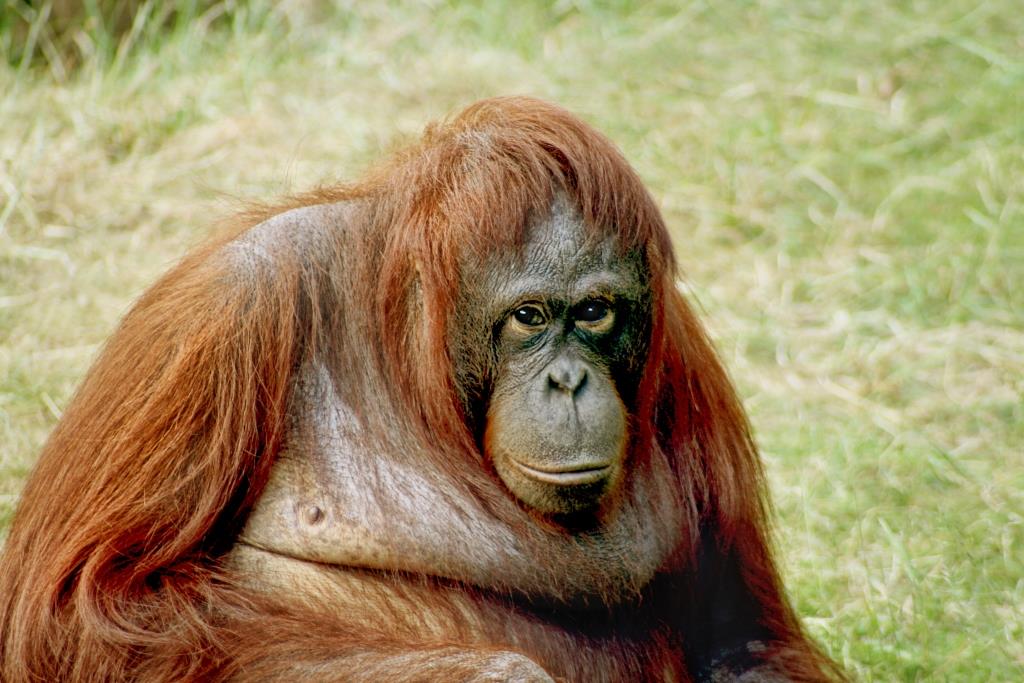
At the end of 2014, the appeals court in New York state said that a caged chimpanzee called Tommy could not be recognised as a "legal person" as it "cannot bear any legal duties" although the Nonhuman Rights Project say the state has previously conferred legal "personhood" status on domestic animals who were the beneficiaries of trusts, as well as extending rights to non-human entities such as corporations. Similarly in 2007 an Austrian Supreme Court refused to appoint a woman as legal guardian of a 26 year old chimpanzee called Hiasl as he was not a person, in a case that was referred to the European Court of Human Rights. Interestingly in December 2014, in another case brought by the Nonhuman Rights Project, a court in Argentina allowed a claim for habeas corpus - for orang-utan Sandra - who had been born in captivity and was being held at Buenos Aires Zoo - finding she deserved the basic rights of a non human person, including the right to life, liberty and freedom from harm, and pending appeal should be released to a sanctuary; but does that extend to the right to copyright authorship one must ask?
In this case, Slater licensed the image to the Caters News Agency, and Slater argued that he had "engineered" the shot, and that "it was artistry and idea to leave them to play with the camera and it was all in my eyesight. I knew the monkeys were very likely to do this and I predicted it. I knew there was a chance of a photo being taken" and claimed copyright. The photographs were uploaded to Wikimedia Commons and the website listed the selfie photograph as being in the public domain on the grounds that it was the creation of an animal, and not a person. Slater requested that the Wikimedia Foundation, the owners of Wikimedia Commons, either pay for the photographs or remove them from Wikimedia Commons: His claim was rejected by the organisation, which determined that no one owned copyright as the monkey was the author of the photograph.
The results of the 1709 reader's poll into who owns the 'black macaque image can be found here - 52% of 1709 readers polled thought that "there is no copyright in works authored by animals: they are a gift to humanity which we can all use" although 30% thought that only humans are authors so the photographer owns the copyright as the nearest relevant human" - and aurelia J Schutlz's 2011 opinion can be found here.
Over on the IPKat, Lucy Harrold examines how the case would proceed under the provisions of the Copyright Designs & Patents Act here in the UK - opining (just as a starter) that as the monkey is neither an individual nor a body corporate so on similar facts in the UK, its case would fall at the first hurdle, before turning to the somewhat complex issues of authorship. well worth a read.
Orang-utan image: "Orangutan-bornean" by Julie Langford - Own work. Licensed under CC BY 3.0 via Commons - https://commons.wikimedia.org/wiki/File:Orangutan-bornean.jpg#/media/File:Orangutan-bornean.jpg
Return of the Mack by Mark Morrison here