Friday, 20 March 2015

Fox News Files Motion for Interlocutory Appeal in 9/11 Photo Fair Use Case

Readers of this blog may remember  that Judge Edgardo Ramos from the Southern District of New York (SDNY) denied on February 10, 2015 Fox News Network’s motion for summary judgment in a copyright infringement suit filed by the copyright holder of an iconic 9/11 photograph. Fox News had unsuccessfully moved for summary judgment, claiming fair use. 

Fox News (Defendant) has now filed on March 19 a motion to certify the February 10, 2015 opinion and order for immediate appeal, under 28 U.S.C. § 1292(b), which gives a district judge the power to certify  an order of interlocutory appeal , if he believes that “such order involves a controlling question of law as to which there is substantial ground for difference of opinion and that an immediate appeal from the order may materially advance the ultimate termination of the litigation.” Under Second Circuit case law, cited by Defendant, a question of law is controlling if the certified order would terminate the action, or could significantly affect the conduct of the action, or if the issue has precedential value for a large number of cases.

Fox News is arguing that the February 10, 2015 order is presenting the controlling question of law of whether...

For fair use purposes, whether a secondary user may transform a visual work by placing that work in a new context and for a new purpose, without substantial physical alterations.”

Fox News calls this area of law “murky” and further notes that “guidance is sorely needed” as “the use of visual works on social media… is widespread.”

Transformative Qualities of Social Media

Fox is asking the Second Circuit to recognize a “context-sensitive test” for transformative use, and claims that social media is “transformative by design.” It  argues that “transformative qualities of social media are not taken into account when considering a fair use defense” and that the “use’s particular context” should be taken into account in fair use cases. Such finding would have “massive implications for the millions of Americans who use social media on a regular basis.” Fox News also claims that not considering the use of protected works on social media to be fair "would effectively proscribe a wide swath of ongoing online speech. The public has a strong interest in having these fundamental free-speech concerns addressed at the earliest possible juncture. ”

Defendant further  argues that it had used Plaintiff’s photo “in an inherently transformative context: on social media.” As social media is not one-way to communication, but rather, a way to share ideas, expression on social media “is thus inherently intertwined with comments and criticism,” two of the purposes expressively mentioned by Section 107 of the Copyright Act.  

While this argument alone appears overbroad, as agreeing with it would allow for almost any use of copyrighted work on social media, Fox narrows the argument further along in its memorandum when arguing that interlocutory review is warranted because the order “implicate[d] fundamental free-speech questions,” as its and others’ speech may be chilled “from using copyrighted content on social media to discuss issues of public concern.”

Difference of Opinion Over Appropriate Standard for Transformation of Visual Works

Defendant also argues that certification is warranted because the fair use jurisprudence of the Second Circuit is divided.  While cases such as Swatch Grp. Mgmt. Servs. Ltd. v. Bloomberg L.P., and Bill Graham Archives v. Dorling Kindersley Ltd. held that a use can be transformative even if the copyrighted work has not been altered, the Second  Circuit placed great weight on transformative use in Cariou v Prince.  Defendant also cited the Second Circuit Authors Guild, Inc. v. Hathitrust case, where the court asserted that “[a]dded value or utility is not the test: a transformative work is one that serves a new and different function from the original work and is not a substitute for it” (at 96).

Transformative Content or Transformative Purpose?

Fox News is arguing that Judge Ramos relied on Cariou, which conflicts with Bill Graham.  It cites a blog post written by Professor Rebecca Tushnet , where she noted that, in Cariou, “the court, despite speaking of purpose, seemed to require transformation of content, contrary to the aims of much appropriation art” and also wrote that “Fox’s purpose… [of use]  was an issue of fact, not indisputably different as the publisher’s was in Bill Graham Archives.” Indeed, in Bill Graham, the Second Circuit found that a publisher’s purpose in using copyrighted images of posters in its biography of the Grateful Dead was “plainly different from the original purpose for which they were created” (at 609) and was fair use.  

Is publication on social media, a new context for the work, enough to warrant finding of a different purpose? Probably not, but the issue of the respective weight of transformative content and transformative purpose for fair use analysis purpose warrants further discussion in court. Many copyright practitioners  and scholars are now rooting for Fox’s motion to be granted, hoping it will lead to another Second Circuit  fair use case, which may clarify Cariou.


Image is courtesy of Flickr user Heather Paul under a CC BY-ND 2.0 license.

Wednesday, 18 March 2015

The CopyKat - its greeeeeaaaat to be a copied cat

The author Jeffrey Archer has complained to the Indian Government in an attempt to stop Bollywood producers stealing his novels and turning them into films without his permission. Archer claims that his novel Not a Penny More, Not a Penny Less  was turned into the 2011 romantic comedy hit Ladies v Ricky Bahl, and that Archer's Kane & Abel became the film Khudgarz. Perhaps unsurprisingly, it transpired Archer was in India promoting a new novel. As for future movies, The Times says he told prospective film makers to contact his agent in London. 

Jay-Z has settled a copyright claim brought against him by a Swiss musician who claimed the rapper lifted a sample from an original 1978 song and used it without the artist’s consent. Bruno Spoerri, a 79-year-old Swiss jazz musician, will get 50% of royalties from Jay-Z’s 2013 song “Versus,” reports the Daily Mail. The rapper agreed to a settlement after a year and a half-long legal battle in which Spoerri claimed Jay-Z used a portion of his 1978 song “On the Way” without first clearing the sample with his record label. You can compare the two tracks here http://www.breitbart.com/big-hollywood/2015/03/13/music-lawsuit-frenzy-jay-z-latest-to-settle-copyright-claim-awards-50-royalties-to-swiss-musician/

And more .... counsel for Jay-Z and Kanye West expressed confidence that musician Joel R. McDonald’s assertion that the famed rappers' 2011 hit "Made In America" ripped him off would fail, as a Manhattan federal judge prepared to give the songs a listen. The defendants' motion to dismiss is before U.S. District Judge Allison J. Nathan and will be fully briefed by the end of March. The defendants say their tune and McDonald's 2008 work of the same name are “are two completely different songs.”

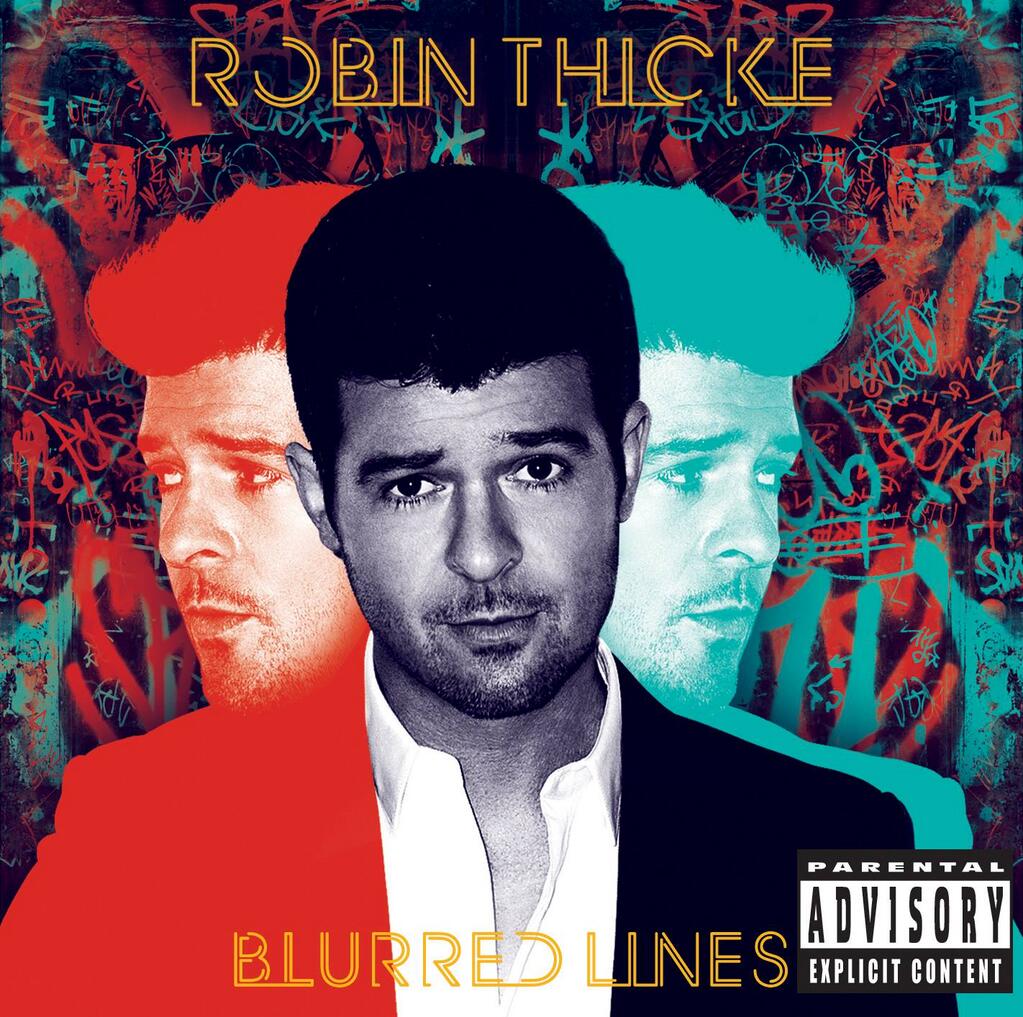
And with Marvin Gaye's children now musing what other songs may have been 'copied' from their father's work (the last I heard, it was Pharrell Williams in the firing line again for his smash hit 'Happy', which Nona Gaye  says is a copy of Hayes 1966 song 'Ain’t That Peculiar') an appeal in the Blurred Lines case has been formally announced. Robin Thicke and William's lawyer Howard King told reporters "we owe it to songwriters around the world to make sure this verdict doesn't stand". Speaking to Fox Business News, he went on: "My clients know that they wrote the song 'Blurred Lines' from their hearts and souls and no other source. We are going to exercise every post trial remedy we have to make sure this verdict does not stand. We look at it as being in the seventh innings of a game that could go into extra innings". At the trial the Gaye family also said that that Thicke and his estranged wife Paula Patton's co-written track 'Love After War' plagiarised their father's song 'After the Dance'. 

The IP Court of Venice has held that a work created by a lawyer for their client in the performance of legal services was indeed protected by copyright law. The court found that the piece in question, a review of anti-counterfeit regulations, “possesses a creative quality, epitomised by originality and novelty” because the work was "“the result of a personal, original, new and creative elaboration of legal concepts and industry practices and of the experiences of the author” The third-party defendant in the case who was found to have infringed the copyright was ordered to compensate damages determined on an equitable basis (the fact that the regulation was available on the Internet did limit, according to the Court, the harmfulness of the conduct) and ordered the publication of the decision in two newspapers, one national and one local.

UK blocking orders against the Pirate Bay put in place by BT, EE, Virgin and TalkTalk are now seemingly ineffective, possibly as a result of The Pirate Bay switching to an SSL service provided by US company CloudFlare, which made the HTTPS version of the Bay site (rather than the HTTP version) the default address.

Talking of blocking, the Pirate Party MEP Julia Reda, who is currently leading the European Parliaments review into the harmonisation of EU copyright law, has highlighted her view that geo-blocking within the Union is a threat to European culture saying "One cross-border issue users feel strongly about is 'geoblocking'. Most of us are familiar with the error message “This video/content/service is not available in your country.” There’s no digital single market when travellers can't use the services they pay for once they cross a border, linguistic minorities are denied access to cultural works in their native language, innovative services are only available in the big member states because of varying regional hurdles – or UK MEPs are blocked from following the cricket in Brussels." 

The CopyKat is scampering off out BUT just noted this : A Brussels court has ruled that Belgian ISPs don’t have to pay copyright levies for offering access to copyright protected materials online. In an action brought by collection society  Sabam against  the country’s three biggest ISPs (Belgacom, Telenet and Voo) the court of the first instance in Brussels and found that Internet access providers are not liable for information transmitted over their networks. 

Image from wikileaks
The EFF updates us on the Trans Pacific Partnership treaty: "We are deeply concerned about this situation in which important decisions for our nation’s culture and society are being made behind closed doors" reads a joint public statement from Japanese activists who are fighting the copyright provisions in the TPP. A group of artists, archivists, academics, and activists, have joined forces in Japan to call on their negotiators to oppose requirements in the TPP that would require their country, and five of the other 11 nations negotiating this "secretive agreement", to expand their copyright terms to match the United States' already excessive length of copyright.

And finally .... noting that the content industries have managed to blame everyone but themselves for their business woes, Rick Falkvinge, a regular columnist on TorrentFreak, opines: "The copyright industry has managed to kill civil liberties for their own children, ushering in a dystopian surveillance machine, merely to avoid taking responsibility for their own business failures. I lack words to quantify my contempt for these utter parasites." The piece is called "Piracy is just another copyright industry scapegoat" and It's WELL worth a read here!

Tuesday, 17 March 2015

How commercial is "non-commercial"? A reader asks ...

One of our readers has written to this weblog to ask about the position under copyright law where teachers seek to use Creative Commons non-commercial (CC-NC) images in a lesson in which students are actually paying to attend the class. Says our reader by way of personal opinion:
"The use of the image does not seem to fall within CC terms of “primarily intended for or directed toward commercial advantage or private monetary compensation” -- but there could be different interpretations. In the United Kingdom as in other countries, many educational organisations now need to charge for attendance, including universities. The only definitive advice I can find is in this document ["Free Knowledge Based on Creative Commons Licenses" by Paul Klimpel] with a German viewpoint from 2012 which advises on avoiding NC licences".
Do readers have any ideas or personal experiences to share with our reader?

Friday, 13 March 2015

Your chance to shape a copyright event

Bill Rosenblatt, who runs the very fine Copyright and Technology blog, surveying the world of Copyright and Technology from a New York base but with a global perspective, has just published the date and call for ideas for this year's Copyright and Technology London event, taking place on 18 June (not the October of last year).

Last year, both 1709 (in the person of John Enser) and the IPKat (in the person of Eleonora) chaired panels and can vouch for the excellence of the event, so if you would like to have a say in this year's topics, head over to Bill's site and submit your suggestions.

Ideas on the list so far include:
  • Implications of the “Blurred Lines” decision on copyright in the age of sampling and remix culture 
  • The use of digital watermarking throughout the media value chain 
  • Progress of the UK Copyright Hub, Linked Content Coalition, and other initiatives for centralizing copyright information online 
  • Content protection technologies for browser-base over-the-top streaming video 
  • Progress of graduated response schemes in France, UK, Ireland, and elsewhere
but it is not a closed list.

Copyright Aware - BBC contributes to copyright education

Let's hear it for the BBC, who this week launched a new website, Copyright Aware, highlighting and explaining the subject of copyright to everyone.

Here at 1709, we think that the more exposure people have to the concepts of copyright the better - and in the BBC's case, this involves some rather nifty little films involving explanations of copyright as well as some useful text-based context (pointing, for example, to the scale of the creative industries in the UK).   

Go on the site, watch the films, tell your friends!

As the BBC says in its press release:
"With increasing numbers of people of all ages producing and sharing content online – whether that be photos, videos, blogs and other creative works that are protected by copyright law, the [Copyright Aware] site aims to educate and demystify the subject through a series of videos and practical tools.    
By breaking up the subject of copyright into simple parts that answers basic questions - while also tackling some more advanced concepts like the exceptions to copyright law or how to protect your own work – the site will give all creators of content an awareness and understanding of copyright and the benefits it provides in the digital age.
The site will also serve as an effective resource in the fight against copyright infringement, adopting a facilitating tone, focusing on the individual and their creative efforts and by doing so, hopes that consumers and creators will deal more consciously and responsibly with creative works, recognising the effort and skill that has gone into producing them."
Bal Samra, Commercial Director of the BBC, welcoming the launch of the site said, 
We recognise that our audiences are increasingly producers of copyright, taking photos and shooting films on their phones and sharing those widely online.  We designed the site to help them understand why copyright is relevant to them and to deal more responsibly with the creative works of others which in turn helps support our industry and fund the creation of new creative works for us all to enjoy.” 

The CopyKat - Friday's feline feast

The Motion Picture Association of America (MPAA) and the Recording Industry Association of America (RIAA) have both sent letters to the Internet Corporation for Assigned Names and Numbers (ICANN) urging the organization to take strong action against the use of domain names for illegal and abusive activities including those related to copyright infringement. The RIAA had said it was disappointed with ICANN’s treatment of copyright abuse complaints and urged ICANN to make domain name registries and registrars investigate copyright abuse complaints and take swift action, not least because when ICANN recently opened up top-level domains, it included a provision in its contract with the registries of the new top-level domains which was called the Public Interest Commitment - agreeing that they would only do business with domain name registrars that prohibited its customers from distributing piracy, trademark and copyright infringement (amongst other things). More on Techspot here.

Here's an interesting take on copyright reform in the EU: "The reform of copyright also concerns linguistic precision - a distinction should be made between Anglo-American copyright and continental European authors' rights. With copyright exploitation rights are not necessary reserved for the creator." Its from Dietmar Köster, the European Parliament's EPP group shadow rapporteur looking towards a renewed consensus on the enforcement of intellectual property rights in the EU: That debate is being led by the rapporteur for parliament's legal affairs committee, Julia Reda, of the Greens/EFA group.

City University are organising a copyright-related seminar to be held at City Law School on Wednesday 1st April 2015, College Building, Room AG 02. The speaker is Professor Stavroula Karapapa (University of Reading), who will talk about "The Concept of 'Public' in Copyright Law" and will look at "what amounts to an actionable communication of copyright works to the public. Recent rulings of the Court of Justice of the European Union uphold that infringement takes place not only where an unauthorised communication reaches the public but also where a communication is addressed to a «new public», i.e. a public that copyright holders had not taken into account when authorising the initial communication of the work. This newly developed doctrine does not refer to a public or a private circle in a copyright sense, but develops a sui generis legal fiction that fundamentally changes the communication right; it both restricts and expands its scope in ways that were not foreseen when the right was first introduced in international law, European copyright and the national laws of Member States. In its unnecessary complexity and complicated logic that challenges the credibility of copyright, the concept of the “new public” indicates that the extremely broad scope of the communication right is unworkable and counter productive, and invites a principle-based approach in examinations of infringement." More here.

CMU Daily reports that the City Of London Police's IP Crime Unit (PIPCU) has shut down a copyright infringing karaoke website following a complaint by PRS For Music. CMU tells us that KaraokeWorld was a BitTorrent site with a specific focus on accessing unlicensed karaoke tune. The service had a commercial element, with VIP memberships on offer from £5 to £90, which will have heightened the case for taking criminal rather than civil action against the operation. A 46 year old man believed to be the operator of the website was arrested as part of the shutdown. PIPCU Detective Chief Inspector Danny Medlycott told reporters: "The public needs to be aware that by accessing sites like this, they are putting money directly in the hands of criminals, which often then funds other serious organised crime, as well as putting their own financial and personal details at risk of being compromised and used for other fraudulent scams. These websites are stealing from the creative industries that employ thousands of people and PIPCU will continue to work closely with our partners to tackle the criminals behind these sites and bring them to justice".

AND FINALLY - AND coincidently set against the backdrop of the news that Sarah Brightman is working with Andrew Lloyd Webber on new material to perform in space -  this from a anonymous contributor who The CopyKat shall name only as 'Major Tom'.....

'Stimulated by Sarah Brightman's intention to be propelled into space in September, the EU has launched a Public Consultation into the collective administration of rights in extraterrestrial broadcasting. "We have asked her to delay her flight for an indefinite period - possibly several aeons - while we consult and decide on the cross-planet implications of the licensing of her performance', said an EU spokesperson. Elsewhere (George) Lucas Grange, supremo of Universal Music, said 'We are called Universal for a good reason. We have an exclusive arrangement with Ms Brightman and her ex-husband, with his Soyuzful Music Corporation, to handle all the publishing and artistic rights. People laughed at us when we signed everything for the Universe, but they are now laughing on the other side of their galaxies.' This claim was dismissed by Sergey Brin. 'Ms Brinman's voyage will take place in Google Rocket, propelled by Google Zoom. Her Google Watch will stream her singing via Google Play and Universal can go and sing for their royalties. Her destination was Google Moon, but if she fails in her mission then she and the royalties will fall into a Google Black Hole.' Speaking from a black hole in Brussels, an EU spokesperson stated that all modalities would be taken into consideration. The CEO of a central European collecting society, who wished to remain anonyme, said 'all public performance royalties from Ms Brightman's performances that cannot be distributed (and that means all of them) will be sucked into our black box, as is customary'.

To infinity ...... and beyond!


Thursday, 12 March 2015

What’s Wrong With the ‘Blurred Lines’ Copyright Ruling?

Got To Give It Up (Marvin Gaye) – transcribed from bar 5 [0:14].
This bassline employs substantial rhythmic variations throughout the song.
"What’s Wrong With the ‘Blurred Lines’ Copyright Ruling" was a headline from the New York Times two days after a civil jury found that Robin Thicke, Pharrell Williams and TI's song infringed Marvin Gaye's 'Got To Give It Up'. In it Jon Caramanica says "Owing to the specifics of copyright law, the jury was instructed to base its decision on the sheet music, a fact that reflects how inadequate copyright law is when it comes to contemporary songwriting and production practices. In 2015, the arrangement of notes on a sheet of paper is among the least integral parts of pop music creation. We’re decades beyond the time when a songwriter penned a tune on paper, then gave it to musicians to perform.


Blurred Lines (Robin Thicke and Pharrell Williams).
This 8-bar bass line is looped throughout the song.
Pointing to the difficulties in this area, Caramanica also comments on the recent 'Stay With Me' settlement where Tom Petty and Jeff Lynne were given 25% of that song which allegedly plagiarised Petty's 1989 hit "I Won't Back Down" - although Caramanica points out the argument there was structural — "both choruses have a similar pace and syllabic emphasis. But Mr. Smith’s song is ecstatic and soaring, and Mr. Petty’s is quietly tenacious. “Stay With Me” is far more indebted to traditional choir gospel than to Mr. Petty’s meditative country-rock" and asking   in truth, once you begin splitting hairs, the possibilities are endless — listen closely to “Got to Give It Up,” and you may hear the skeleton of a song like Prince’s “Kiss.” Will the Gaye family sue him, too?

But there has been a lot of comment and argument out there - some criticising copyright law - but mostly criticising the decision itself, its detrimental effect on creativity and many criticising music lawyers.

Where do we begin? Well, Dr. E Michael Harrington, chair of the music business programme at the School of Audio Engineering Institute (SAE) and reportedly an expert witness in copyright infringement, said he found the ruling absurd saying  “I think it was the worst possible decision. I think it’s really a terrible precedent. There’s no melody, no chord progression, no rhythm, no lyrics,” he explained. 

Perhaps the best analysis and comparison of the two SONGS I had seen is here http://joebennett.net/2014/02/01/did-robin-thicke-steal-a-song-from-marvin-gaye/ : its by Professor Joe Bennett, writer and musicologist and Professor of Popular Music and Dean of School of Music & Performing Arts, Bath Spa University. Its a very good read; it was written pre-trial but gives a good idea of why the two songs are NOT similar (even if the recordings are!). The two images I have used are from Professor Bennett's article.

George Harrison got a number of mentions in cyberspace yesterday. Readers may remember the rather complicated 1976 case of  Bright Tunes Music v. Harrisongs Music et al, 420 F. Supp 177 (1976) where Harrison was ultimately ordered to pay $587,000 for "subconsciously" copying parts of the Chiffons' 'He's So Fine' in his song 'My Sweet Lord' - with one commentator saying that when the songs are compared "makes it hard to feel bad for the old Beatle". Well that's his opinion - whereas I remember thinking at the time the songs (well the recordings of the songs I had heard) were quite different. But the decision was not mine to make - it was District Judge Richard Owen's and he held: "Did Harrison deliberately use the music of He's So Fine? I do not believe he did so deliberately. Nevertheless, it is clear that My Sweet Lord is the very same song as He's So Fine with different words, and Harrison had access to He's So Fine. This is, under the law, infringement of copyright, and is no less so even though subconsciously accomplished.

Many other older stories about similarities between songs also surfaced - and this article in Time Magazine - 11 Suspiciously Sound Alike Songs and this one on Bloomberg, Six Musicians Who Got Busted for Plagiarizing perhaps sums up what many were thinking - and it is all brilliantly parodied in the Axis of Awesome's YouTube 2011 video "4 Chords" video which neatly and almost seamlessly combines numerous big hits - which all share the same four chords - its well worth a listen to get a sense of perspective! As is What do you mean all Country music sounds the same?!?

After the Chiffons case, Harrison admitted he was to 'paranoid' to write  any new songs for some time afterwards. Time Magazine also noted the 'chilling effects' of the ruling saying 

"It’s easy to see the judgment as a worrisome sign that authorship in music is about to get a lot more narrowly defined. After all, Thicke and Williams didn’t interpolate the actual recording of Gaye’s track; their ripping-off of Gaye, if one agrees with the court that they did indeed rip him off, is a question of having been influenced too much. But without influences and borrowing from one another, there’s practically no popular music at all. Nearly all of contemporary music, from Taylor Swift’s ’80s pastiche on “Style” to Meghan Trainor’s faux-doo-wop stylings on “All About That Bass” to every act that tries to sound like Avicii — they’re all reaching back to music from the recent or distant past, if only because there are only so many ways to truly innovate. Even in Williams’ own back catalog, listeners have noted similarities to other songs: Daft Punk’s “Get Lucky” bears some resemblance to “Criminal World,” from David Bowie’s Let Dance; both were produced by Nile Rodgers. 

The LA Times reported that Los Angeles composer and producer Gregory Butler said that his friends and colleagues in the industry were stunned by the verdict: "You've made it illegal to reference previous material,"  adding "I'm never going to come up with something so radically different that it doesn't contain references to something else."

And Joe Escalante, an early member of the Vandals punk rock band and an entertainment law attorney, said he was concerned that the jury's decision had been driven by emotion rather than what's protected under copyright law. "This may put a smile on the Gaye family's face, but it's a dark day for creativity, and in the end, this will be a net loss for music fans," he said.

But Gaye's daughter, Nona, had this to say ""I don't think there's anything wrong with being inspired. I've been inspired when I made music before. Inspiration's fine, but the line is when you decide to take the complete and utter essence out of the song. When you take all the meat, and leave the bones"


In fact I ended up in a large multi person live debate on FaceBook yesterday where there were a wide range of opinions and questions. It started off with I'm not a fan of Blurred Lines but does this mean Queen are gonna sue Alicia Keys as 'Fallin' sounds similar to the first two chords of 'We Are The Champions' or Madonna is gonna sue Gaga over 'Born This way' or is Bruno Mars going to have to fork out money to Earth, Wind and Fire, Prince and Kool and the Gang for for having similar elements in 'Uptown Funk' to their music" . Other comments included "Drums are copyrighted, dude!" to "All music is influence" to "Pretty sure drum patterns generally can't be copyrighted" to the more specific like "No lyrics or melody have been nicked. It is just that the main hook of the production could be argued to be the vibe of the the rhythm track" countered by the comment that "that if I was Marvin Gaye - I'd be pissed off, and I think i'd be totally within my rights to be pissed off" and  the comment that "A huge part of modern music is production to the point that it often  IS the 'song'. We're in a post-modern song era. The song is no longer the main identity of a track". It ended with "So basically nobody can use an electric piano patch with a funk cowbell without the fear of Gaye's hysterical daughter and her team of legal vampires descending on them"

The EFF picked up a number of these threads saying

"Artists evoke elements of common culture all the time, to make their point or simply to entertain by putting their own twist on what has come before. This is what makes culture a conversation and not a series of disjointed soliloquies. Copyright law, though, is dangerously disconnected with the way culture gets made, and as a result it pushes entire genres and communities to the margins, such as those that involve sampling, remix, and other adaptations" and "Musicians will have to think twice before creating any new songs that evoke the feel of the music that inspired them in their youth. And with the length of copyright we have these days, artists who want to feel confident that their musical influences are in the public domain are going to have to go all the way back to ragtime."


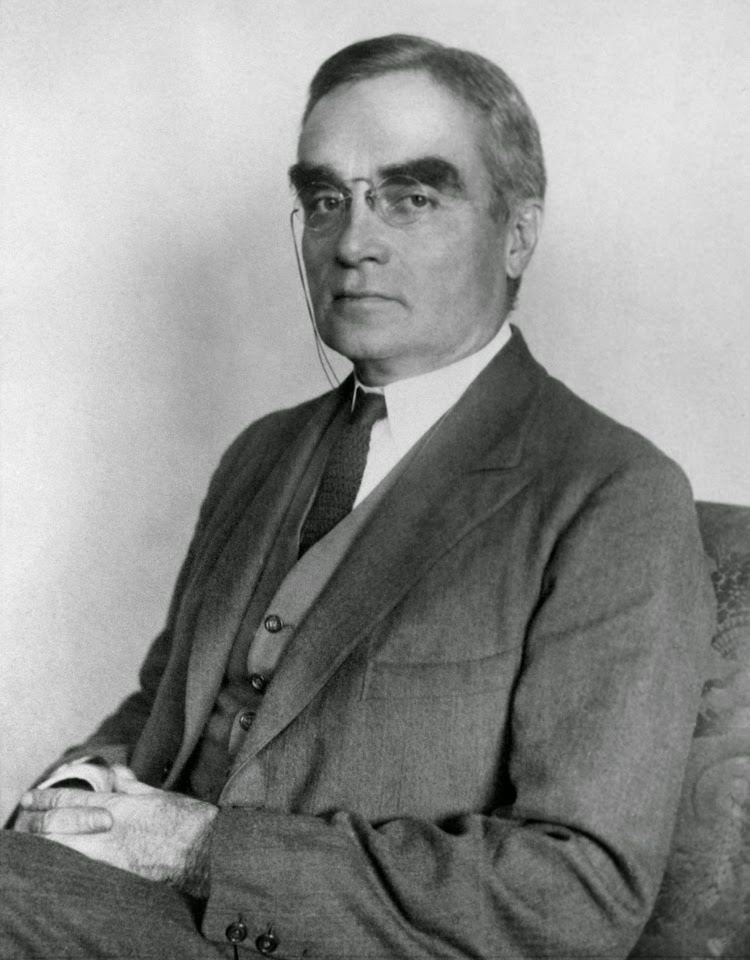
Judge Learned Hand
 United States Court of Appeals for the Second Circuit
Inspiration or appropriation? I went back 99 years to Haas v. Leo Feist, Inc. 234 F. 105 (S.D.N.Y. 1916) where Judge Learned Hand had to compare two works to determine if there had been copying. Despite denigrating the originality of BOTH works, Learned Hand drew lines connecting identical pitches occurring at the same points in the two tunes. A few years earlier, in his opinion in Hein v. Harris (1910), Hand used a similar "comparative method" when he found for the plaintiff because thirteen of seventeen bars were "substantially the same" between the works. In the later case he also favoured the plaintiff because of "parallelism which seemed to [his] ear to pass the bounds of mere accident." And lets not forget that in 1930 Learned Hand again had to look at the line between ideas and the expression of ideas: Reinforcing perhaps what many reading about Blurred Lines might have thought, in Nichols v. Universal Pictures Corp., 45 F.2d 119, 121 (2d Cir.1930) Judge Learned Hand pointed out that the line between idea and expression is an inherently arbitrary one and said:

"Nobody has ever been able to fix that boundary, and nobody ever can."


http://wkrn.com/2015/03/11/blurred-lines-copyright-ruling-causes-stir-on-music-row/

http://www.nytimes.com/2015/03/12/arts/music/whats-wrong-with-the-blurred-lines-copyright-ruling.html?_r=0

http://entertainment.time.com/2013/08/22/11-suspiciously-sound-alike-songs/slide/all/

http://www.fairwagelawyers.com/most-famous-music-copyright-infringment.html

Wednesday, 11 March 2015

Thicke and Williams crossed that blurred line

The family of Marvin Gaye has been awarded $7.3 million by a civil jury in Los Angeles, who decided that Robin Thicke and Pharrell William's massive 2013 hit Blurred Lines did copy Marvin Gaye's 1977 Classic "Got to Give It Up".  Howard E King, The lawyer for Thicke, WIlliams and co-writer rapper TI, said the decision set a "horrible precedent for music and creativity going forward". The decision will almost certainly be appealed.

Williams, Thicke and T.I. said in a joint statement: "'Blurred Lines' was created from the heart and minds of Pharrell, Robin and T.I. and not taken from anyone or anywhere else.  We are reviewing the decision, considering our options and you will hear more from us soon about this matter."

The Gaye family's lawyer Richard S Busch said "We'll be asking the court to enter an injunction prohibiting the further sale and distribution of Blurred Lines unless and until we can reach an agreement with those guys on the other side about how future monies that are received will be shared". 

http://www.bbc.co.uk/news/entertainment-arts-31825059 and http://www.rollingstone.com/music/news/robin-thicke-and-pharrell-lose-blurred-lines-lawsuit-20150310